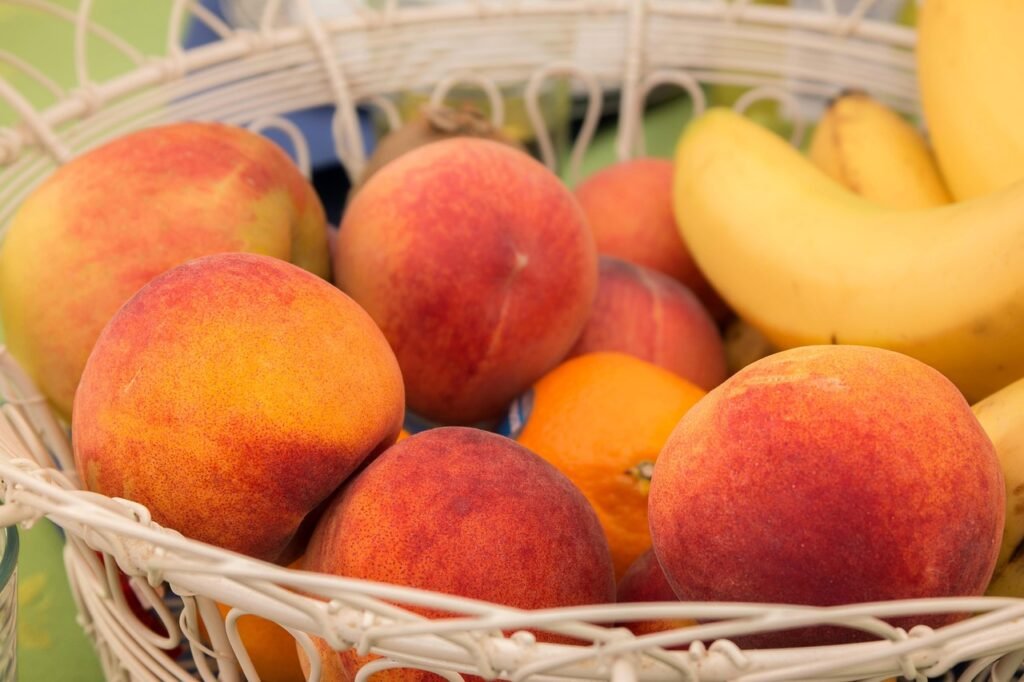
Ripen peaches on the counter in a single layer, then move them to the fridge once they smell like peaches and give at the shoulder. Chilling a firm peach is what creates that dry, cottony texture, because cold stalls the enzymes that would otherwise soften the flesh properly.
Ripe first, cold second
A peach does not get sweeter after picking. The sugar it has is the sugar it will ever have. What does change is texture and aroma, and those changes only run at room temperature. Cold does not pause them cleanly the way it pauses a kiwi. It interferes with them, and the fruit can come out of the fridge soft but flavourless with a strange woolly grain.
So the order matters more than the location. Counter until ripe, fridge afterwards to hold what you have got, and back to room temperature for half an hour before eating, because cold mutes the aroma.
Judging ripeness without wrecking the fruit
Poking a peach with a thumb is how bruises start, and a bruised peach releases more ethylene, which pushes everything near it along. Use gentler tests instead.
- Smell the stem end. A ripe peach announces itself from a few inches away.
- Cup the whole fruit in your palm and press with your fingers spread, not a single fingertip.
- Check the background color, the part that is not blushed red. Green means unripe. Cream or gold means ready.
- Look for a slightly wrinkled ring around the stem, which is a reliable sign of a fruit that is ready now.
Counter, bag, or fridge
| Situation | What to do | What to expect |
|---|---|---|
| Hard, green shouldered fruit | Counter, stem down, single layer | Several days to soften |
| Firm but fragrant | Paper bag, loosely folded | Ripens in a day or two |
| Soft and fragrant | Fridge, single layer, uncovered | Holds a few days |
| One bruised fruit in the batch | Pull it out and eat it today | It will take the others with it |
| Cut halves | Closed container, a squeeze of lemon | Browning slows, texture softens anyway |
Free stone and cling stone varieties behave the same in storage. The difference only shows up when you try to twist the halves apart.
The mistakes that cost you a whole batch
Leaving peaches in the grocery bag is the classic. They pile against each other, every contact point becomes a pressure bruise, and the bag holds in the ethylene so the whole lot ripens at once and then goes over together. Unpack them the moment you get home and lay them out in one layer.
Refrigerating hard peaches is the second, and it is usually done with good intentions. Cold will keep a firm peach firm, but it spends that time developing the mealy texture rather than waiting patiently.
Washing before storage is the third. The fuzz on the skin holds water, and damp fruit sitting shoulder to shoulder grows gray mold fast. Rinse each peach as you eat it.
And stacking peaches two deep in a fruit bowl guarantees that the bottom layer is bruised before anyone looks. Peaches want space more than they want a container.
When a soft spot is fine and when it is not
A small brown bruise is compressed flesh. Cut it out and eat the rest. A wet, sunken patch that gives way under light pressure is rot, and it usually has a slightly fermented smell. Gray or white fuzz spreads between touching fruit within a day, so a fuzzy peach means checking every neighbor too.
Shrivelling around the stem while the rest stays firm just means water loss. That peach is still good, and it will be sweeter than it looks.