To keep bananas fresh, store them at room temperature away from other fruit until they reach the ripeness you like, then move them to the refrigerator to slow ripening. The peel darkens in the cold, but the flesh stays firm and usable for a few more days.
Why a bunch of bananas ripens all at once
Bananas ripen with the help of ethylene, a natural gas that fruit gives off as it matures. The gas triggers more ripening, which releases more gas, so the process speeds up once it starts. Bananas packed together in a bag or a crowded bowl share that gas and push each other along. A bunch that is already fully yellow when you buy it gives you fewer days before it tips past your favorite stage.
Warmth speeds things up too. A bunch on a sunny counter near the stove will outrun one kept in a cooler corner. Bruises add to it, since damaged spots darken and soften faster than the rest of the fruit.
Banana storage by ripeness stage
| Stage | What it looks like | Where to keep it |
|---|---|---|
| Green or green tipped | Firm, starchy, not sweet yet | Counter at room temperature, never the refrigerator |
| Yellow | Sweet and firm | Counter, away from other fruit, hanging if possible |
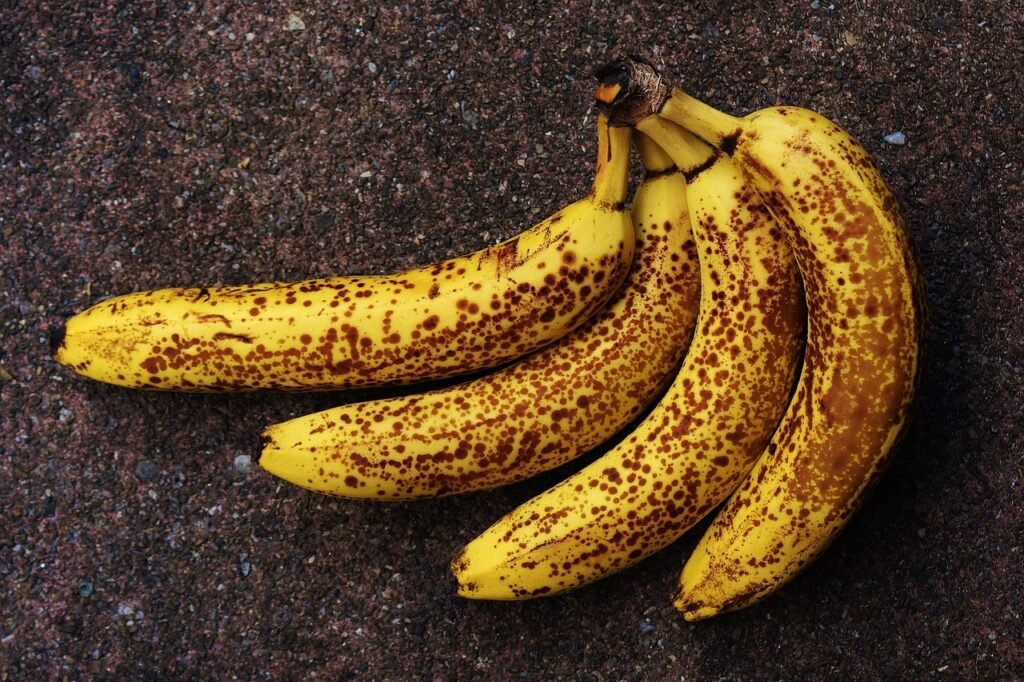
| Yellow with brown flecks | Sweetest, a little softer | Eat soon, or refrigerate to slow it down |
| Mostly brown | Soft and very sweet | Bake, blend or freeze |
Green bananas and the cold do not mix. Mississippi State University Extension says not to refrigerate bananas before they ripen, because they will not ripen properly in the refrigerator. Postharvest specialists at UC Davis note that bananas suffer chilling injury below about 56°F, which shows up as a dull, grayish peel and fruit that fails to ripen normally.
Hanging bananas and giving them space from other fruit
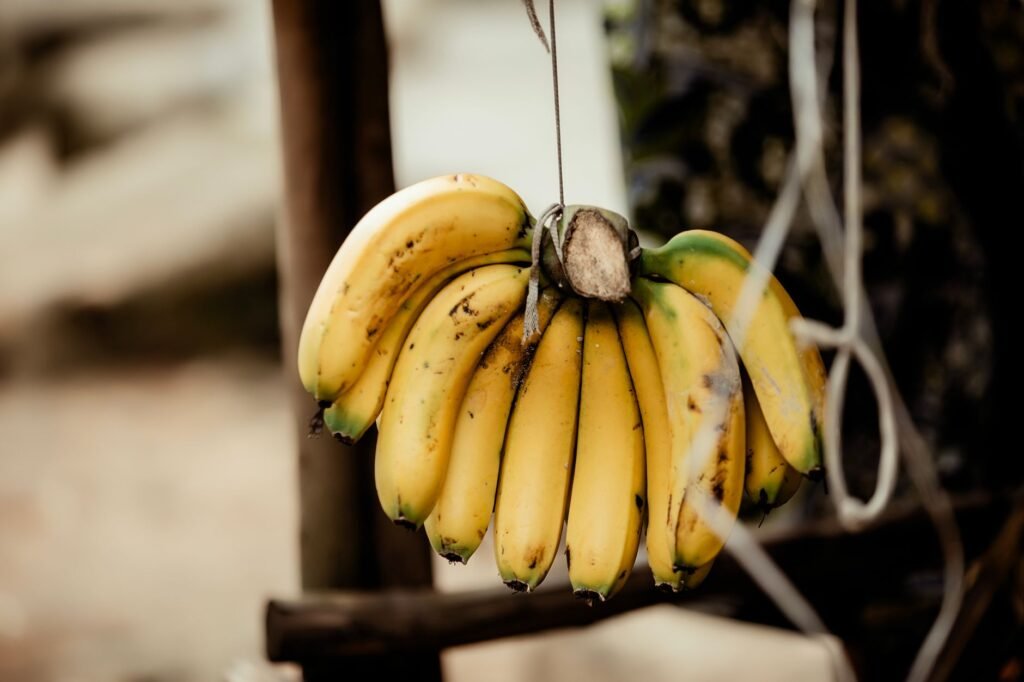
Where you set the bunch changes how fast it goes. Mississippi State’s guidance suggests hanging bananas by their connected stems, or laying them upside down with the stems and tips touching the counter, to keep them from bruising. A banana hook works, and so does a cup hook screwed under a cabinet.
Keep bananas out of a shared bowl with apples, avocados, pears or tomatoes, which also give off ethylene. Splitting a bunch into single bananas spreads them out and lets you use the ripest first. Keep them out of sealed plastic bags, which hold the gas in around the fruit.
A cool spot helps as long as it stays at ordinary room temperature. A pantry shelf away from the oven, dishwasher vent and sunny windows slows things more than you might expect.
Refrigerating ripe bananas without wasting them
Once bananas are as ripe as you like them, the refrigerator is the best tool you have. According to Mississippi State University Extension, ripe bananas keep in the refrigerator for 2 to 3 days, and while the skin turns brown, the flesh stays cream colored.
That dark peel scares people into throwing good fruit away. Judge by the inside. Firm, pale flesh with a normal smell is fine to eat. Mushy, leaking, sour smelling or moldy fruit is not.
Cut or peeled bananas brown quickly where the flesh meets air. A little lemon or lime juice brushed on cut slices slows the browning if you are packing them for later in the day.
Stem wraps and other counter tricks
Wrapping the stems in plastic wrap or foil is the most shared banana tip online. The idea is to slow what escapes from the crown where the bananas join. Results vary and it will not stop ripening, so treat it as a small nudge rather than a fix.
Buying with a plan usually does more. Choose a bunch with some green on it if you will eat bananas over most of a week, or buy two smaller bunches at different stages. When a few get away from you anyway, peel and freeze them for baking or smoothies, and a separate guide on how to freeze bananas covers that step.
Frequently asked questions
Should bananas be stored in the refrigerator?
Only once they are ripe. Mississippi State University Extension advises against refrigerating bananas before they ripen, since they will not ripen properly in the cold. Ripe bananas can go in the refrigerator for 2 to 3 days, and the peel darkens while the flesh stays cream colored.
Why do bananas turn brown so fast?
Bananas release ethylene, a natural ripening gas, and respond strongly to it, so ripening speeds up once it begins. Warm rooms, bruising, sealed bags and nearby fruit such as apples or avocados all add to it. Separating and hanging the bananas slows the process a little.
Are brown bananas safe to eat?
Brown spots on the peel are a normal sign of ripeness, and the fruit is often at its sweetest then. Very brown bananas work well in banana bread and smoothies. Throw them out if you see mold, leaking liquid, or notice a sour or fermented smell.
How do you ripen bananas fast?
Trap the ethylene they give off. Dole suggests putting green bananas in a brown paper bag in a warm, dry spot out of direct sun for a day or two, and adding a ripe apple if the peels still need more yellow. Keep them out of the refrigerator, where green bananas will not ripen properly.
How long does it take for bananas to ripen?
Bananas that are pale yellow with some green are usually ready to eat in a few days at room temperature, according to Mississippi State University Extension, and ripe ones keep for a few more days before turning overripe. Temperature changes the pace. Dole notes that the warmer the room, the faster bananas ripen.
How do you keep bananas from turning brown in banana pudding?
Coat the slices in an acidic juice before layering them. Dole recommends tossing cut bananas in pineapple juice, which it calls an ascorbic acid color keeper, and lemon juice works too. Then tuck the slices under the pudding or custard, since cut banana darkens where it meets air, and assemble close to serving time.