
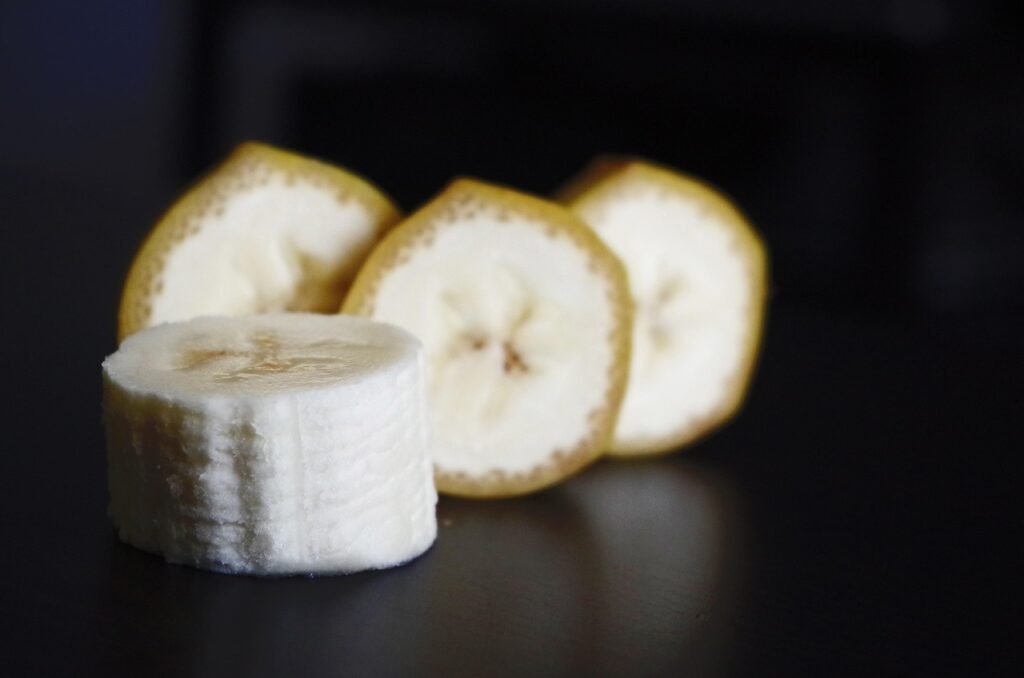
Yes, you can freeze bananas, and the best way is to peel them first, then freeze them whole, in slices spread on a tray, or mashed in measured portions. Pack them in airtight freezer bags or containers. Frozen bananas are ideal for smoothies and banana bread, though they turn soft once thawed.
Choosing whole, sliced or mashed frozen bananas
How you plan to use the bananas decides how to freeze them. Riper bananas give sweeter results, which suits baking and smoothies.
| Form | How to prep | Best for |
|---|---|---|
| Whole, peeled | Peel and bag, pressing out the air | Quick storage, banana bread |
| Sliced | Cut into coins or chunks and tray-freeze before bagging | Smoothies, blended frozen desserts, oatmeal |
| Mashed | Mash, portion by the cup and seal | Muffins, pancakes, banana bread |
Peel before freezing in every case. A banana frozen in its skin turns black, and the frozen peel is hard to get off without thawing the fruit first.
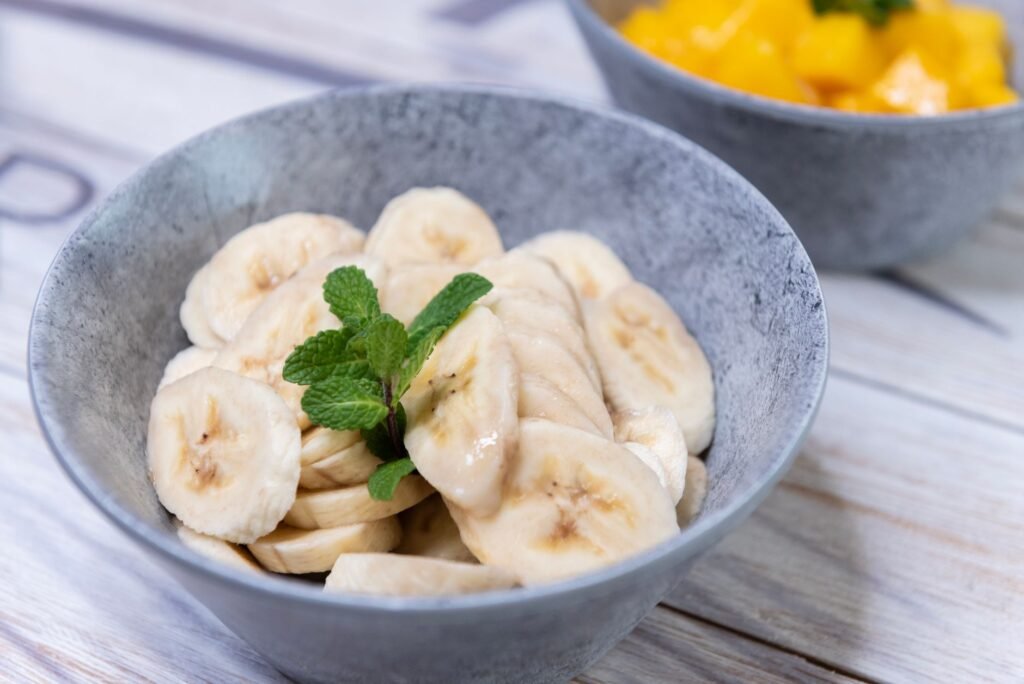
Tray-freezing banana slices so they don’t clump
- Peel the bananas and cut them into slices or chunks of similar size.
- Line a baking sheet or plate with parchment or wax paper.
- Spread the pieces out in one layer so they don’t touch.
- Leave the tray in the freezer until the banana slices feel solid, which usually takes a couple of hours.
- Transfer the frozen slices to a freezer bag or airtight container, push the air out, and mark the freezing date on it.
Because each piece froze separately, you can shake out exactly the amount you need instead of chipping at a solid block. Smaller pieces blend more easily, so cut thinner coins if your blender struggles with ice. Keep smoothie portions in separate small bags if you make the same drink every morning.
Freezing mashed banana for baking
If most of your bananas end up in banana bread, freezing them already mashed saves a step. The University of Georgia’s National Center for Home Food Preservation publishes banana freezing directions that call for firm ripe bananas, peeled and mashed thoroughly, with 1/2 teaspoon of ascorbic acid added per cup of mash, packed in a moisture-vapor resistant container.
The ascorbic acid, sold as powdered vitamin C for canning and freezing, limits browning. If you skip it, the mash may darken, which affects looks more than baking. Freeze it in the portion your recipe calls for so you don’t have to thaw more than you need. Laying filled bags flat on a tray until they freeze makes thin slabs that stack neatly and thaw faster than a thick lump. Mark every bag with how many cups it holds and when you froze it, since frozen mash all looks alike after a few weeks.
How long frozen bananas keep and how to thaw them
The same center’s frozen-food storage guide lists fruits at roughly 8 to 12 months for best quality when kept at 0°F or colder, and notes that food past those times should still be safe, just lower in quality. In practice, bananas taste best used sooner, before ice crystals and freezer burn dull the flavor. Squeezing every bit of air from the bag before sealing slows that decline.
For baking, thaw bananas in a bowl in the refrigerator or on the counter. They release brown liquid as they thaw, and that liquid is banana juice, so stir it back into the batter rather than pouring it out. Thawed bananas will be too mushy to slice for a fruit bowl.
Using frozen bananas right out of the freezer
Frozen slices go into smoothies with no thawing, and they make the drink thick and cold without much ice. Pour the liquid into the blender first, since a dry jar of frozen fruit tends to jam the blades, and start on a low speed until things begin to move. Blend frozen chunks alone in a food processor, scraping down the sides now and then, and they turn into a soft-serve style dessert. Frozen coins can also be stirred into hot oatmeal, where they thaw in a minute. If you have more bananas than you can freeze, drying them into chips or slowing their ripening on the counter are other options, each covered in its own guide.
Frequently asked questions
Can you freeze bananas with the peel on?
You can, but it is not ideal. The peel turns black in the freezer and becomes very hard to remove while the fruit is frozen, so you usually have to let it thaw partway first. Peeling before freezing gives you banana that is ready to drop into a blender or batter.
Why did my frozen bananas turn brown?
Browning happens when the cut fruit is exposed to air. It is mostly cosmetic and does not make the bananas unsafe. Pressing air out of the bag, freezing quickly in a single layer, and adding ascorbic acid to mashed banana all help keep the color lighter.
Can you refreeze thawed bananas?
Thawed bananas are best used right away in baking or smoothies. Refreezing them makes the texture even mushier and more watery. If you often thaw more than you need, freeze in smaller portions, such as single cups of mash or small bags of slices.
Can you freeze ripe bananas?
Yes, ripe bananas are the ones to freeze. The National Center for Home Food Preservation's directions call for firm ripe bananas, and riper fruit tastes sweeter in smoothies and banana bread. Peel them first, since a frozen peel turns black and is hard to remove, and pack them airtight.
How long does it take for bananas to freeze?
Usually a few hours on a tray. Penn State Extension freezes fruit pieces uncovered in a single layer just until solid, which it puts at four to six hours, and thin banana slices can firm up sooner. Whole bananas take longer, so bag the fruit only once it feels solid through.