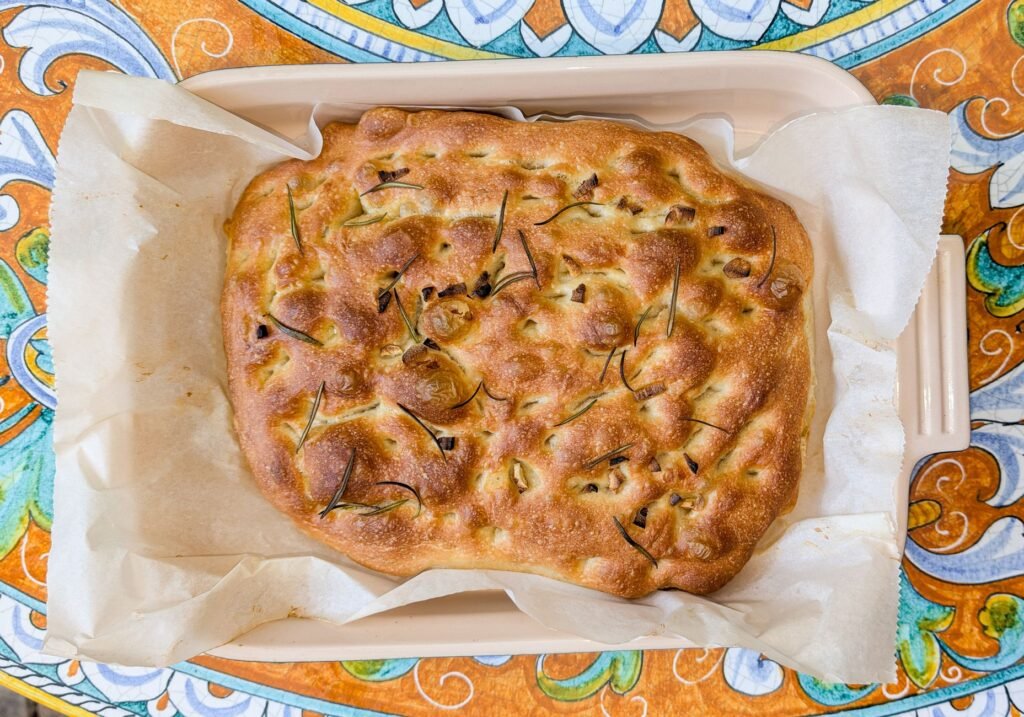
To make focaccia, mix a soft yeast dough with flour, warm water, salt and olive oil, let it double, then press it into an oiled pan and let it rise again. Dimple the top with your fingers, drizzle with more oil, sprinkle coarse salt and bake in a hot oven until golden and cooked through.
What makes focaccia different from pizza dough
Focaccia is a flat, leavened Italian bread baked in the oven. The dough can look a lot like pizza dough, but the handling is different. Pizza goes into the oven right after it is shaped, while focaccia is flattened and then left to rise again. That second rise is what gives it a thick, airy crumb instead of a thin crust.
The top is usually brushed or drizzled with olive oil and sprinkled with coarse salt before that final rise. Rosemary is the herb you will see most often, and regional versions range from soft and oily to much drier and crisper.
A tested home focaccia recipe by the numbers
This ingredient list comes from King Arthur Baking’s basic focaccia recipe, which makes one round loaf about 14 inches across on a greased baking sheet. It uses a little whole wheat flour for flavor, and you can swap in all-purpose if that is all you have.
| Ingredient | Amount |
|---|---|
| Active dry or instant yeast | 1 1/2 teaspoons |
| Granulated sugar | 1/2 teaspoon |
| Warm water | 1 cup (227 grams) |
| Table salt | 1/2 teaspoon |
| Whole wheat flour | 1/2 cup (57 grams) |
| All-purpose flour | 2 1/2 cups (300 grams) |
| Extra-virgin olive oil | 2 tablespoons (25 grams), plus more for the top |
Weighing the flour gives you the most consistent dough, because a cup scooped from the bag can hold far more than a cup spooned in. A digital kitchen scale is the easiest upgrade for any bread recipe.
Mixing, rising and dimpling the focaccia dough
- Stir the yeast and sugar into the warm water, then add the salt, both flours and the olive oil.
- Mix and knead until the dough is smooth and soft. It should feel slightly tacky, not dry.
- Cover the bowl and let the dough rise until doubled. The recipe gives 1 1/2 to 2 hours, and a cool kitchen can take longer.
- Oil the baking sheet generously, turn the dough out and press it into a round about 14 inches wide. If it springs back, rest it a few minutes and press again.
- Cover and let it rise for about 30 minutes, until it looks puffy.
- Oil your fingertips and press deep dimples across the whole surface, almost to the pan.
- Drizzle with olive oil and scatter coarse salt and any toppings.
Baking focaccia until the top is golden
Heat the oven to 425 degrees Fahrenheit while the shaped dough rises, so the oven is fully hot when the bread goes in. Bake for about 25 minutes, until the top is lightly browned and the bread is cooked through. Ovens vary, so start checking a few minutes early.
Lift one edge with a spatula and look underneath. A golden, crisp bottom tells you the oil has done its job. If the top is coloring fast but the bottom looks pale, move the pan to a lower rack for the last few minutes. Let the focaccia cool on a rack for at least a little while before cutting, so steam does not turn the crust soft.
Focaccia toppings that hold up in a hot oven
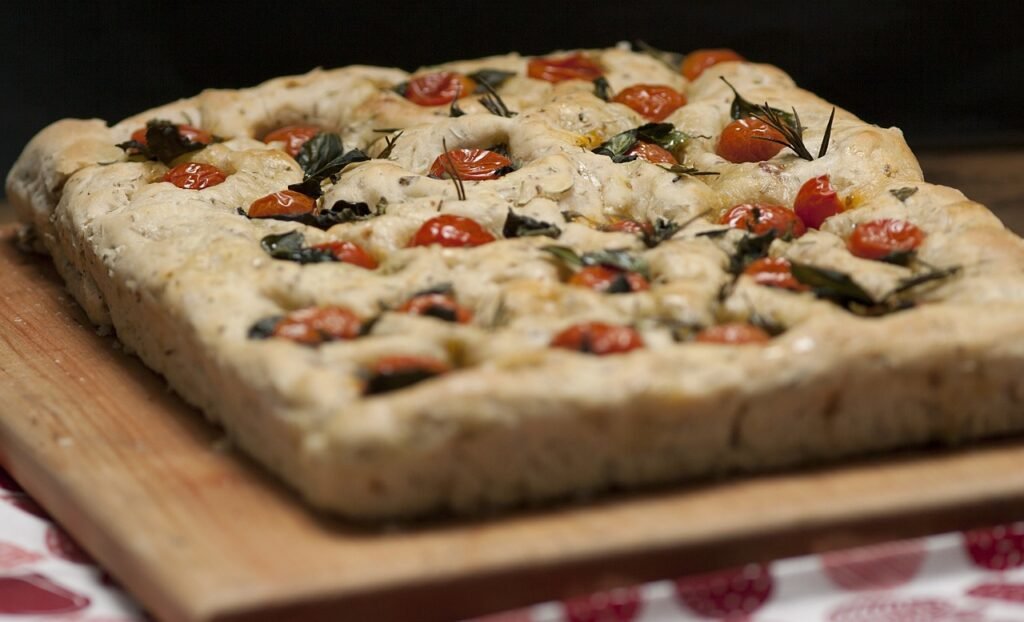
Keep toppings light, since a heavy load weighs the dough down and stops it rising. Press them gently into the dimples so they stay put. Traditional choices include rosemary, sage, garlic, olives, tomatoes, thin slices of potato and cheese. Onions sliced thin will soften and brown during baking.
A light brush of oil over the toppings keeps herbs from drying out in the hot oven. Delicate herbs such as basil scorch easily, so add them after baking. Wrapped leftover focaccia holds up best at room temperature, and only for about a day. After that, slice it for sandwiches, toast it, or cube it for croutons.
Frequently asked questions
Why is my focaccia dense instead of airy?
The most common causes are not letting the dough rise fully, adding too much flour so the dough is stiff, or pressing out the air after the second rise. Measure flour by weight, keep the dough soft, and let it get properly puffy before you dimple and bake.
Can I make focaccia dough the night before?
Many bakers let focaccia dough rise slowly in the refrigerator overnight for extra flavor. Cover it well, then let it warm up and puff at room temperature after shaping before baking. Rising times will be longer than a same day recipe, so judge by how the dough looks.
What pan is best for focaccia?
A rimmed baking sheet, a metal cake pan or a cast iron skillet all work. Metal browns the bottom better than glass. Whatever you use, oil it generously so the dough fries slightly as it bakes, which gives focaccia its crisp base.
What do you eat with focaccia?
Focaccia pairs well with soup, salad or pasta, and with a board of cheese, olives and cured meats. King Arthur Baking suggests serving it with warm marinara sauce for dipping, and olive oil works as a dip too. Split thicker squares crosswise to make sandwiches from leftovers.
Is focaccia vegan?
Basic focaccia usually is. The dough is typically flour, water, yeast, salt and olive oil, sometimes with a little sugar, as in King Arthur Baking's recipe. Some versions add milk, butter, eggs or honey, and toppings such as cheese or cured meats are not vegan, so check the recipe or ask at the bakery.
How do you reheat focaccia?
Reheat it uncovered in a 350°F oven so the crust crisps again. King Arthur Baking's method for refreshing a loaf is to sprinkle it with water and warm it for about 15 minutes, so check a thinner slab sooner. Single squares can go in a toaster oven instead.