
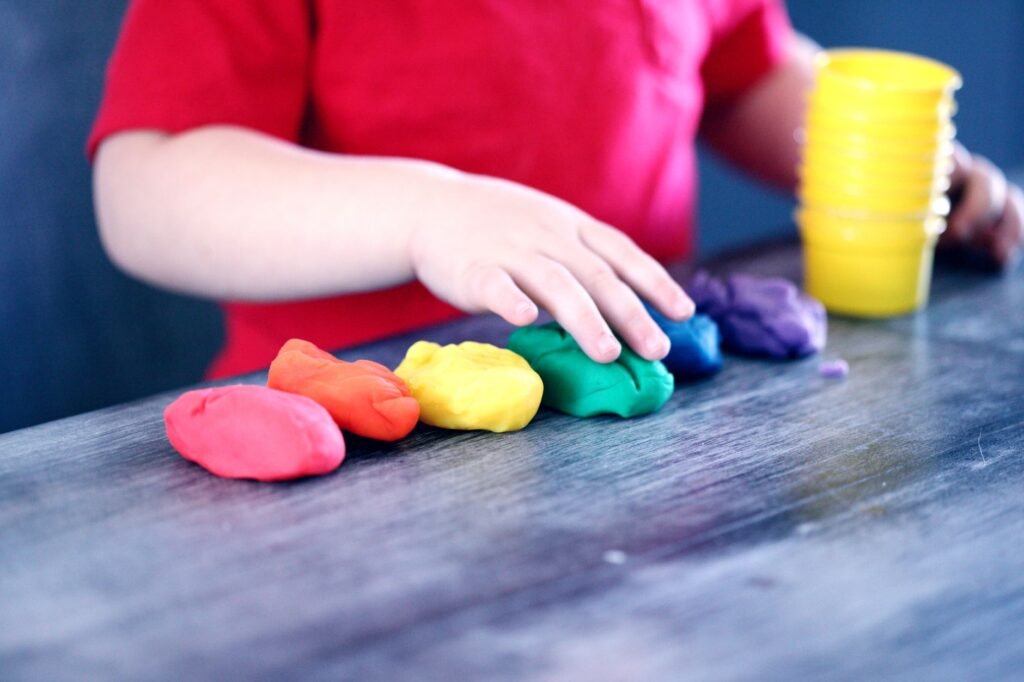
Cook 2 cups flour, 1/2 cup salt, 4 teaspoons cream of tartar, 2 cups lukewarm water and 2 tablespoons vegetable oil in a pot over medium heat, stirring until it forms a ball. Let it cool, knead until smooth, and keep it sealed in an airtight bag between play sessions so it stays soft.
The cooked playdough recipe, ingredient by ingredient
This version comes from Ohio State University’s food safety team and makes enough for four to six children. Each ingredient has a job.
| Ingredient | Amount | What it does |
|---|---|---|
| All purpose flour | 2 cups | Forms the body of the dough |
| Salt | 1/2 cup | Adds firmness and discourages mold |
| Cream of tartar | 4 teaspoons | Makes the dough stretchy and smooth |
| Lukewarm water | 2 cups | Hydrates the flour |
| Vegetable oil | 2 tablespoons | Keeps it soft and less sticky |
| Food coloring | A few drops, optional | Color, added with the water |
Cream of tartar is sold in the spice aisle. It is slightly acidic, which changes how the flour proteins behave, and it helps the finished dough feel silky rather than grainy.
Cooking the dough without scorching it
- Whisk the flour, salt and cream of tartar together in a large pot before it goes on the heat.
- Add the water, oil and food coloring, and stir until mostly smooth. Lumps will cook out.
- Set the pot over medium heat and stir constantly with a sturdy spoon or spatula.
- Keep going as the mixture thickens. It will look like lumpy paste, then suddenly pull away from the sides into a single ball.
- Turn the ball out onto a clean counter or cutting board and give the dough time to cool enough that it is comfortable to touch.
- Knead the warm dough for a minute or two, stopping once it is smooth and even in color.
An adult should handle the cooking and the first kneading, since the dough holds heat. To make several colors from one batch, cook it uncolored, then knead a few drops of coloring into each portion, wearing gloves if you want to avoid stained hands.
A no cook version, and a note on raw flour
If you would rather skip the stove, the University of Alaska Fairbanks Cooperative Extension publishes an uncooked recipe using 3 cups flour, 1/4 cup salt, 1 tablespoon oil and 1 cup water. Mix the flour and salt, then add the water and oil gradually, adjusting with a little more flour or water until it feels right. It is firmer and less stretchy than the cooked kind.
Uncooked dough leaves the flour raw. Ohio State points out that flour can carry harmful bacteria, which is one reason the cooked recipe is a good default for young kids who may put their hands in their mouths. Everyone should wash their hands before and after playing.
Fixing sticky, dry or crumbly playdough
Sticky dough usually needs more cooking time or a little more flour. Work extra flour into the dough one spoonful per round, stopping once the dough no longer clings to your hands. If the whole batch is wet, return it to the pot over low heat and stir for another minute or two.
Dry or crumbly dough has lost moisture, often from being left out. Knead in a few drops of water or oil and work it for several minutes. If it has hardened all the way through, start a fresh batch.
Keep playdough in a tightly sealed container, or in a zip top bag squeezed flat so no air is trapped inside. Oil and cream of tartar both help it last, but it will not keep forever. Throw it out if it smells sour or shows any fuzzy spots.
Keeping homemade dough away from dogs
Homemade playdough contains a lot of salt, which can be dangerous for dogs that eat it. Store it out of reach of pets, clean crumbs off the floor after play, and call your veterinarian right away if a dog eats some.
The same salt means the dough is not a snack for kids either. If a child swallows a large amount, call Poison Control or your pediatrician for advice right away, and do not hold off until symptoms show up.
Frequently asked questions
Can you make playdough without cream of tartar?
Yes. The no cook recipe from University of Alaska Fairbanks Extension leaves it out entirely. Without cream of tartar the dough is usually a bit less stretchy and may not stay soft as long, so store it well sealed and knead in a few drops of oil if it starts to dry.
How long does homemade playdough last?
It depends on how it is stored and how often it is handled. Kept sealed in an airtight bag or container, cooked playdough lasts far longer than dough left out on the table. Discard it once it turns sour smelling, grows fuzzy spots, or gets grimy from heavy use.
Is homemade playdough safe for toddlers?
The ingredients are common kitchen staples, but the dough is not food. Cooking it avoids raw flour, and the high salt content means it should not be eaten. Supervise young toddlers, wash hands before and after play, and ask your pediatrician if a child eats a large amount.
How do you get playdough out of carpet?
Scrape up what you can with a rounded spoon, then break up dried bits and vacuum them. For what remains, the Carpet and Rug Institute's Spot Solver entry for Play-Doh lists a mild detergent solution, a quarter teaspoon of liquid dish soap per cup of lukewarm water, blotted in from the edges and followed by several clear water rinses.
How do you get playdough out of clothes?
Brush or scrape off as much dough as you can, then rinse the spot under cold running water. Tide's stain guide suggests a short soak in cold water with liquid detergent, then washing at the warmest temperature the care label allows. Check the spot before drying, since dryer heat can set whatever is left.