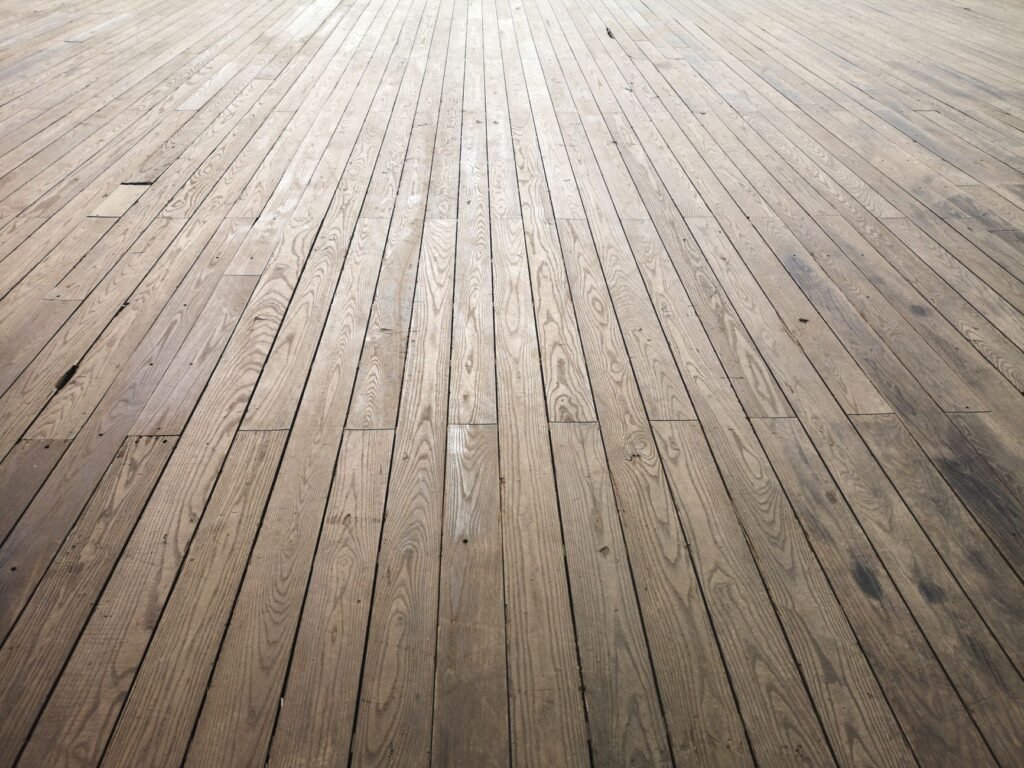
Most creaky floorboards come from wood rubbing against wood or against a loose nail, usually where the subfloor has pulled away from a joist. From a basement, glue a shim into the gap or screw up into the subfloor. From above, drive a screw through the board into a joist, or work powder into gaps between hardwood boards.
Finding the exact board that creaks
Creaks travel, so the spot where you hear the noise is not always the spot that moves. Pinning it down first saves you from drilling holes in the wrong place.
Walk the area slowly and shift your weight from foot to foot. When you find the loudest point, mark it with a piece of painter’s tape. If the room sits over an unfinished basement or crawl space, have one person rock on the marked spot while another watches from below. Look for a subfloor panel that flexes, a gap above a joist, or a nail that shifts as the weight moves.
From above, you need to know where the joists are. A stud finder will usually locate them through hardwood or carpet. In most houses, joists run perpendicular to the direction of hardwood boards, though older homes and renovations do not always follow that rule, so confirm with the finder or from below.
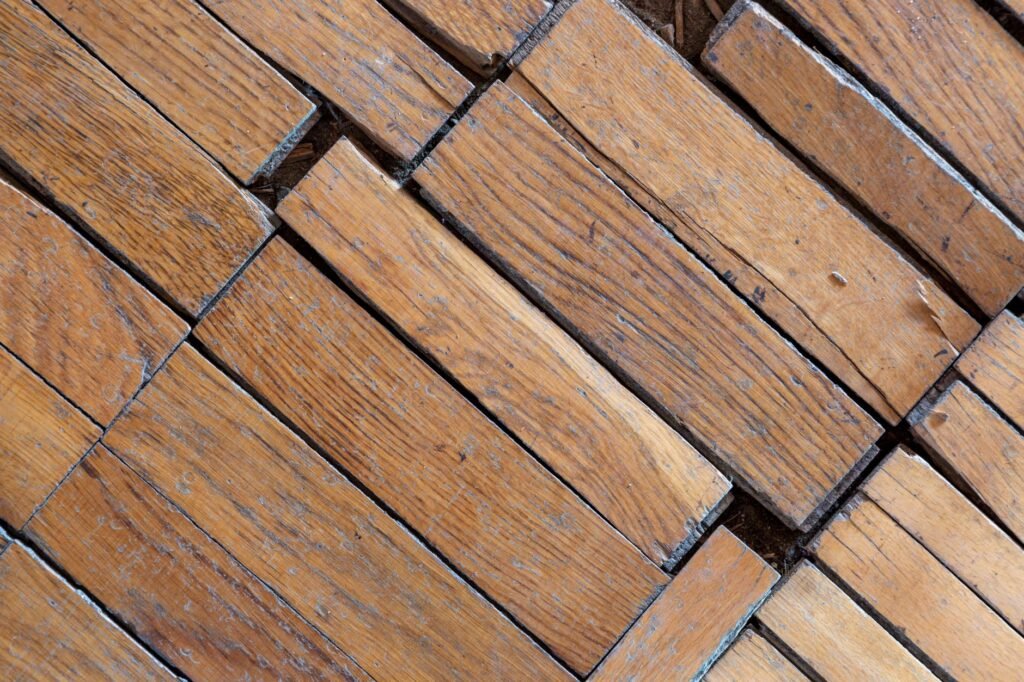
Shims and screws from the basement side
When you can reach the underside of the floor, you can fix the squeak without touching the finished surface. The most common culprit is a small gap between the top of a joist and the subfloor. Every step pushes the subfloor down onto the joist and it rubs.
- Find the gap by watching from below while someone steps on the marked spot.
- Coat a thin wooden shim with construction adhesive.
- Tap it gently into the gap with a hammer until it is snug. Do not drive it hard, since forcing it can lift the floor and create a new squeak.
- For a long gap, run a bead of construction adhesive along the joist where it meets the subfloor instead of using several shims.
- If the subfloor itself is loose, drive short wood screws up through the subfloor, choosing a length that stops well short of the finished floor’s top surface.
Measure the combined thickness of the subfloor and finished floor before picking a screw. A screw tip poking through the living room floor is a much bigger repair than the squeak you started with.
Choosing a fix by floor type
| Floor type | Access from below? | Usual fix |
|---|---|---|
| Hardwood over a basement | Yes | Shims with adhesive, or screws up through the subfloor |
| Hardwood, no access below | No | Screws or finish nails into a joist, holes filled with wood putty |
| Carpet over a wood subfloor | Sometimes | Screws through the carpet into the joist, using a kit made for carpeted floors |
| Floating laminate or engineered | Rarely helps | Often an uneven subfloor underneath, which may mean lifting boards |
| Tile | Sometimes | Work only from below, since screws through tile crack it |
Quieting hardwood from above without tearing it up
With no way to get underneath, you can still pull the floor tight to the framing. Drill a small pilot hole through the creaking board at an angle into the joist, then drive a trim head screw or finish nail so the head sits just below the surface. Fill the hole with wood putty that matches the floor. Kits sold for this job include a guide that snaps the screw off below the surface, which keeps the hole tiny.
Some creaks are board rubbing against board rather than board against joist. For those, sprinkle talcum powder or powdered graphite over the joint, work it into the gap with a soft brush, and sweep up the excess. It does not fix loose boards, but it quiets the friction between tight ones.
Creaks that come and go with the seasons
Wood swells in humid weather and shrinks when the air is dry, which is why a floor that was silent all summer can start popping once the heat comes on. Small gaps open between boards and fasteners loosen slightly.
If your creaks only show up in winter, running a humidifier may reduce them, and it is sensible to wait through a full season before deciding a fix is needed. The flooring manufacturer’s installation guide usually lists the indoor humidity range the floor was designed for.
Some floor noises point to something more serious than a squeak. A floor that bounces noticeably, sags, feels soft underfoot, or shows water stains from below may have damaged joists or rot. Those call for a contractor or structural inspection rather than more screws.
Frequently asked questions
Are creaky floorboards a sign of structural problems?
Usually not. Most creaks are harmless friction between wood parts or loose nails. Get a professional opinion if the creak comes with sagging, noticeable bounce, soft spots, cracks in walls near the floor, or signs of water damage from below, since those can point to joist or subfloor trouble.
Can you fix a creaky floor under carpet?
Yes. Special kits let you drive a screw through carpet and pad into the joist, then snap off the head below the carpet so nothing shows. Find the joist with a stud finder first. If you can reach the floor from a basement, working from below avoids disturbing the carpet at all.
Does baby powder really stop floor squeaks?
It can help when the noise comes from hardwood boards rubbing against each other. The powder works into the joint and lowers friction. It will not fix a squeak caused by a loose subfloor or a gap over a joist, and the effect can fade, so you may need to reapply.
Why is my floor squeaky?
A floor squeaks when something in it moves under your weight and rubs, most often a subfloor that has pulled away from a joist, a loose nail sliding in its hole, or boards rubbing at their edges. Wood also swells and shrinks with humidity, which can open small gaps and loosen fasteners over time.
Will a rug help a squeaky floor?
A rug with a thick pad can soften the sound, but it will not stop the squeak, because the boards or subfloor underneath still move and rub when you step. Treat the rug as a cover for comfort and fix the loose spot itself, from below with shims or screws or from above with a repair kit.