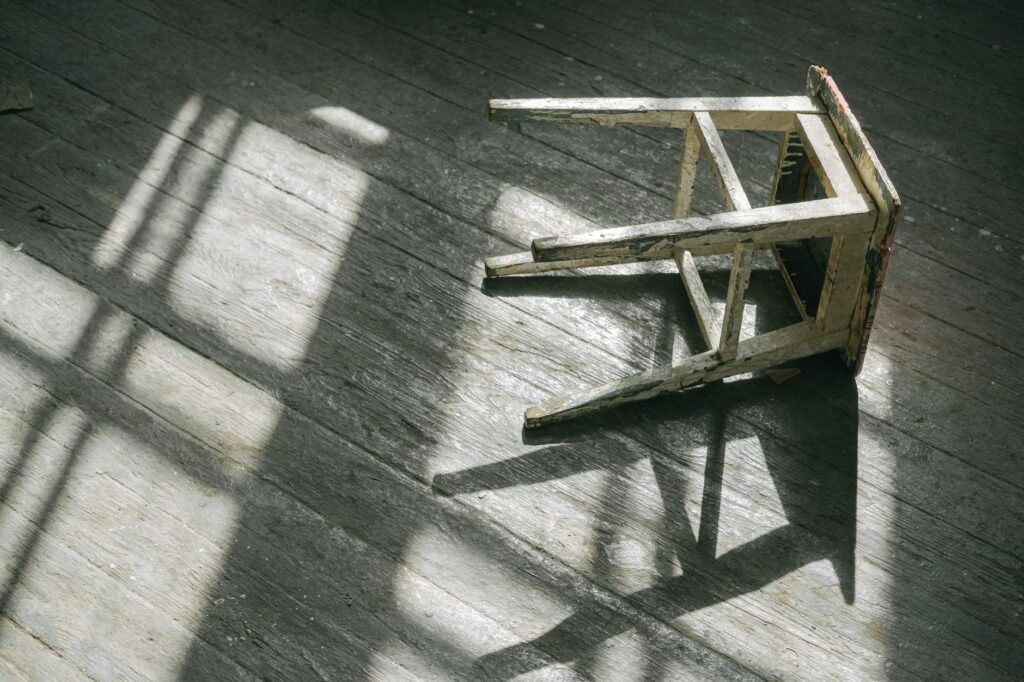
First work out whether the chair wobbles because a joint is loose or because one leg is shorter than the others, since the fixes are different. Loose joints need tightening or regluing with wood glue and a clamp. A short leg or uneven floor calls for an adjustable glide, a felt pad or a careful trim of the longer legs.
Diagnosing the wobble on a flat surface
Old floors are rarely flat, so move the chair to a surface you trust, such as a kitchen countertop, a large table or a sheet of plywood on the floor. Rock the chair gently from corner to corner.
| What you notice | Likely cause | Fix |
|---|---|---|
| Chair rocks on a flat surface but joints feel solid | One leg is short or one is long | Glide, pad or trim the legs |
| Joints flex or creak when you push the seat sideways | Loose glued joint | Take apart, clean and reglue |
| Wobble stops when you tighten hardware under the seat | Loose bolts or screws | Tighten, repair stripped holes |
| Chair sits firmly on a flat surface, wobbles at the table | Uneven floor | Adjustable glide or move the chair |
| Cracked leg or split seat rail | Broken part | Pro repair or replace |
To test joints, hold the seat and push the legs in different directions. Watch the spots where rungs and legs meet. A visible gap or a dark line of old glue opening up shows you which joint has let go.
Tightening screws, bolts and corner blocks under the seat
Flip the chair over. Many dining chairs have triangular corner blocks screwed into the seat rails, and kitchen chairs often use bolts through the legs. Tighten everything you find, snug but not so hard that the screw spins in place.
A screw that turns without biting has stripped its hole. Back the screw out, pack the hole with several wooden toothpicks or a thin sliver of wood dipped in wood glue, break them off level with the surface, and once the glue has dried, drive the screw back in. For metal bolts that keep backing out, a thread-locking compound from the hardware store helps them stay put.
Regluing a loose rung or leg joint
- Tap the loose joint apart with a rubber mallet, protecting the wood with a cloth. Don’t force joints that are still solid.
- Label each part with tape so it goes back in the same spot.
- Scrape and sand the old glue off both surfaces. Fresh wood glue bonds poorly to old dried glue.
- Test fit the joint dry. If it’s loose, a thin wood shaving or a glue made for filling gaps can take up the slack.
- Spread glue on both surfaces and reassemble.
- Pull the chair tight with a strap clamp or a loop of rope twisted tight with a stick, then check that all four legs touch a flat surface.
- Wipe away squeeze-out with a damp cloth and leave the chair clamped for the time printed on the glue label.
Read the label for the minimum working temperature and full cure time too, and don’t sit on the chair until the glue has fully cured.
Leveling a chair with one short leg
If the joints are solid and the chair still rocks on a flat surface, one leg is out of line. The gentlest fix is to add something under the short leg, such as a stick-on felt pad, a nail-on glide or an adjustable threaded glide that lets you dial in the height.
Trimming works when the difference is bigger. Set the chair on your flat surface, slide a thin shim under the short leg until it stops rocking, then mark the other three legs by resting a pencil on a block the thickness of the shim. Cut or sand each leg down to its line in small passes, setting the chair back on the flat surface often to check.
Metal, plastic and folding chairs
Metal chairs usually wobble because a bolt or rivet has loosened. Tighten bolts and replace missing hardware with matching sizes. A crack in a welded joint is a job for a welder, or a sign to retire the chair. Molded plastic chairs that flex or show stress cracks at the legs shouldn’t be patched for sitting, since a crack can give way without warning. Folding chairs that no longer lock fully open aren’t safe to use until the mechanism is repaired.
Frequently asked questions
Can you fix a wobbly chair without taking it apart?
Sometimes. Tightening hardware and adding a glide fixes many wobbles without disassembly. Injecting glue into a loose joint through a small drilled hole can help a slightly loose joint, but a joint coated in old glue rarely holds long unless you take it apart, clean it and reglue.
What kind of glue is best for chair joints?
A wood glue made for furniture and interior woodworking is the usual choice for chair joints. Read the label for clamp time, minimum temperature and whether it fills gaps. Avoid general household glues that stay brittle, and skip construction adhesive, which makes future repairs much harder.
Why does my chair only wobble on one floor?
If the chair sits solidly on a flat surface, the floor is uneven rather than the chair. Tile edges, old wood boards and sloped slabs are common reasons. Adjustable glides let you correct for one spot, or you can nudge the chair until all four legs land firmly.
How do you fix a wobbly office chair?
Flip the chair over and tighten every bolt holding the seat mechanism to the seat, then the screws on the backrest and armrests, using the hex key that fits them. If the wobble comes from a loose or damaged base or gas cylinder instead, contact the maker for replacement parts rather than forcing a fix.
How do you fix a wobbly upholstered chair?
Turn it over and, if there is a fabric dust cover stapled under the seat, remove it to reach the frame. Tighten the corner block screws and any bolts, and reglue loose joints the same way as on a wooden chair. Staple the cover back in place once the glue has cured and the chair sits firmly.