
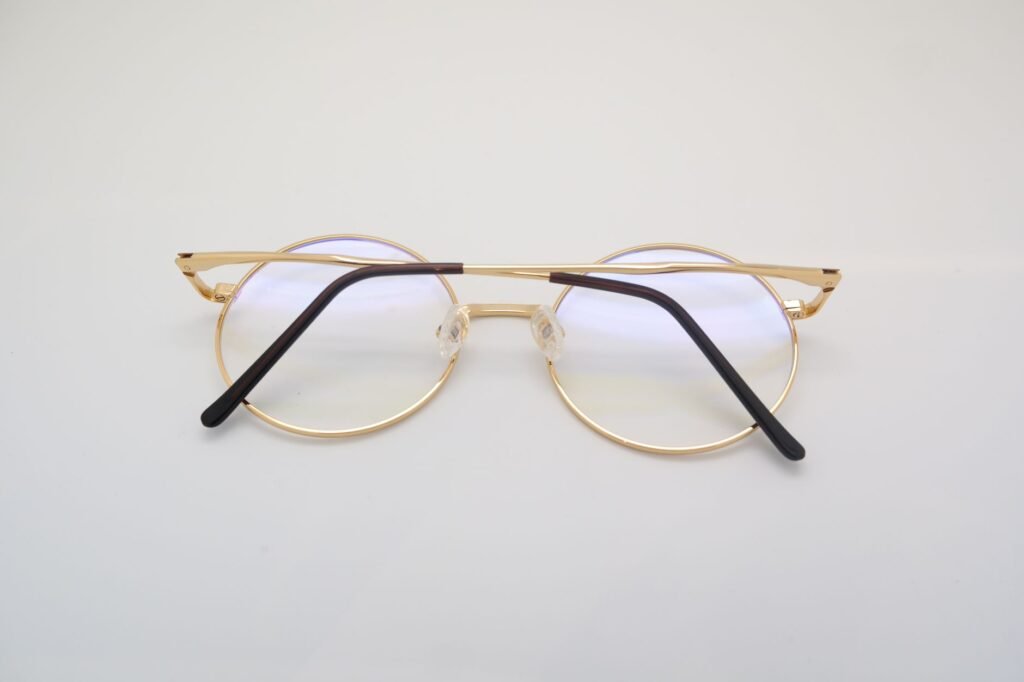
Most loose glasses can be fixed at home by tightening the tiny hinge screws with a precision screwdriver, squeezing metal nose pads slightly closer, or giving metal temple tips a gentle inward bend. Plastic frames, rimless styles and stripped screws are safer to hand to an optician, who has the right tools and can reshape frames without cracking them.
Figure out where the looseness comes from
Put the glasses on and pay attention to how they move. Frames that slip usually fail at one of three spots, each with its own fix.
| What you notice | Likely cause | First fix to try |
|---|---|---|
| Arm flops or wobbles at the hinge | Hinge screw has backed out | Tighten the screw |
| Glasses slide down your nose | Nose pads too wide, or temples too loose | Adjust nose pads, then the temple tips |
| Frame sits crooked on your face | One temple bent more than the other | Compare both arms on a flat table |
| Lens moves or pops out | Rim screw loose, or rim stretched | Tighten the rim screw, or see an optician |
A quick table test helps. Set the glasses upside down on a flat surface. Both temple tips should touch the table. If one floats, that arm is bent and the frame will tilt.
Tightening hinge screws with a precision screwdriver
- Work over a towel on a table so a dropped screw doesn’t vanish.
- Pick the screwdriver from an eyeglass repair kit that fits the slot snugly. A bit that is too small will strip the head.
- Open the arm fully and hold the hinge steady between your finger and thumb.
- Turn the screw clockwise until it is snug, then stop. Overtightening can strip it or make the arm too stiff to fold.
- Fold and unfold the arm a few times. It should move smoothly and stay where you put it.
- If a screw is missing, replacement screws in eyeglass repair kits come in several sizes. Match the size to the one on the other hinge.
Screws that keep backing out after every tightening are a sign of wear. An optician can replace the screw or fix a worn hinge.
Glasses sliding down your nose
On metal frames with adjustable nose pads, the pads sit on small wire arms. Gently pinch both pad arms toward each other a tiny amount so the pads grip higher on your nose. Move them in small steps and try the glasses on after each one, keeping both sides even.
Plastic frames usually have fixed nose bridges, which can’t be bent at home. Stick-on silicone nose pads or slip-on ear grips from a drugstore can add friction without changing the frame.
Old nose pads also lose their grip. If yours look yellowed, cracked or hard, replacement pads are made to click or screw onto the pad arms. An optician can match the right style in a few minutes, and fresh pads often stop the sliding on their own.
Bending temple arms on metal versus plastic frames
If the arms are too loose behind your ears, the curved tips need to wrap a little more. On metal frames, hold the arm just in front of the curve and bend the tip inward a very small amount with your fingers, then check the fit. Do both sides the same way.
Plastic and acetate frames are a different story. Opticians warm them with special heaters before bending, and forcing a cold plastic arm can crack it or snap the hinge. Hot water or a hair dryer at home is risky, because too much heat can warp a frame or harm lens coatings. Take plastic frames to a shop for this kind of adjustment.
When a shop visit makes more sense
Head to an optician if a screw is stripped, a spring hinge has lost its tension, a rimless lens is loose, or anything is cracked. Rimless and semi-rimless glasses are held together by screws or thin cords through the lens, and a wrong move can chip the lens.
Start with the store that sold you the glasses, since many shops will adjust frames they supplied. Ask about their adjustment policy and check your warranty paperwork before paying anyone else. If your prescription glasses keep sliding because your vision seems off, book an eye exam as well.
Frequently asked questions
What size screwdriver do I need for glasses?
Eyeglass screws are very small and use tiny flat or Phillips heads, so a standard household screwdriver will not fit. Buy an eyeglass repair kit or a precision screwdriver set from a drugstore or hardware store, and choose the tip that fills the screw slot fully without forcing it.
Can I use superglue on a loose glasses screw?
Avoid it. Glue can seep into the hinge and freeze it, and it can fog or damage lenses and plastic frames. It also makes later repairs harder, because the screw may not come out. If a screw keeps loosening, have an optician replace it or check the hinge.
How do I tighten glasses that are loose behind the ears?
For metal frames, bend the curved temple tips slightly inward with your fingers, a little at a time, keeping both sides equal. For plastic frames, visit an optician, who warms the arms before bending them. Silicone ear grips offer a temporary fix without changing the frame.
How do you tighten glasses without a screwdriver?
For loose hinge screws, you need a tool that fits the slot, since improvised tools rarely fit the tiny screw and can strip its head. Without one, you can still improve the fit by hand on metal frames, pinching the nose pads slightly closer or bending the temple tips inward. An optician can tighten the screws for you.
Do glasses get loose over time?
Yes. Hinge screws can gradually back out with daily use, and loose or missing screws are among the most common reasons glasses need repair. Habits change the fit too. Taking glasses off with one hand can knock an arm out of place, and resting them on top of your head can alter the fit over time.