
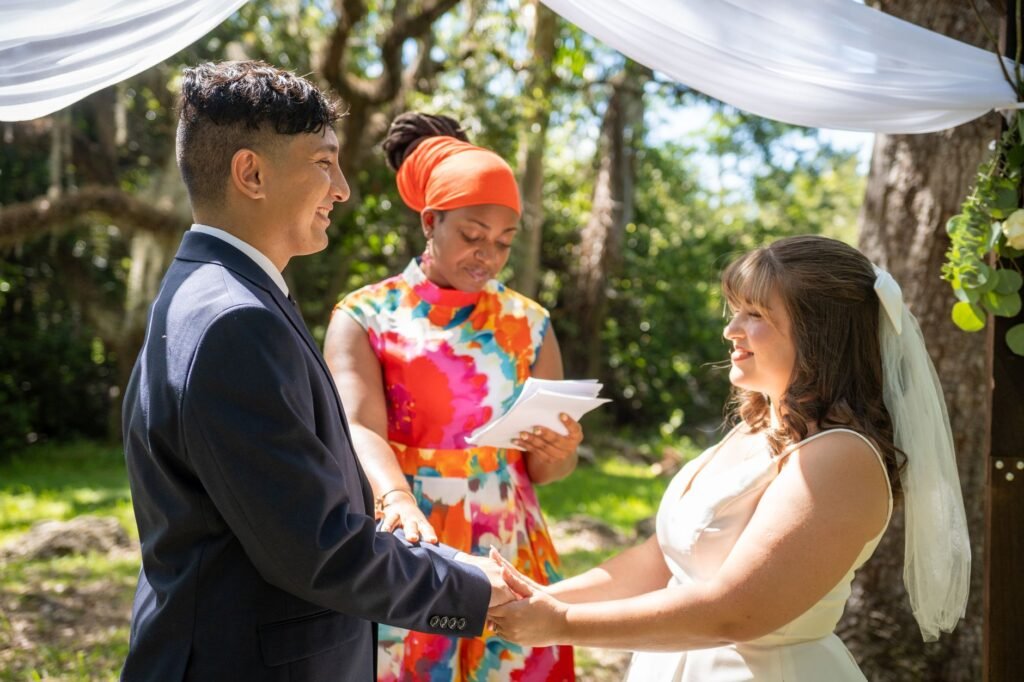
To officiate a wedding, first confirm what the county where the ceremony takes place requires of officiants, get ordained or registered if needed, then lead the ceremony and sign and return the marriage license on time. The rules come from state and county law, so the county clerk’s office is the source to trust.
Start with the rules where the wedding happens
Who may solemnize a marriage is set by state law and administered at the county level, and the requirements can be very different from one place to the next. The rules that apply are the ones for the location of the ceremony, not where you or the couple live.
Call or visit the website of the county clerk, or the office that issues marriage licenses, for the county where the wedding will take place. Ask these questions.
- Who is allowed to officiate, and does online ordination qualify?
- Do officiants have to register with the county or state before the wedding, and what paperwork do they need to show?
- Does the ceremony need witnesses, and how many?
- Is any particular wording legally required during the ceremony?
- Who returns the signed license, where, and by what deadline?
Write the answers down and keep them with your ceremony notes. If anything is unclear, ask the clerk to point you to the written rule, and confirm again closer to the date.

Getting ordained online, and checking it counts
Many friends and relatives who officiate become ministers through an online religious organization. The process usually means filling in a short form with your name and details. Some organizations also offer printed credentials or a letter of good standing, and certain counties ask to see documents like these.
Acceptance is the part you have to verify. Some jurisdictions accept online ordination as it is, while others add requirements such as registration or extra documents. Ask the clerk directly whether they accept ordination from the organization you plan to use, and what documents to bring. For a religious ceremony, the couple’s congregation may have its own rules as well.
The marriage license is what makes it legal
The ceremony is the celebration, but the license is the legal record. The couple applies for it before the wedding. A license can come with a waiting period before it can be used and a date after which it expires, so they should ask about both when they apply.
On the day, make sure the license is physically at the venue. After the ceremony, you, the couple and any required witnesses sign it, and you fill in your details exactly as the county instructs, usually in the ink color it specifies. Then it has to be returned to the issuing office by the deadline. If that job falls to you, don’t let it sit in a bag after the reception.
Writing a ceremony script the couple will love
Meet the couple early to decide on tone, length and whether they want religious elements. A typical ceremony follows this order.
| Part | What happens |
|---|---|
| Processional | Wedding party and couple enter |
| Welcome | You greet guests and set the tone |
| The couple’s story | A short, personal piece about how they got here |
| Readings | Optional poems or passages read by friends |
| Declaration of intent | You ask each person if they freely choose to marry |
| Vows and rings | Personal or traditional promises, then the ring exchange |
| Pronouncement | You declare them married |
| Kiss and recessional | The couple exits together |
Keep your own parts brief. Guests came to see the couple, and most loved ceremonies stay short.
Leading the ceremony on the day
Attend the rehearsal and practice where everyone stands and when you speak. Print your script in large type and put it in a simple binder, and speak more slowly than feels natural. Tell guests when to sit and stand. Step aside for the kiss so photographers get a clear shot. Afterward, finish the paperwork before you join the party.
Pack a small kit the night before with your printed script, a pen in the ink color the county asks for, any credentials the clerk said to carry, and a bottle of water. Confirm who is holding the rings and the license, so nothing goes missing in the rush before the processional.
Frequently asked questions
Can anyone officiate a wedding?
Not automatically. Each state decides who can legally solemnize a marriage, and requirements such as ordination or registration vary. A friend can often qualify by getting ordained, but you need to confirm with the county clerk where the ceremony happens that your credentials are accepted there before you agree to officiate.
How long should a wedding ceremony be?
Length is mostly up to the couple, as long as any legally required parts are included, which the county clerk can confirm. Many couples prefer a short ceremony that keeps guests comfortable. Agree on a target length early, then read your script aloud with a timer and trim it to fit.
What happens if the marriage license is returned late?
Consequences depend on the county and state. A late or incorrect license can delay the official record, and in some places it may cause bigger problems for the couple. Contact the county clerk that issued the license right away if you miss the deadline and follow their instructions exactly.
Can you officiate your own wedding?
In some places, yes. Colorado lets couples solemnize their own marriage, which Boulder County lists as self-solemnization, and Washington, D.C., accepts self-officiated ceremonies in which one partner performs the ceremony. Rules elsewhere differ, so confirm with the county clerk where the wedding happens before you plan on it.
What is a wedding officiant?
A wedding officiant is the person who leads the ceremony and legally solemnizes the marriage. Depending on local law, that can be a religious leader, a judge or other public official, or a friend who has been ordained or registered. The officiant also signs the marriage license and often returns it to the issuing office.