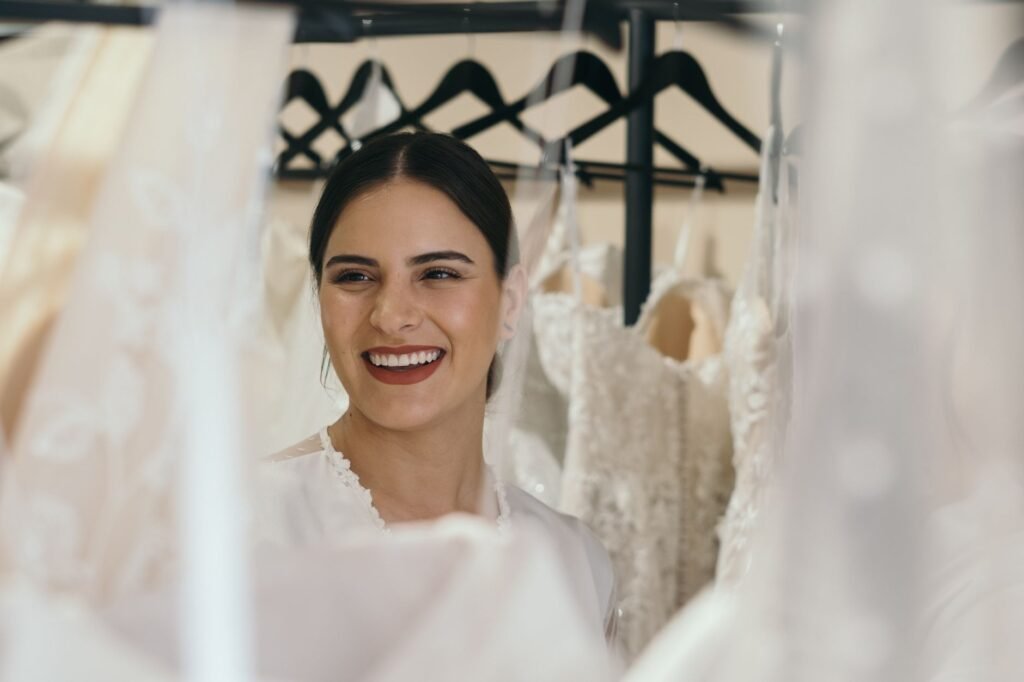
Decide the venue and season first, set a total budget that includes alterations and accessories, then shop for silhouette before you shop for detail. The gowns that get regretted are almost always the ones chosen for a photograph rather than for the room they had to work in.
Settle the constraints before you book anything
Four facts narrow the field faster than any amount of browsing.
- Venue and floor. Grass, sand, and cobblestones eat long trains and delicate hems. A cathedral train in a garden ceremony gets carried more than it gets worn.
- Season and whether you will be outdoors. Heavy satin in August outdoors is genuinely uncomfortable. Chiffon and organza breathe. Long sleeves in a cold church are a feature, not a compromise.
- Total budget, not gown budget. Alterations, undergarments, veil, and shoes are separate line items and they add up. Ask each shop what alterations typically run there, since it varies widely by region and by gown complexity.
- How you want to move. If you plan to dance all night, mermaid hems restrict stride unless there is a godet or a bustle plan.
Learn the silhouettes, ignore the marketing names
| Silhouette | How it sits | Worth knowing |
|---|---|---|
| A-line | Fitted top, gradual flare | The most forgiving, easy to move in |
| Ball gown | Fitted bodice, full skirt | Dramatic, heavy, needs ceiling height in photos |
| Sheath or column | Follows the body straight down | Light and easy to travel with |
| Mermaid | Fitted to below the knee, then flares | Restricts stride, check stairs and dancing |
| Empire | Seam under the bust, loose below | Comfortable, good for warm venues |
Shops often invent their own names for these. Ask where the waist seam sits and where the flare begins, and you will know which category you are actually looking at.
How to use an appointment properly
- Bring the shoes and undergarments you expect to wear, or the closest match in heel height. Hem length judgments are meaningless without them.
- Bring one or two people, maximum. Every extra opinion lowers your confidence in your own reaction.
- Tell the consultant your all in budget on arrival and ask them not to pull above it. Trying a gown you cannot buy poisons everything after it.
- Photograph and video every gown from the front, side, and back, and walk and sit in each one. Sitting is where uncomfortable boning reveals itself.
- Stop at around eight gowns. Judgment degrades after that. Book a second appointment instead.
- Ask what size the sample is and what would need to change. Clips at the back can make anything look fitted, which is exactly why it is misleading.
Questions to ask before you sign
Get the production time in writing, along with the date the gown is expected in store. Ask what happens if it arrives late, and whether rush fees apply. Ask whether alterations happen in house or elsewhere, and get an estimate range before you commit.
Ask about the deposit and whether it is refundable, because for made to order gowns it usually is not. Check the return and exchange policy for sample sales specifically, since those are often final. Prices, timelines, and policies differ by shop and change over time, so confirm each one directly rather than relying on what a forum said last year.