

Cover graphic by KnackDaily.
Rinse both lenses under lukewarm running water, add one drop of plain dish soap to each side, rub gently with your fingertips, rinse again, then dry with a clean microfiber cloth. The rinse is the part that matters, because it floats off the grit that would otherwise be dragged across the coating.
What is actually sitting on the front of your lenses
Modern lenses are plastic, usually polycarbonate or a similar resin, with a stack of extremely thin layers deposited on top. An anti reflective coating is several metal oxide layers, each a fraction of a wavelength thick, often with a scratch resistant layer beneath and an oil repelling layer above. Everything you like about a good lens, the absence of glare and the way water beads and runs off, comes from layers thinner than the wall of a soap bubble.
Two things break that stack. Solvents strip the outer oil repelling layer first, which is why lenses cleaned with alcohol or household glass spray start smearing and never come fully clean again. Heat is the other one, because the plastic underneath expands more than the mineral coating does, and the mismatch cracks the coating into a fine web that looks like frost in bright light. Hot tap water, a car dashboard in summer and a dishwasher rack all do this.
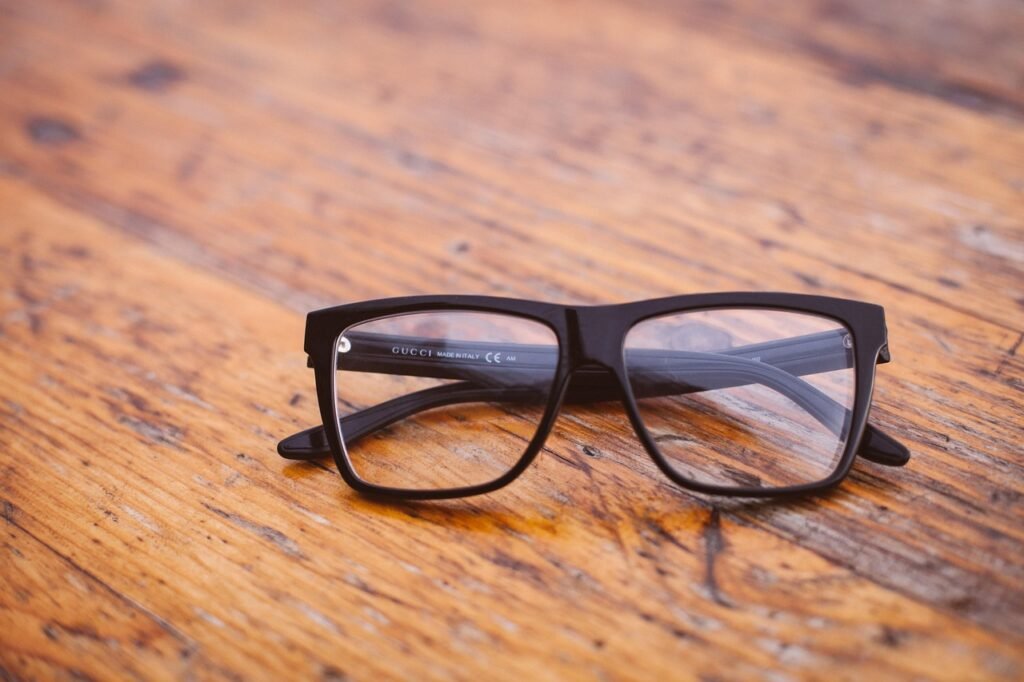
The two minute wash, step by step
- Wash your hands first, so you are not putting fresh oil back on the lenses.
- Run lukewarm water over both faces of both lenses. Lukewarm, not hot.
- Add one small drop of plain dish soap, the kind with no lotion, bleach or degreaser in it.
- Work it across both surfaces with your fingertips, then around the nose pads and the hinges where skin oil collects.
- Rinse until water sheets off evenly instead of breaking into patches.
- Blot dry with a microfiber cloth. Paper towel, tissue and shirt fabric are all stiff enough at the fiber level to leave marks.
Safe versus damaging on coated lenses
| Product | Effect on the coating |
|---|---|
| Lukewarm water with plain dish soap | Safe, and the only routine most lenses need. |
| A clean microfiber cloth | Safe on a rinsed lens. Wash the cloth regularly, because it holds grit too. |
| Wipes labeled for coated lenses | Generally safe. Check whether alcohol appears in the ingredients. |
| Household glass cleaner with ammonia | Strips the top layer and hazes the coating over time. |
| Isopropyl alcohol, acetone or nail polish remover | Dissolves the oil repelling layer and can attack the plastic itself. |
| Vinegar | Acidic enough to degrade coatings with repeated use. |
| Hot water or a dishwasher | Causes the fine cracking that shows as permanent haze. |
| Shirt hem, tissue or paper towel | Micro scratches, which accumulate and never come out. |
Dry wiping is where nearly all scratches come from
Ordinary airborne dust contains mineral particles harder than any lens coating. A dry lens holds that dust electrostatically, and a dry wipe turns each particle into a tiny cutting tool traveling in an arc across the surface. That is the origin of the faint curved scratches you see when headlights hit the lens at night. Rinsing first costs ten seconds and removes the cause entirely.
The frame parts nobody touches
Nose pads collect skin oil and makeup, and the buildup is what makes glasses slide down. A soft toothbrush with the same soapy water handles the pads, the hinges and the temple tips. Ultrasonic cleaners are excellent for metal frames, less so for rimless designs where the lenses are held by glue or tension, since the vibration works at those joints. If a frame feels loose after cleaning, an optician can tighten it in a minute rather than you bending it by hand.