

Cover graphic by KnackDaily.
Power the monitor down, wipe it dry with clean microfiber to sweep off dust, then go over it with a second cloth dampened with distilled water and dry it immediately. Two passes, two cloths, no pressure. The coating on the front of a desktop panel is far more fragile than the glass on your phone.
The matte layer is the part you can wreck
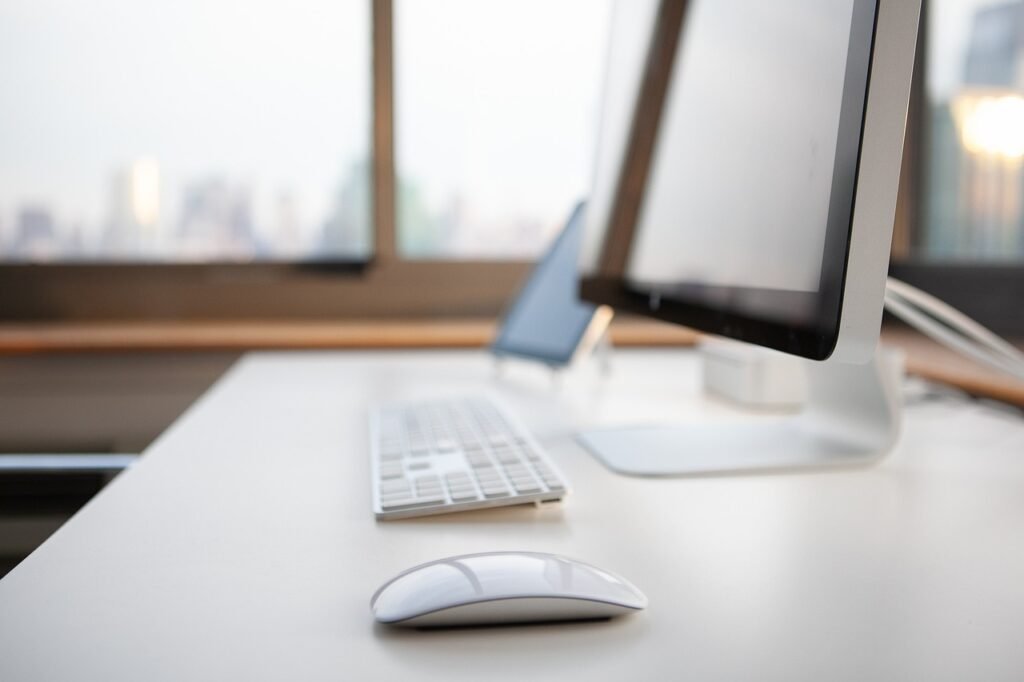
Most desktop monitors ship with an anti glare finish rather than a mirror finish. That finish is either a fine texture etched into the outer polarizer or a thin film laminated over it, and its entire purpose is to scatter reflections from windows and overhead lights so you are not staring at your own face all afternoon.
Solvents attack it. Ammonia, ethanol, acetone and the aggressive cleaners sold for kitchen counters all soften that outer layer, and when it re-hardens it does so unevenly. The result is a cloudy patch, sometimes with visible streak lines locked into it, and there is no sanding it back or reapplying it. Cloudy is permanent. Replacing the panel is the only remedy, which is a strange thing to discover after a two minute cleaning job.
The texture also changes how dust behaves. A glossy phone screen lets dust slide off. A matte surface has microscopic peaks and valleys that hold onto grit, which is why the dry pass comes first. Wiping a dusty matte panel with a wet cloth grinds those particles across the coating.
Turn it off and let it cool
A dark panel makes every smudge and fingerprint visible, so you can see what you are actually cleaning rather than guessing against a bright desktop. A warm panel flash dries moisture in streaks that then need a second round. Both problems disappear if you switch off, unplug if you like, and give it a few minutes.
Stand the monitor where you can reach the whole surface without leaning on it, and support the back of the panel with your free hand while you wipe. Modern monitors are thin, the panel flexes more than it looks like it should, and a thin panel pressed from the front is where those pale blotches come from.
The two pass method
- Dry pass. Sweep the whole panel with a clean, dry microfiber cloth using long overlapping strokes in one direction. This is the step that removes the abrasive material.
- Dampen a second cloth. Distilled water is worth the small cost, since tap water leaves mineral spots as it dries. Damp means damp, with nothing that could run down toward the bottom bezel.
- Never spray the panel. Spray the cloth, always, so liquid cannot find the seam where the panel meets the frame.
- Wipe in one direction rather than circles, which keeps any remaining film from being swirled into a pattern that catches the light.
- Dry immediately with the dry corner of the first cloth before the water can evaporate on its own.
What is safe and what leaves permanent haze
| Product | On a matte monitor |
|---|---|
| Dry microfiber | Safe, and handles most sessions on its own |
| Distilled water on microfiber | Safe, removes fingerprints and cooking film |
| Screen cleaner labeled alcohol free and ammonia free | Safe for stubborn marks |
| Window cleaner with ammonia | Clouds the coating permanently |
| Isopropyl alcohol or sanitizer gel | Softens and streaks the anti glare layer |
| Paper towel, tissue or a shirt sleeve | Wood fiber and polyester scratch the texture |
| Any pressure with a fingertip | Leaves pale pressure marks in the display |
The frame, the vents and the stand
Once the panel is done, the rest of the monitor can take a firmer approach. The plastic bezel and the stand tolerate a cloth dampened with a little dish soap, which is useful because that is where dust cements itself with skin oil. Keep the cloth away from the panel edge while you do it.
Blow or brush the vents along the top and back, since a monitor that cannot shed heat runs hotter than it should. A soft paintbrush moves dust out of the vent slots without pushing it further in, and it is gentler than canned air fired at close range.