
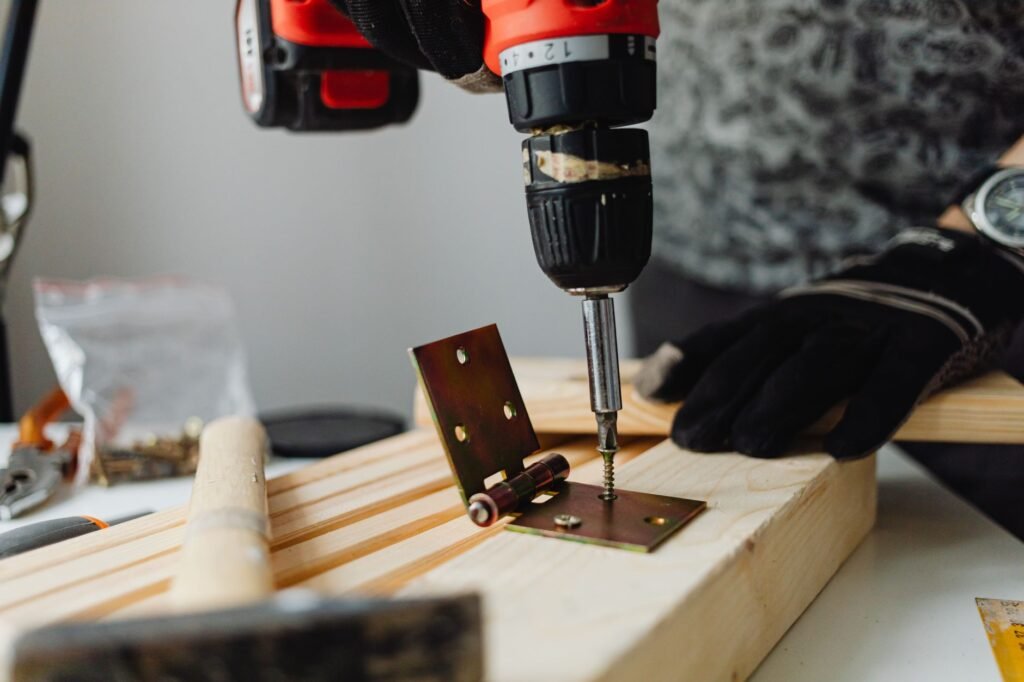
Most sagging doors are fixed by tightening the top hinge, often by replacing one of its jamb screws with a 2 1/2 or 3 inch wood screw that bites into the wall framing. If that isn’t enough, repair stripped screw holes, shim a hinge or move the strike plate before you ever plane the door.
Finding where the sagging door rubs
A door sags when its latch side drops, usually because the top hinge has worked loose. Close the door and study the gap around it. A sagging door typically shows a wide gap along the top near the hinges and a tight gap, or rubbing, along the top corner on the latch side. Scuffed paint on the frame tells you exactly where it hits.
Next, open the door partway, grab the handle and gently lift. If the door shifts at the hinges, loose screws are part of the problem. Watch each hinge while you lift to see which one moves.
| What you see | Most likely cause | First fix to try |
|---|---|---|
| Top latch corner rubs, gap at top hinge side | Loose top hinge | Tighten or lengthen top hinge screws |
| Screws spin without tightening | Stripped screw holes | Glue and toothpicks or a dowel |
| Latch misses the strike plate | Slight sag or shifted frame | Adjust or file the strike plate |
| Gaps change with the seasons | Wood swelling in humid weather | Wait for dry weather before trimming anything |

Pulling the top hinge tight with a longer screw
Hinge screws that come with a door are often short enough that they only grip the thin jamb. A longer screw reaches through the jamb into the stud behind it and pulls the whole hinge back toward the frame.
- Tighten every existing screw on all hinges while a helper lifts the latch side slightly to take the weight off.
- On the top hinge, remove one screw from the leaf attached to the jamb, not the door.
- Drill a pilot hole through the jamb, keeping the drill aimed square to the hinge.
- Drive a 2 1/2 or 3 inch wood screw with a head that matches the countersink in the hinge.
- Tighten slowly and check the gap as you go, because the screw will change the reveal around the door.
Repairing stripped hinge screw holes
When a screw turns and turns without snugging up, the wood around it has crumbled. For mild cases, coat a few wooden toothpicks or a thin skewer with wood glue, push them into the hole and snap them off flush. Let the glue set, then drive the screw back in.
Badly chewed holes need more. Drill the hole out, glue in a short hardwood dowel, trim it flush with a utility knife, then drill a fresh pilot hole. This gives the screw solid wood to grab again.
Shimming a hinge to shift the door
A thin shim behind a hinge leaf moves that edge of the door away from the jamb. Placed behind the bottom hinge, it pushes the lower part of the door toward the latch side, which tilts the top latch corner back up and away from the frame. Loosen the hinge leaf on the jamb, slide in a piece of thin cardboard or a commercial hinge shim, and retighten. Go one layer at a time and test the swing after each change.
Strike plate fixes and signs the frame has moved
If the door hangs well but the latch still misses, adjust the strike plate instead of the door. Mark where the latch actually hits, then file the opening a little larger or move the plate, filling the old screw holes as described above.
Sticking that comes and goes with humid weather may be swelling wood rather than sag, so wait for a dry spell before trimming. Planing the door is a last resort; seal any bare edge you cut afterward. Doors across a house that all start binding at once, along with new wall cracks, can point to settling, and a contractor or structural professional should look at that. A squeaky hinge is a different fix, covered in our guide on silencing a squeaky door.
Frequently asked questions
Can a sagging door fix itself?
Not usually. Hinge screws that have loosened tend to keep working looser as the door swings, and the sag grows. Seasonal swelling can make sticking come and go, but real sag stays. Tightening the hinges early is quick and keeps the jamb and hinge holes from wearing out.
Do I need to take the door off to fix the sag?
Most fixes, including longer screws, toothpick repairs and small shims, can be done with the door hanging if someone supports its weight. You'll need to remove it for major hole repairs with dowels, for rehanging, or if you end up planing an edge.
Why does my exterior door sag more than interior doors?
Exterior doors are usually solid and heavier, so they put more strain on the top hinge. They also deal with bigger swings in temperature and humidity. Longer hinge screws help most on these doors, and some people add a heavier-duty hinge at the top position.
How do you adjust door hinges?
You adjust them by changing how the hinge leaves sit. Tightening loose screws, or driving a 3 inch screw through the top hinge into the wall framing, pulls the door toward the jamb. A thin shim behind a leaf pushes that edge away, and bending the knuckles slightly with a wrench fine tunes the gap. Test after each change.