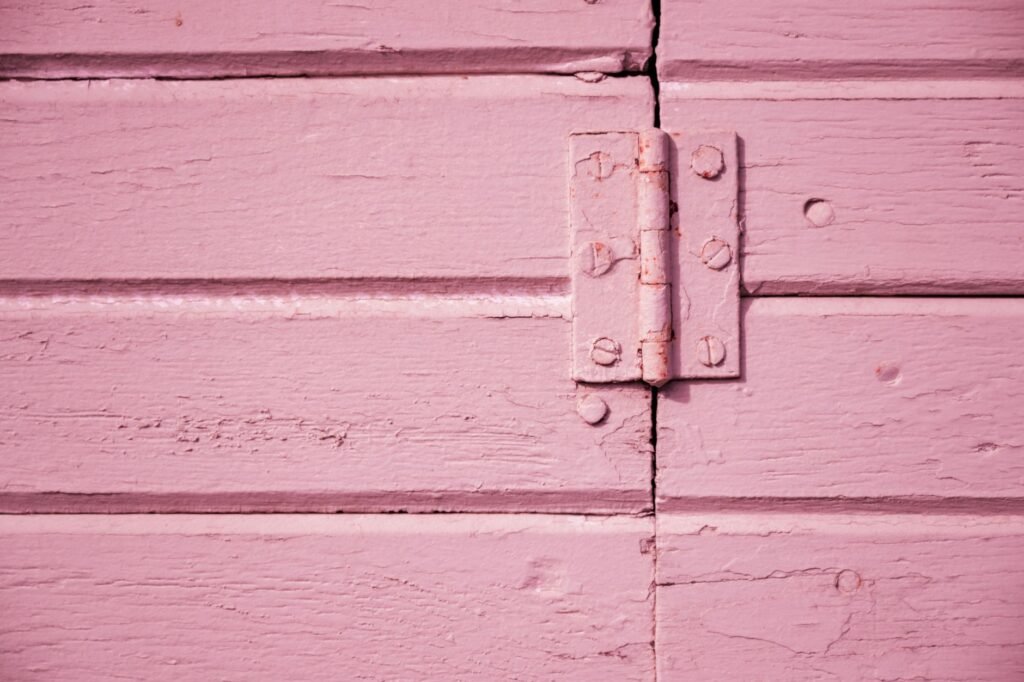
To fix a squeaky door, find the noisy hinge, tap its pin out from below, wipe away old grime and rust, coat the pin with a lubricant such as white lithium grease or silicone spray, and slide it back in. Swing the door a dozen times to spread the lubricant through the hinge.
Finding which hinge is making the squeak
Most doors have two or three hinges, and usually only one is noisy. Open and close the door slowly while you listen near each hinge in turn. Resting a fingertip on the hinge barrel helps, since you can often feel the vibration of a squeak before you can pin down the sound.
Watch the gaps around the door too. If the door drags on the frame or the floor, the noise may be wood rubbing rather than metal, and grease on the hinges will not stop it.
Pulling the hinge pin and greasing it
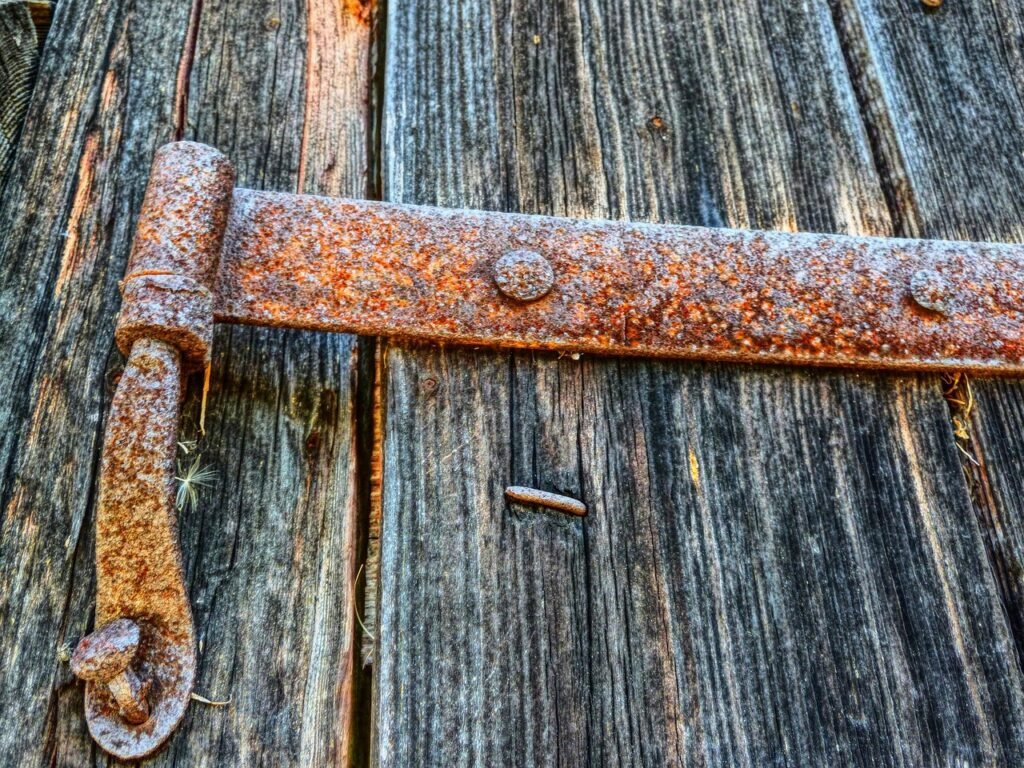
You can spray lubricant into the top of a hinge without taking anything apart, and that sometimes works for a while. Coating the whole pin lasts much longer. Work on one hinge at a time so the door stays hung.
- Close the door so its weight rests on the latch and the hinges are not under strain.
- Hold a nail or thin screwdriver against the bottom of the hinge pin and tap it upward with a hammer until you can pull the pin free.
- Wipe the pin clean with a rag. If it is rusty, rub it with fine steel wool or sandpaper until it feels smooth.
- Clean inside the hinge barrel with a pipe cleaner or a rag wrapped around a thin tool.
- Coat the pin with a thin layer of lubricant along its full length.
- Tap the pin back in, wipe off any excess and swing the door back and forth several times.
- Repeat on any other hinge that still makes noise.
Picking a lubricant for door hinges
Almost any lubricant will quiet a hinge for a day. The difference is how long it lasts and how much mess it makes. Keep a rag under the hinge the first time, since drips can stain carpet and wood trim.
| Lubricant | Why people use it | Downside |
|---|---|---|
| White lithium grease | Thick, clings to metal, lasts a long time | Can look messy if overapplied |
| Silicone spray | Thin, clean film that reaches into tight gaps | Overspray gets on nearby surfaces |
| Petroleum jelly | Already in most homes, easy to smear on a pin | Can soften and drip in a hot room |
| Water displacing spray | Loosens light rust and grime | Thin film, so the squeak often returns |
| Bar soap or candle wax | No drips, handy in a pinch | Wears off quickly |
Skip cooking oils. They quiet the hinge at first but can turn gummy over time and collect dust.
Rusty or worn hinges that grease will not quiet
If the squeak returns within days, look closely at the pin and the hinge knuckles. A pin that is pitted with rust or worn thin will keep grinding no matter how much grease you add. Clean it again with steel wool, or buy a replacement pin that matches the old one in length and thickness.
Sometimes the hinge itself is bent or the knuckles are worn oval. Replacing a hinge is a manageable job with a screwdriver. Take the old hinge to the hardware store so you can match its size, finish and the shape of its corners, since square and rounded corners are not interchangeable without changing the cutout in the wood.
When the noise comes from the frame, not the hinge
Loose hinge screws let the door shift and rub, and that can sound a lot like a dry hinge. Tighten every screw on both the door and frame side. If a screw just spins, the hole is stripped, and a longer screw that reaches the framing behind the jamb will usually hold.
A door that scrapes along the top or the latch side may be sagging, which is a separate fix covered in its own guide. Weather plays a role too. Wood swells in humid months and can start rubbing, then go quiet again when the air dries out.
Frequently asked questions
Will a quick shot of spray lubricant fix the squeak for good?
A thin spray often quiets a hinge for a short time and can help loosen light rust. Because it leaves a thin film, the squeak tends to come back. For a longer fix, clean the pin and then coat it with a thicker lubricant such as white lithium grease or silicone spray.
Do I have to take the door off to fix a squeak?
No. Work on one hinge at a time with the door closed, and the other hinges keep it hanging while you pull and grease a pin. You only need to remove the door if a hinge must be replaced and the door is too heavy to support while you swap it.
Why does my door squeak only in winter or summer?
Temperature and humidity change how wood and metal behave. Dry winter air can leave hinges with less lubricant film, while humid summer air can swell a wooden door until it rubs the frame. Check which part is making the noise before choosing a fix.
How do you take a door off its hinges?
Close the door so the latch holds its weight, then tap each hinge pin upward from below with a nail or thin screwdriver and a hammer until you can pull it out. Once every pin is out, hold the door steady, release the latch and lift it clear of the frame. A heavy door is easier with a helper.
How do you fix a squeaky garage door?
Lubricate the moving parts first, meaning the hinges between panels, the roller bearings and the springs, using a garage door lubricant or silicone spray. Keep it off the tracks, where it can make rollers slip. If the squeak persists, call a trained technician, since the door industry's trade group warns that spring systems are dangerous to repair yourself.