
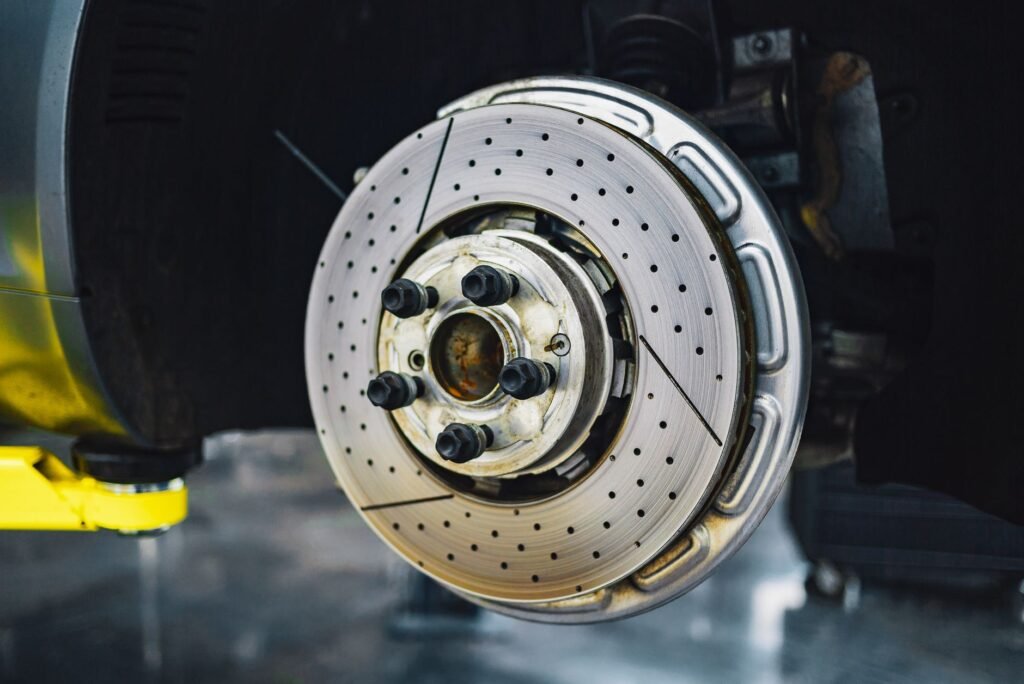
Most squeaky brakes come from surface rust, brake dust, glazed pads or dry hardware, and many of those clear up with driving, a proper bed in, or a lubed pad job. A steady high squeal under light braking is different. It often means the pad wear indicator is touching the rotor, and that calls for new pads.
Morning squeaks that fade after a few stops
If your car sleeps outside, dew, rain or snow settles on the bare iron rotors overnight and leaves a thin film of rust. The first few stops of the day scrape it off, and the pads chirp while they do it. Once the rotors are clean and dry, the noise stops.
That kind of squeak needs no repair. You can confirm it by paying attention to timing. If it happens on a cold, damp morning and is gone by the end of your street, it is moisture. If it follows you all day, keep reading.
A car that sits for weeks can build heavier rust than a few stops will remove. Short, gentle drives usually polish it off, but grooves or a lip on the rotor edge are a sign it needs a closer look.
The wear indicator squeal is a deadline
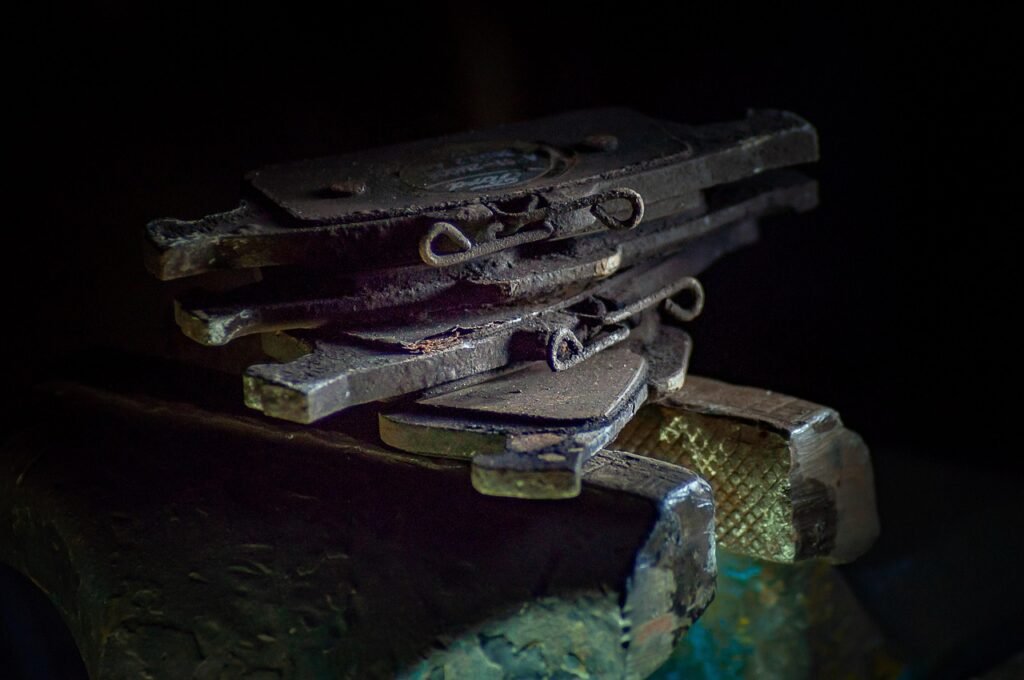
Many brake pads carry a small spring steel tab riveted to the backing plate. It is designed to make noise on purpose. According to brake maker PowerStop, the tab touches the rotor when about 1/8 to 1/4 inch of pad material is left, and you hear a loud squeal whenever you brake.
The giveaway is consistency. The sound shows up in dry weather, at every speed, often on light pedal pressure, and it does not go away after a few days. Some newer cars use an electronic sensor instead, which turns on a dashboard warning light rather than making noise, so the owner’s manual is the place to confirm which type your car uses.
Ignoring the tab does not make the problem go away. Once the pad material is gone, the steel backing plate grinds against the rotor, which damages it and lengthens stopping distances.
Matching the brake noise to its likely cause
| What you hear | When it happens | Likely cause | Next step |
|---|---|---|---|
| Light chirp or squeak | First stops on a damp morning | Surface rust on rotors | Drive normally, it should clear |
| Steady high squeal | Light braking, every trip | Wear indicator on the rotor | Book a pad inspection soon |
| Squeal on new pads | Days after a brake job | Pads not bedded in, or dry hardware | Ask the installer to check |
| Squeal plus a pulsing pedal | Moderate to hard stops | Uneven pad deposits or worn rotors | Have rotors measured |
| Metal grinding | Any braking | Pad worn through to the backing plate | Stop driving it and get it towed or inspected |
What a careful home fix looks like
If your pads have plenty of material and the noise is a squeal rather than a grind, these are the jobs that tend to quiet it. Anything past the first two involves removing wheels and calipers, so do them only if you have the tools, jack stands and experience.
- Drive normally for a few days after rain or a car wash to rule out moisture.
- Bed in new pads using the procedure printed by the pad manufacturer, in an empty lot with no traffic around.
- Clean rust off the caliper bracket where the pad ears slide, since binding pads vibrate and sing.
- Apply brake specific lubricant to the pad edges, backing plates and slide pins, following the pad maker’s directions.
- Replace worn clips, shims or anti rattle hardware rather than reusing tired ones.
Never spray lubricant on the rotor or the friction face of a pad, and skip household oils anywhere near the brakes. Grease on the braking surface does silence the squeak, but only because the pads can no longer grip, trading a noise for a car that cannot stop. If you are unsure about any step, a shop can do the lube and hardware job quickly.
Signs your car needs a brake shop today
Some symptoms mean the car should not wait for a convenient weekend. Grinding or scraping metal, a pedal that feels soft or sinks toward the floor, the car pulling to one side when you brake, a brake warning light on the dash, or a burning smell after normal driving all deserve a professional inspection before more miles go on the car.
A squeal that returns within weeks of a home fix also belongs in that group. It often points to a warped or glazed rotor, a sticking caliper, or pads that were the wrong fit, and a technician can measure pad and rotor thickness against the specifications for your vehicle.
Frequently asked questions
Is it safe to drive with squeaky brakes?
A brief squeak on a damp morning is normal and usually harmless. A squeal that happens every time you brake may be the wear indicator, so plan an inspection soon. Grinding, a soft pedal or pulling to one side means the car should be checked before you keep driving it.
Why do my brand new brakes squeak?
New pads often squeak when they have not been bedded in against the rotor, when hardware was reused or left dry, or when the pad compound does not suit the rotors. Take the car back to the installer, since most shops will recheck their own brake work.
Will WD-40 stop brakes from squeaking?
Do not use it. Any oil or spray lubricant that reaches the rotor or pad surface reduces braking grip, which can be dangerous. Only brake specific lubricant belongs on the brakes, and only on the back and edges of the pads and on slide pins, never the friction surfaces.
Why do my brakes squeak when I reverse?
Often it is the same light rust from overnight moisture, because backing out of a driveway is the first stop of the day for many cars. If the squeak shows up in reverse all day, have the pads, clips and caliper hardware checked. Some automakers have issued repair bulletins for brake noise that happens only in reverse.