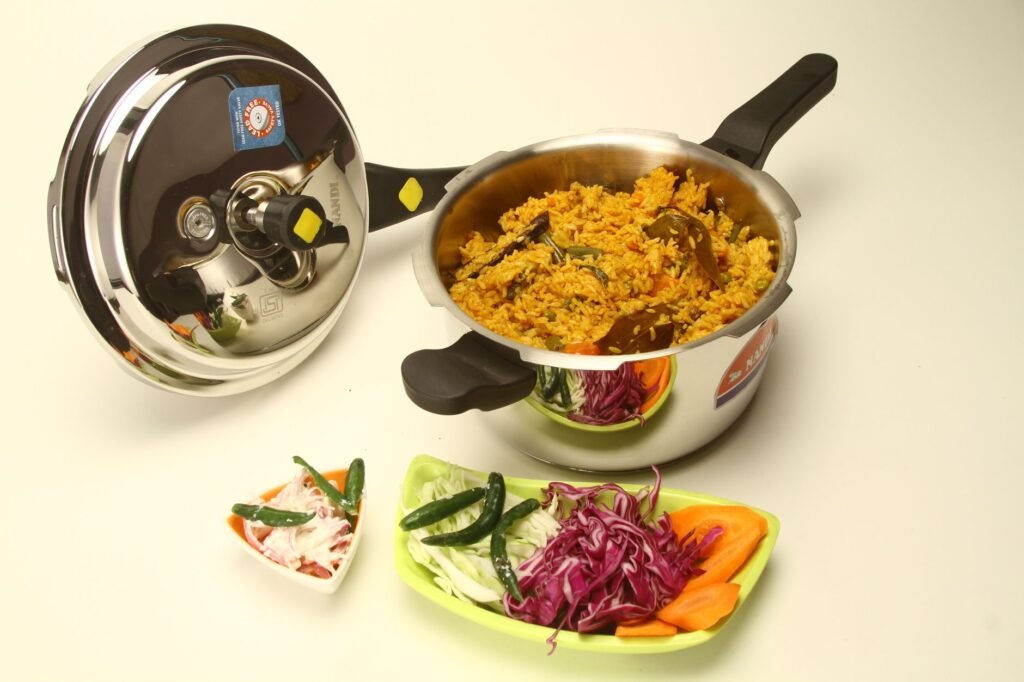
To use a pressure cooker, add at least the minimum liquid your manual calls for, keep food below the fill line, lock the lid and bring it up to pressure. Time the cooking from the moment full pressure is reached, then release the pressure naturally or with the valve, and open the lid only once it comes off freely.
How a pressure cooker cooks food faster
A pressure cooker is a pot with a locking, gasketed lid. As the liquid inside heats, the steam cannot escape, so pressure builds. Higher pressure raises the temperature water boils at, and that hotter steam cooks tough cuts, dried beans and grains far faster than an open pot.
The same sealed design is why the safety rules exist. Too little liquid means no steam, too much food can block the vents, and opening the pot early releases a burst of scalding steam and food.
Stovetop and electric pressure cookers compared
Both types work on the same principle. The main difference is who controls the heat.
| Feature | Stovetop cooker | Electric multicooker |
|---|---|---|
| Heat source | Your burner | Built-in element |
| Keeping pressure steady | You lower the burner once it is up to pressure | Automatic |
| Signal that pressure is reached | Pressure indicator rises, as the manual describes | Float valve pops up and the timer starts |
| Release options | Natural, or the valve, per the manual | Natural or quick release with the valve |
| Attention needed | Stay nearby to adjust the burner | Mostly hands off once started |
Liquid and fill lines before you lock the lid
Every cooker needs liquid to make steam. The exact minimum depends on the model, and extension guides quote amounts from a half cup to a cup, so the number in your own manual is the one to follow. Thick sauces tend to scorch on the bottom before they make enough steam, so thin liquid such as water or broth should make up that minimum.
If the pot seems to take forever to come up to pressure, Colorado State’s guidance says to check that the valve is turned to sealing and that the sealing ring is seated properly. Fill limits count just as much. Colorado State University’s cooker tips point to two lines found on most electric pots. Rice, beans, grains and dried vegetables go no higher than the half line, including their liquid, because they foam and swell. Everything else stays under the two-thirds line.
Natural release versus quick release
Natural release means you turn off the heat and wait for the pressure to drop on its own. The food keeps cooking gently while it does, so recipes often use it for large cuts of meat, beans and dishes that foam. Colorado State notes that releasing pressure can take anywhere from 3 to 45 minutes, on top of the 10 to 15 minutes it takes to heat up, so build both into your timing.
Quick release means opening the valve to vent steam fast, which stops the cooking for vegetables, seafood and other foods that overcook easily. Point the vent away from you, keep hands and face clear, and never do it under a hanging cabinet. On a stovetop model, use only the release methods your manual approves.
Never force the lid, and other rules that prevent burns
- Never force a lid that will not turn. A stuck lid means pressure is still inside. Wait, or finish releasing it.
- Tilt the lid away from you as you lift it, so trapped steam goes toward the back.
- Check the sealing ring and the valve before each use. A missing or cracked ring lets steam leak and the pot will not reach pressure.
- Keep the vent and float valve clean, since food buildup can block them.
- Do not use an electric multicooker for home canning. The National Center for Home Food Preservation does not recommend its canning processes in these appliances.
After each use, wash the lid, sealing ring and valve parts as your manual directs and let them dry before reassembling. If you are also learning a rice cooker, it is a much gentler machine with its own separate guide.
Frequently asked questions
Can a pressure cooker explode?
Most modern cookers have several safety features, such as lids that lock under pressure and backup valves that vent excess steam. Most accidents come from forcing the lid open, overfilling, or blocked valves. Follow your manual's fill lines, keep the valves and ring clean, and never open the pot while pressure remains.
Do I start timing when I close the lid?
No. Cooking time in a pressure cooker recipe starts once full pressure is reached. The heat up stage can take a while, especially with a full pot or cold ingredients, so plan for that extra time on top of the listed cooking time.
Can I cook frozen meat in a pressure cooker?
Many recipes allow it, but frozen food takes longer to come up to pressure and needs more cooking time. Colorado State University Extension suggests adding up to 50 percent more time. Check the center with a food thermometer before serving to confirm it has reached a safe temperature.
How should you store a pressure cooker?
Wash and dry every part, including the sealing ring, then keep the cooker in a dry place with the lid turned upside down on the pot instead of locked on. Presto's instructions warn that a locked lid can trap unpleasant odors inside and damage the sealing ring. Keep the manual nearby for fill lines and release steps.
Is an Instant Pot a pressure cooker?
Yes. Instant Pot is a brand of electric multicooker, and pressure cooking is its main function. Most models also slow cook, saute, steam and keep food warm. Everything in this guide about electric cookers applies, including the minimum liquid, the fill lines, the float valve and never forcing the lid open.