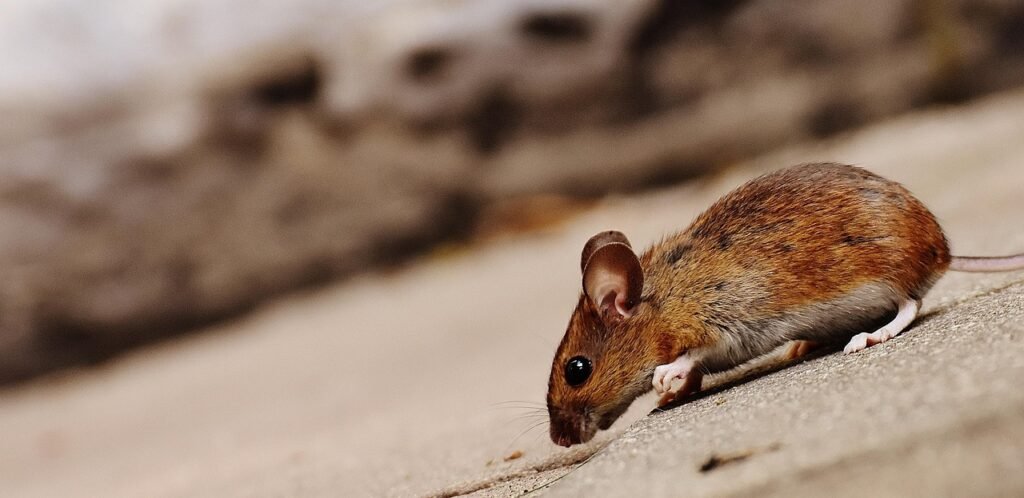
The humane way to get rid of mice is to seal the gaps they use to get in, take away food and nesting spots, and catch any that are still inside in live traps you check often. Before you release one, check your local rules, since moving mice off your property is illegal in some places.
Finding where the mice are getting in
Mice are small and flexible. The CDC says they can fit through a hole the width of a pencil, about a quarter inch. That means a single gap around a pipe can keep new mice arriving in a house however many you trap.
Look for droppings, gnawed packaging and greasy rub marks along walls, then trace them to the nearest openings. Inside, check behind appliances and kitchen cabinets, under sinks where pipes pass through, around water heaters and furnaces, and in attics, basements and closets. Outside, walk the foundation line and check around doors, windows, vents and the holes where cable, gas and plumbing lines enter.
Sealing gaps with materials mice cannot chew
The material has to stop teeth. University of California pest management guidance warns that plastic screening, rubber, vinyl, expanding foam and wood are ineffective on their own, because mice gnaw through them.
| Opening | What to use |
|---|---|
| Small hole around a pipe or wire | Steel wool packed tight, held in place with caulk or spray foam |
| Larger gap or broken vent | Hardware cloth, lath screen or metal sheeting |
| Crack in a foundation | Cement or patching compound |
| Gap under an exterior door | A metal door sweep or threshold |
Seal the outside first where you can, then block the inside openings near where you have seen activity. Recheck your work after a week or two. Fresh gnaw marks or droppings near a patched spot tell you the material was too soft or the gap was not fully closed.
Removing food, water and nesting spots
Sealing works faster when the house stops being a good place to live. Store cereal, grains, pet food and birdseed in glass, metal or thick plastic containers with tight lids. Wipe up crumbs, keep trash lidded, and do not leave pet bowls full overnight. Clear clutter from closets and garages, where cardboard and fabric make ready nesting material.
Repellent gadgets are a common letdown. The same University of California guidance says there is little evidence that sound, magnetic or vibrating devices drive established mice out of buildings.
Live traps and where a caught mouse can go
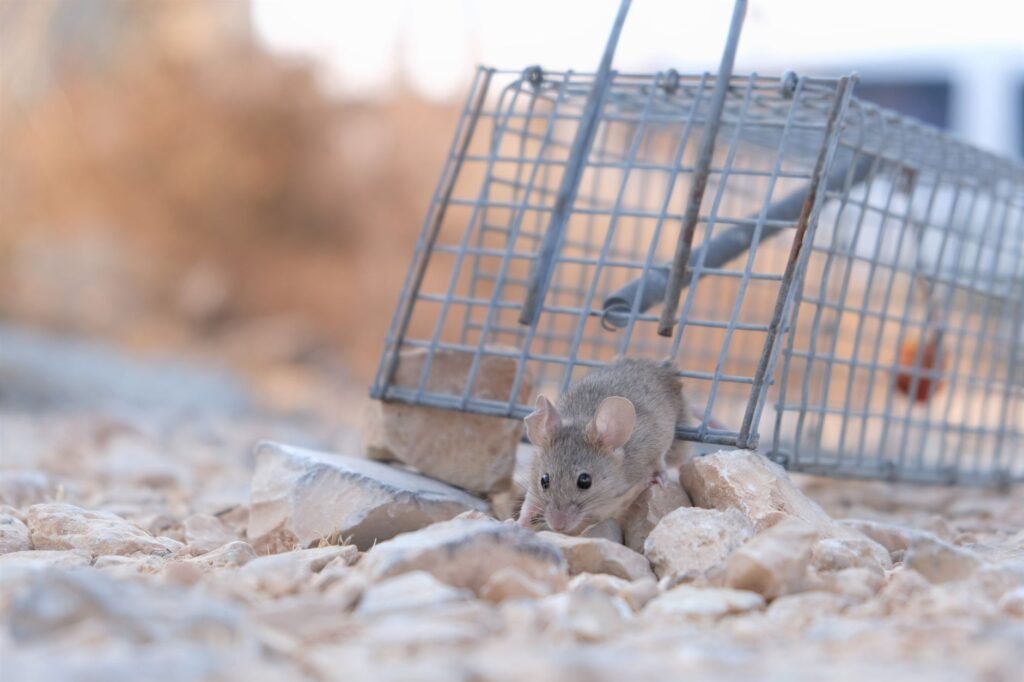
Live catch traps come as single mouse boxes and as multiple catch traps that hold several at once. House mice seldom travel more than about 30 feet from their nest and food, so set traps along walls near droppings and gnaw marks, with a little peanut butter or oats as bait. Check traps at least once a day so a caught mouse is not left waiting.
Release is the tricky part. The University of California guidance says moving house mice off the property where they were caught is illegal there, and that mice moved as far as half a mile have found their way back. Rules differ by state and city, so call your state wildlife agency or county extension office before releasing one anywhere. Whatever they tell you, release only works for good once the house is sealed.
Cleaning droppings the way the CDC recommends
Mouse droppings and urine can carry disease, including hantavirus. The CDC’s cleanup steps are built to keep dust from getting into the air.
- Open doors and windows for 30 minutes before you start, and leave the area while it airs out.
- Wear rubber or plastic gloves.
- Do not sweep or vacuum droppings, urine or nesting material.
- Spray them until very wet with a bleach solution, 1 part bleach to 9 parts water, or an EPA registered disinfectant, and let it soak 5 minutes.
- Wipe up with paper towels, double bag the waste, and wash your hands after removing the gloves.
If you develop a fever or feel unwell after cleaning up after rodents, see a doctor and mention the exposure.
Frequently asked questions
Does peppermint oil keep mice away?
Peppermint oil is a popular home remedy, but it is not a reliable way to clear an established problem. Scents fade quickly, and mice return to food and shelter. Sealing entry gaps and removing food sources does far more, with live traps catching any mice still inside.
How long does it take to get rid of mice humanely?
It depends on how many mice are inside and how quickly you find and seal the entry points. Once the house is sealed and food is locked away, catches usually drop off as the remaining mice are trapped. If new droppings keep appearing, there is probably an opening you missed.
Should I call a professional for mice?
Consider it if you cannot find how mice are getting in, if the entry points are on a roof or high wall, or if the problem keeps coming back. Ask companies whether they offer exclusion work and live trapping, since not every service uses humane methods by default.
What do mice eat?
Almost anything they can reach. University of California pest management experts describe house mice as omnivores that eat whatever food is available, including cereals, seeds, roots and even insect larvae, with cereals and grains among their favorites. Indoors that means pantry goods, pet food and birdseed, so store them in sealed containers.
Can mice climb walls?
Yes. University of California pest management experts say house mice are excellent climbers that can run up any rough vertical surface, travel along wires and ropes, and jump up to 12 inches from the floor onto a flat surface. Check higher openings, such as gaps around vents and utility lines, when you seal the house.
Do mothballs keep mice away?
No. The National Pesticide Information Center says mothballs are insecticides made to kill clothes moths inside closed, airtight containers, not wildlife repellents. Using them in a way the label does not allow, such as scattering them to drive off mice, is illegal, and the fumes can harm people and pets who breathe them.