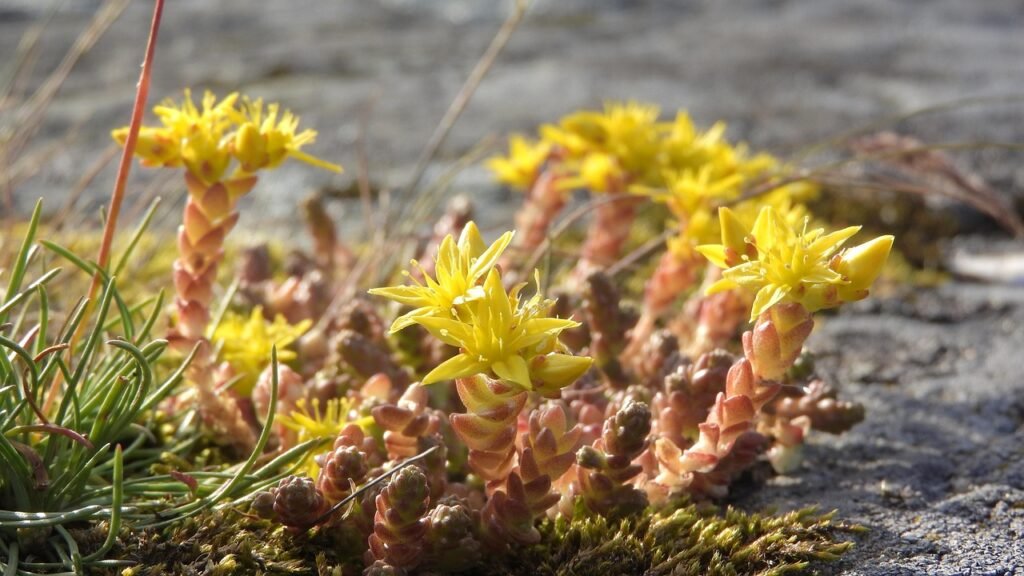
Sedum, also called stonecrop, is one of the easiest plants to propagate from stem cuttings, and many kinds also root from single leaves. Take cuttings from non-flowering shoots in early summer, set them in coarse, fast-draining soil and keep it barely moist. Upright clump-forming kinds can also be divided in spring.
Upright and creeping sedums propagate differently
Sedum is a big genus with hundreds of species, and several of the tall garden kinds have been moved by botanists into a related genus, Hylotelephium. Garden centers still sell both as sedum. For propagation, the handy split is by shape.
| Type | Examples of the look | Best method | Timing |
|---|---|---|---|
| Upright, clump forming | Tall stems with flat flower heads in late summer | Division, or softwood cuttings of non-flowering shoots | Divide in spring, cut in early summer |
| Creeping, mat forming | Low trailing stems that spread over rocks and edges | Stem cuttings or small rooted pieces | Spring through summer |
| Small leaved succulents | Chubby leaves packed along short stems | Single leaves or stem tips | Warm months |
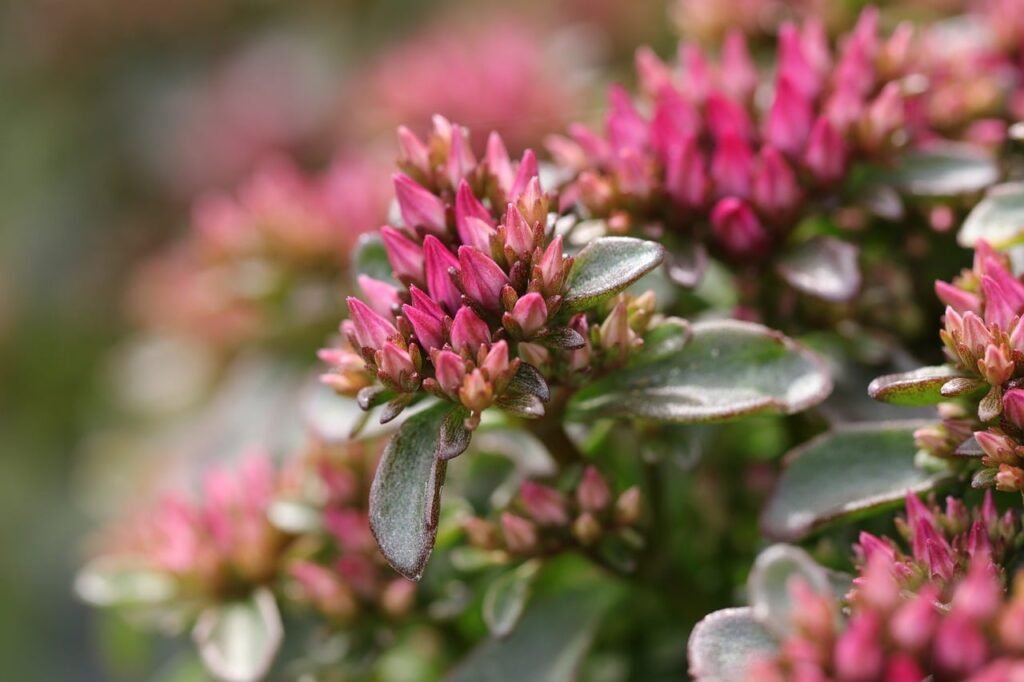
Rooting sedum stem cuttings
Stem cuttings are the most dependable route for nearly every sedum. The Royal Horticultural Society recommends softwood cuttings from non-flowering shoots in early summer for the tall kinds, since shoots busy making flowers root more slowly.
- Snip a healthy, non-flowering shoot a few inches long with clean scissors.
- Pinch the fleshy sedum leaves off the bottom of the shoot so you have a bare section of stem to bury.
- Many growers leave the cutting in a shaded spot for a day so the cut end can dry before planting.
- Load a small pot with a coarse, well-drained medium, and cactus soil suits sedum well.
- Push the bare stem into the mix and firm it in lightly.
- Keep the pot in bright light out of harsh afternoon sun, and hold off on watering the sedum until the soil surface dries.
A sedum cutting that holds firm against a light pull has rooted, and fresh fleshy leaves opening at its tip confirm it. With creeping types, you can often skip the pot and press cuttings directly into prepared ground where you want the mat to spread.
Growing new sedum plants from single leaves
North Carolina State Extension lists leaf cuttings as one of the ways sedum can be propagated, and they are easiest to try with the plump, small leaved kinds. Twist a leaf off cleanly so the whole base comes away with it.
Lay the leaves on top of a tray of gritty mix instead of burying them, and mist the surface lightly when it is dry. Tiny roots and then a small shoot appear at the base of the leaf. The old leaf shrivels as the new plant feeds on it, which is normal. Move the babies to their own pots once they have a few leaves.
Dividing an upright sedum clump in spring
Tall sedums form clumps that are easy to split. Lift the whole clump in spring as new growth appears, then pull or cut it apart, leaving several new shoots on every division. Replant the sections at the same depth and water them in.
Keep an eye out in late winter too. The RHS notes that tall sedums often make rooted shoots at the base of old stems that break away from the parent plant. Those can be planted out as new clumps with almost no effort.
Soil, sun and water for young sedum plants
Rot is the main way sedum propagation fails. According to NC State’s plant profile, sedum grows best in coarse, well-drained soil, preferably a cactus mix, and in full sun of six or more hours a day, though it will take part shade.
Water rooted cuttings when the soil is dry to the touch, and let pots drain completely. Clay pots with drainage holes dry out faster than plastic, which suits sedum well. Once the new plants have a healthy set of roots, move them outdoors after the risk of frost has passed. Established sedums handle dry spells well and need far less water than typical garden flowers.
Frequently asked questions
Can I root sedum cuttings in water?
Some people do, but sedum is a succulent that prefers dry conditions, and stems sitting in water can rot. Rooting in a coarse, well-drained mix is more reliable, and the roots that form in soil adjust more easily when you plant them out.
Is sedum safe around pets and kids?
North Carolina State Extension describes sedum as not poisonous, though eating a lot of it can cause stomach upset. If a child or pet eats a large amount and seems unwell, call your doctor, veterinarian or a poison control line for advice.
How long do sedum cuttings take to root?
Timing depends on the kind of sedum, the warmth and the light. In warm weather, stem cuttings usually root faster than single leaves. Test with a gentle tug rather than pulling cuttings up to look, which can damage the new roots.
Does sedum spread?
Yes, many sedums do. NC State Extension notes that sedums spread by rooting stems and establish quickly, which is why creeping kinds make good ground covers and fill in around rocks. Tall upright sedums stay in clumps that widen over the years, and those clumps can be divided in spring.
Do deer eat sedum?
They can. NC State Extension tags sedum as rabbit resistant but notes that deer can damage it, so it is not a safe bet where deer browse heavily. Protect new plants grown from cuttings with netting or fencing until they are established, and ask your county extension office how local deer treat sedum.
Is sedum a perennial?
Most garden sedums are. NC State Extension lists sedum as a perennial hardy in USDA zones 3 through 9, so in most of the country established plants come back each year. Move young plants rooted from cuttings outdoors only after the risk of frost has passed, since they are still small and tender.