Raccoons stay wherever food and shelter are easy, so removing both beats any repellent on the shelf. Secure the trash, the pet bowls and the birdseed, then close the way into the attic or crawl space once you are sure nothing is still living in there. Trapping is regulated, and the rules differ by state.
Check your state rules before you touch anything
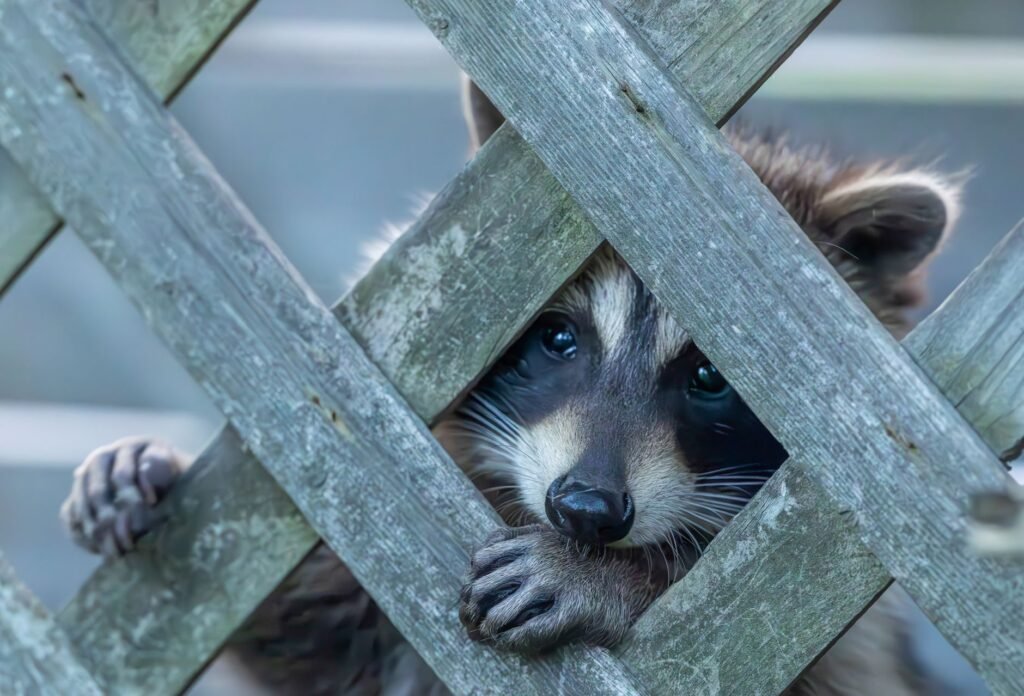
Raccoons are classed as wildlife, not vermin, across most of the country. That means capture, relocation and lethal control all sit under a state wildlife agency, and what a neighbor did legally two states over may be an offense where you live. Some states require a permit, some allow only a licensed operator to move an animal, and several ban relocation outright because of disease spread.
Poisoning is a separate matter and a bad idea everywhere. There is no bait registered for raccoons in home use, an animal that dies inside a wall becomes a far worse problem than the one you started with, and pets and children reach things you assumed were out of reach. Everything below is about making the property unattractive and closing it up.
Cut the food supply first
| What draws them in | What actually stops it |
|---|---|
| Kitchen trash at the curb overnight | Latching lid, bin in the garage until morning |
| Cat or dog food left on the porch | Feed indoors, pick up bowls after meals |
| Bird feeder spill under the pole | Rake the spill, pull feeders in at dusk |
| Fallen fruit and unharvested vegetables | Clear windfalls daily during the season |
| Grubs in a soft lawn, which cause rolled back turf | Treat the lawn issue, not the raccoon |
A raccoon that finds nothing for several nights running usually widens its route and stops including your yard. This is slow, unglamorous work and it is the part that actually holds.
Closing the entry, and why timing matters
- Find the hole in daylight. Look at soffit corners, roof vents, the gap where a chimney meets flashing, and loose lattice around a deck or porch.
- Confirm whether anyone is home. Crumple paper loosely into the opening and check it for two nights. Paper pushed aside means the den is active.
- Assume young are present in late winter and spring. Sealing a mother out leaves kits walled in, which is both cruel and a serious odor problem later.
- Once traffic stops, close the gap with hardware cloth or sheet metal rather than foam. They chew and pull anything softer.
- Trim the branches and remove the trellis that gave roof access in the first place.
Raccoon latrines, the communal spots where droppings pile up on a deck rail or in an attic corner, need care. Droppings can carry parasites that stay viable a long time, so this is not a dry sweeping job. Your state health department publishes cleanup guidance, and that is the page worth reading before you start.
When to call a wildlife professional
Some situations are not DIY. A den inside an attic or wall void, especially during kitting season, needs someone with one way doors and the permit to use them. So does an animal that has fallen down a chimney, anything acting sick or unafraid, any job that puts you on a ladder near an angry adult, and any situation where a bite or scratch has already happened.
Ask a company two questions before booking. What does your state license actually allow them to do with the animal, and does the quote include sealing the entry afterward. Removal without exclusion just opens the vacancy for the next raccoon in the neighborhood.