
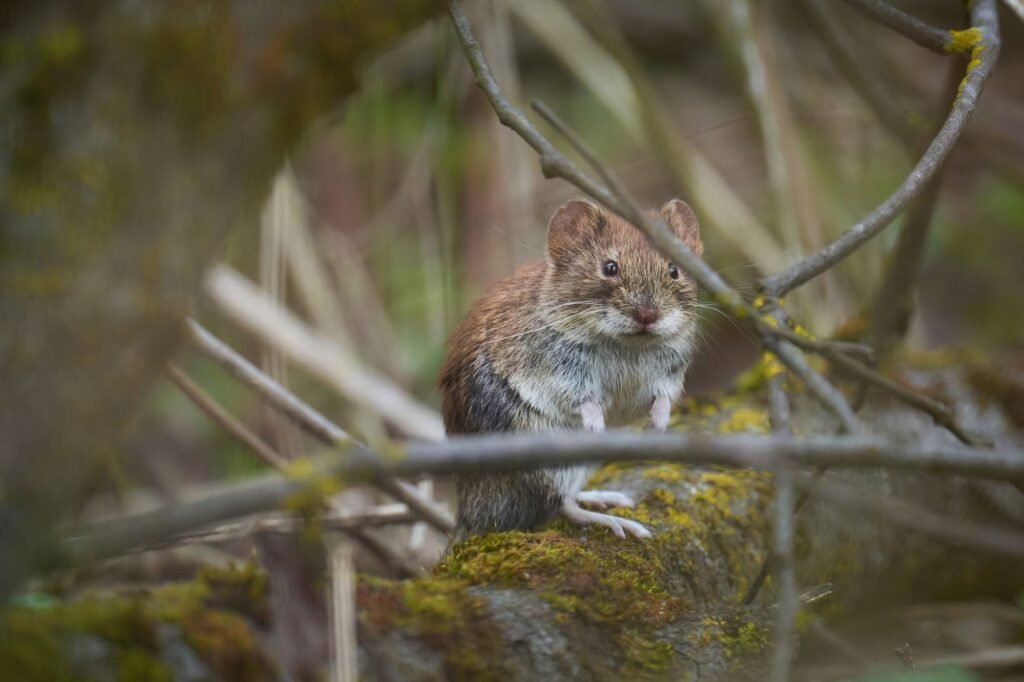
Take away the cover they hide under, protect the plants they chew, and check your state’s wildlife rules before you trap. Voles are surface rodents that run in worn runways through grass and mulch. Strip the shelter and most of the pressure on your yard disappears.
Voles or Moles? The Damage Tells You
| What you see | Voles | Moles |
|---|---|---|
| Surface signs | Narrow runways of clipped grass, clean holes | Cone-shaped mounds and raised tunnel ridges |
| Diet | Roots, bulbs, bark, stems, seeds | Earthworms, grubs, soil insects |
| Plant damage | Gnawed bark near the soil, wilting shrubs, vanished bulbs | Plants lifted or undermined, not eaten |
| Body | Stocky, mouse-like, small eyes, short tail | Paddle feet, no visible eyes, pointed snout |
Get this right before spending a dollar, because everything that works on one is wasted effort on the other. Repellents aimed at grub-eating moles mean nothing to an animal eating your tulip bulbs.
Why Runways and Ground Cover Matter
Voles are prey animals with almost nothing to defend themselves. Hawks, owls, foxes, snakes, and house cats all hunt them, so they refuse to cross open ground. Thick turf, dense ground cover, deep mulch piled against stems, weedy fence lines, and boards left lying on the lawn all read as safe highway to a vole.
They are active year round, day and night, with no hibernation, and they breed prolifically through the warm months. Winter is when the worst damage happens, because snow cover gives them a roof to work under while they strip bark from young trunks at ground level. You often find that damage in spring, after the fact.
This biology is why habitat change outperforms every gadget. Remove the cover and they are exposed, unwilling, and easy prey.
Yard Changes That Push Them Out
- Mow regularly and keep grass shorter at the edges of beds, fences, and outbuildings.
- Pull mulch back several inches from every trunk and stem so no animal can feed hidden against the bark.
- Thin dense ground cover, and clear weeds and tall grass along fence lines and retaining walls.
- Pick up the clutter. Boards, tarps, stacked firewood on the ground, and unused pots all create shelter.
- Clean up fallen fruit and birdseed spill, both of which feed them through lean stretches.
- Keep a band of bare soil or gravel between lawn and beds, since voles hesitate to cross it.
Protecting Trees, Bulbs, and Beds
Young trees deserve a physical guard. Wrap a cylinder of quarter-inch hardware cloth around the trunk, set it slightly into the soil, and leave room between mesh and bark for growth. Make it tall enough to clear typical winter snow depth where you live, since that is the level the animals work at.
For bulbs, line the planting hole with coarse gravel or set the bulbs in wire baskets. Gravel is unpleasant to tunnel through, and it does not rot or need replacing.
Repellents based on castor oil or capsaicin exist and get mixed reports. They wash off with rain, need reapplying, and do nothing about the cover that brought the animals in. Read the label, and treat them as a supplement.
Trapping, Legality, and When to Get Help
If numbers stay high after the yard is cleaned up, trapping along active runways is the usual next step, and simple snap traps set for rodents are the common tool. Before that, look up your state wildlife agency page, since classification, permitted methods, and relocation rules differ by state and some small mammals are protected outright.
Rodenticides are deliberately not covered here. They are restricted in many places, they kill slowly, and poisoned rodents pass the poison to owls, hawks, foxes, dogs, and cats. Call a licensed professional when the population keeps rebounding, when an orchard or a landscape investment is at risk, or when you are unsure what your state allows.