
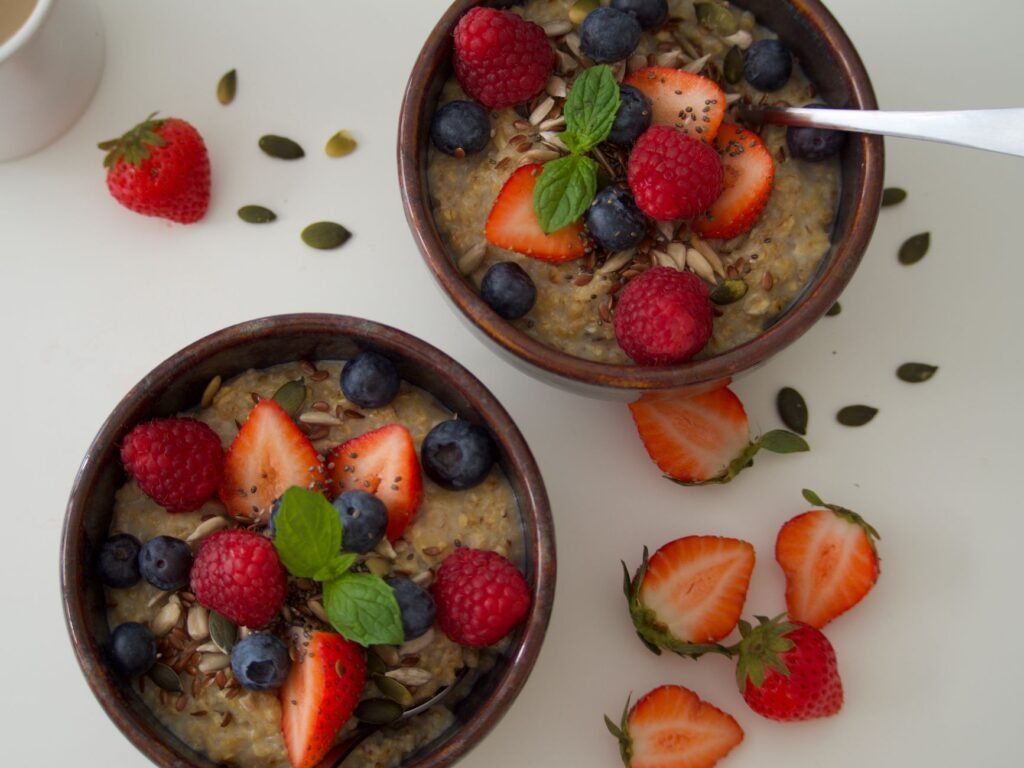
Bring water to a boil, stir in the steel cut oats, then simmer uncovered on low heat, stirring now and then, until tender. Oregon State University Extension uses 3 cups of water per cup of oats and a 15 to 20 minute simmer, while Quaker calls for 4 cups and 25 to 30 minutes.
Why steel cut oats take longer than rolled oats
All oatmeal starts as oat groats, the whole kernel with its hull removed. The Whole Grains Council describes steel cut oats as groats chopped into smaller pieces. Rolled oats are groats that have been steamed and flattened, and instant oats are rolled oats that were precooked, dried and chopped even finer.
That processing is why cooking times differ so much. The council puts steel cut oats at about 30 minutes, rolled oats at 5 to 10, and instant oats at little more than a splash of boiling water. What you get for the wait is a chewier, nuttier bowl with separate grains instead of a smooth paste.
Quick-cooking steel cut oats exist too. They are cut smaller and follow different package directions, so check the label before you start timing.
Water ratios and simmer times from two tested sources
There is no single correct ratio. Less water gives a thicker, chewier result, and more water gives a looser, creamier one. These two sets of directions bracket the usual range.
| Source | Oats | Liquid | Cooking |
|---|---|---|---|
| Oregon State University Extension, stovetop | 1 cup | 3 cups water | Simmer uncovered 15 to 20 minutes, then rest 2 minutes; makes 3 cups |
| Quaker package, stovetop | 1 cup | 4 cups water or milk | Simmer uncovered on low 25 to 30 minutes; 4 servings |
| Quaker package, one serving | 1/4 cup | 1 1/2 cups water or milk | Same method, cooked to the texture you like |
| Quaker package, slow cooker | 2 cups | 8 cups water, or 4 cups water with 4 cups skim milk | Low setting in a 5-quart cooker, 7 to 8 hours |
Stovetop steel cut oats, step by step
- Bring the water to a boil in a medium saucepan, with a pinch of salt if you like it.
- Stir in the oats and turn the heat down to low.
- Simmer uncovered, stirring every few minutes so the bottom does not stick.
- Start tasting at the short end of the time range. The oats are done when they are tender with a slight chew.
- Lift the pan of oats off the burner and let it stand for a couple of minutes. The porridge thickens as it rests.
Milk makes a richer bowl but scorches more easily than water, so stir more often and keep the heat low if you go that route. Add fruit, nuts, cinnamon or a spoonful of nut butter at the end rather than during cooking.
If the pot turns thick before the oats are tender, stir in a few tablespoons of hot water and keep simmering. A heavy-bottomed saucepan holds low heat more evenly and makes sticking less likely.
Slow cooker oats for busy mornings
Quaker’s slow cooker directions suit anyone who wants breakfast ready on waking. Coat the inside of a 5-quart slow cooker with nonstick spray, add 2 cups of oats, 8 cups of liquid and salt to taste, then cover and cook on low for 7 to 8 hours until creamy. Stir well before serving.
Slow cookers vary in how hot their low setting runs, so the first batch is a test. If the edges come out dry or browned, add a little more liquid next time or check it sooner.
Storing and reheating a pot of oats
A full batch makes sense because leftovers reheat well. Oregon State’s recipe says to refrigerate leftovers within 2 hours of cooking. Portion them into lidded containers so each morning takes one scoop.
Cold oats set into a firm block. Reheat a portion in the microwave or a small pan, adding a little extra water or milk and stirring until the oats loosen. For guidance on how many days cooked grains keep in your fridge, check USDA food safety resources, since that depends on how quickly they were cooled and how cold your refrigerator runs.
Frequently asked questions
Do you need to rinse steel cut oats before cooking?
No. Neither the Oregon State Extension recipe nor the Quaker package directions call for rinsing. The oats go directly from the bag into boiling water. If you buy oats from a bulk bin and want to rinse them anyway, drain them well so the extra water does not throw off your ratio.
Can you cook steel cut oats in milk instead of water?
Yes. Quaker lists water or milk for its stovetop directions and offers a half water, half skim milk option for the slow cooker. Milk scorches more easily, so keep the heat low and stir more often. Many cooks use part water and part milk for a creamy bowl.
Are steel cut oats more nutritious than rolled oats?
The Whole Grains Council says the nutrient content is essentially the same across oat types, since all start as whole oat groats. The difference is in processing and texture, and less processed oats are digested more slowly. Pick the type whose texture and cooking time suit your mornings.
Can you make overnight oats with steel cut oats?
Yes. Bob's Red Mill has an overnight recipe that stirs 1/3 cup of uncooked steel cut oats with 1/3 to 1/2 cup of milk and some yogurt, then leaves the mix in the refrigerator overnight. The oats soften as they soak. Eat them cold in the morning, or heat them if you prefer a warm bowl.
Are steel cut oats gluten free?
Not reliably. Oats contain no gluten of their own, but they may be grown and milled alongside wheat, barley and rye, so regular steel cut oats can pick up traces. If you need to avoid gluten, buy oats labeled gluten free, which FDA rules limit to less than 20 parts per million of gluten.
Can you cook steel cut oats in the microwave?
Yes, with some watching. Bob's Red Mill suggests 1/4 cup of steel cut oats and 3/4 cup of water in a large bowl, microwaved for 2 minutes, then stirred and heated in 30-second bursts three or four more times. Cover and let it rest 2 minutes. Quick-cooking steel cut oats are easier to microwave.