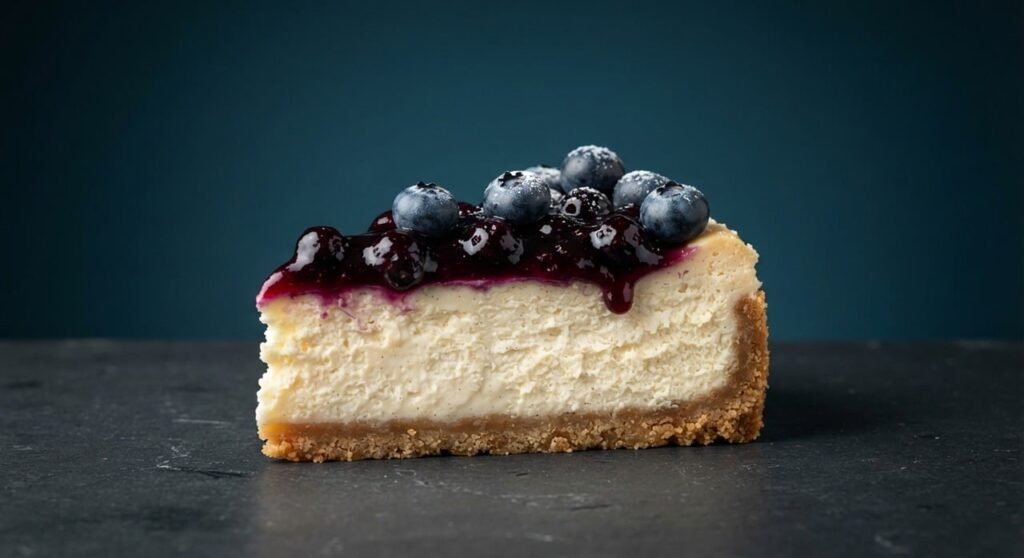
Beat softened cream cheese with sugar on low speed, add eggs one at a time, pour the filling over a pressed crumb crust, and bake at 325°F until the center is almost set. Cool it slowly, then chill it for at least four hours before you slice.
A classic cheesecake, ingredient by ingredient
The Philadelphia classic cheesecake recipe is a solid baseline because so many home versions descend from it. It fills a 9-inch springform pan.
| Part | Ingredient | Amount |
|---|---|---|
| Crust | Graham cracker crumbs | 1 1/2 cups |
| Crust | Sugar | 3 tablespoons |
| Crust | Butter or margarine, melted | 1/3 cup |
| Filling | Cream cheese | Four 8-ounce packages |
| Filling | Sugar | 1 cup |
| Filling | Vanilla | 1 teaspoon |
| Filling | Eggs | 4 |
Heat the oven to 325°F. Stir the crumbs, 3 tablespoons of sugar and the melted butter together and press the mixture firmly over the bottom of the pan. The recipe bakes the cake for 55 minutes, or until the center is almost set, and then refrigerates it for 4 hours. The crust goes into the pan unbaked and sets as the cake bakes.
Once the base recipe works for you, flavor changes are easy. Swap some of the vanilla for lemon zest, use chocolate cookie crumbs in the crust, or swirl a little fruit puree over the filling just before it goes in the oven. Keep the amount of added liquid small so the texture stays close to the original.
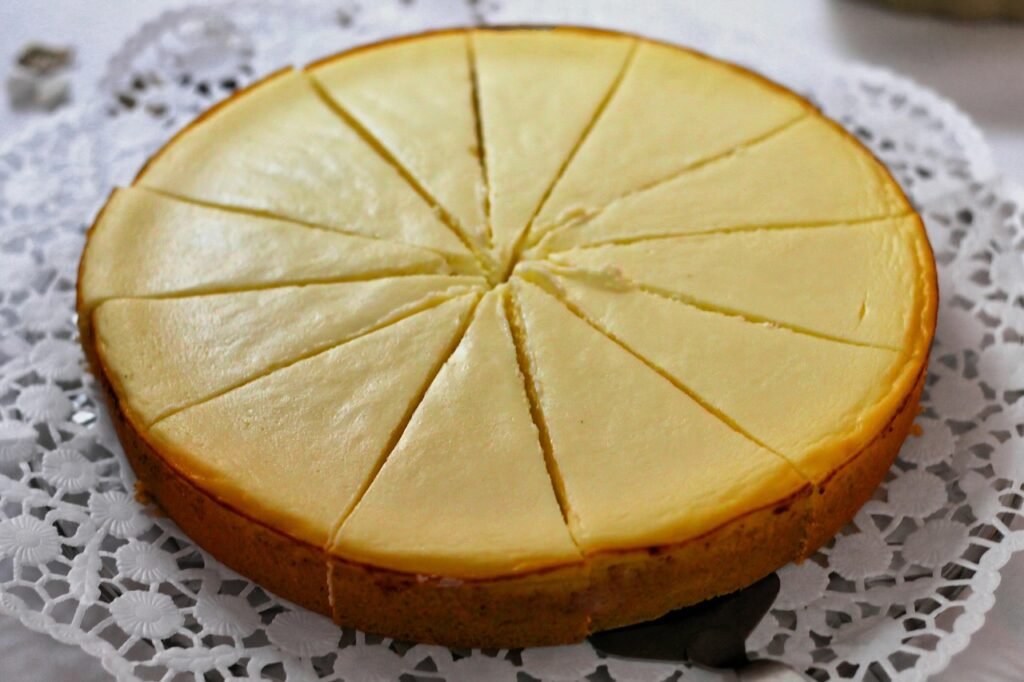
Mixing the filling without whipping in air
Most texture problems start at the mixer. King Arthur Baking recommends having every ingredient at room temperature, because cold cream cheese forms lumps that never fully smooth out. Leave the packages and eggs on the counter for a while before you begin.
Beat the cream cheese, sugar and vanilla on low until blended. Add the eggs one at a time, mixing on low after each only until it disappears. High speed whips air into the batter, and that air turns into steam pockets in the oven, which weaken the structure and lead to cracks. A dense, silky cake comes from patience rather than power.
Scrape the bowl and beaters once or twice so no stiff streaks of cream cheese hide at the bottom.
Reading doneness by jiggle or thermometer
The visual cue is a center that still wobbles slightly, like set gelatin, while the outer ring looks firm. That wobble finishes cooking as the cake cools.
A thermometer removes the guesswork. For a very creamy cake, King Arthur Baking says a probe pushed halfway into the filling, 1 to 2 inches in from the edge, should read 165 to 170°F, with the very center at 150 to 155°F. For a firmer cake it suggests no more than 175°F at the edge and 165°F at the center. It also warns that reaching 185°F anywhere in the cake will almost certainly crack the top.
The water bath, and whether you need one
A water bath surrounds the pan with hot water, so the edges heat more gently and the whole cake bakes more evenly. King Arthur Baking lists it, along with cake strips wrapped around the pan, as a way to even out baking from edge to center.
- Wrap the outside of the springform in heavy foil, bringing it up the sides so water cannot seep in at the seam.
- Set the wrapped pan inside a larger roasting pan.
- Pour hot water into the outer pan once it is on the oven rack, so you are not carrying a sloshing tray.
- Take the cheesecake pan out of its water bath the moment it leaves the oven.
You can skip the bath if you watch the temperature closely. Expect a slightly drier edge and a higher risk of cracking.
Cooling slowly so the top stays whole
A sudden drop in temperature makes the cake contract and split. King Arthur Baking suggests turning the oven off, propping the door open a few inches and leaving the cheesecake inside until it reaches room temperature. Run a thin knife around the rim to release the edge, as the Philadelphia recipe directs, then refrigerate it before removing the ring. If a crack appears anyway, a layer of sour cream or fruit covers it well.
Frequently asked questions
Why did my cheesecake crack?
The usual causes are overbaking, whipping too much air into the batter, and cooling too quickly. King Arthur Baking notes that any part of the cake reaching 185°F almost certainly cracks the top. Mix on low, pull the cake when the center still wobbles, and let it cool slowly in the turned-off oven.
Why is my cheesecake filling lumpy?
Lumps usually mean the cream cheese was too cold when you started mixing. Cold cheese breaks into small pieces that never blend smoothly with the sugar and eggs. Let the cream cheese and eggs sit out until they reach room temperature, and beat the cheese with the sugar before adding anything else.
How long should cheesecake chill before slicing?
The Philadelphia classic recipe refrigerates the finished cake for 4 hours, and many bakers chill it overnight for cleaner slices. The filling keeps firming as it gets cold. A thin knife dipped in hot water and wiped dry between cuts gives neater edges than a cold, dry blade.
Is cheesecake a pie?
Not by name, though it shares a lot with one. Like a custard pie, it pairs a crust with a filling that eggs set as it bakes, which is why it needs gentle heat and comes out with a slight wobble. Most recipes call it a cake, and it is usually baked in a springform cake pan.
Is cheesecake gluten free?
Usually not, because the classic crust is made from graham crackers, which the Celiac Disease Foundation lists as a source of gluten. The classic filling of cream cheese, sugar, eggs and vanilla is usually free of gluten ingredients, though some recipes add flour. For a gluten free cheesecake, use a certified gluten free crust and check every label.