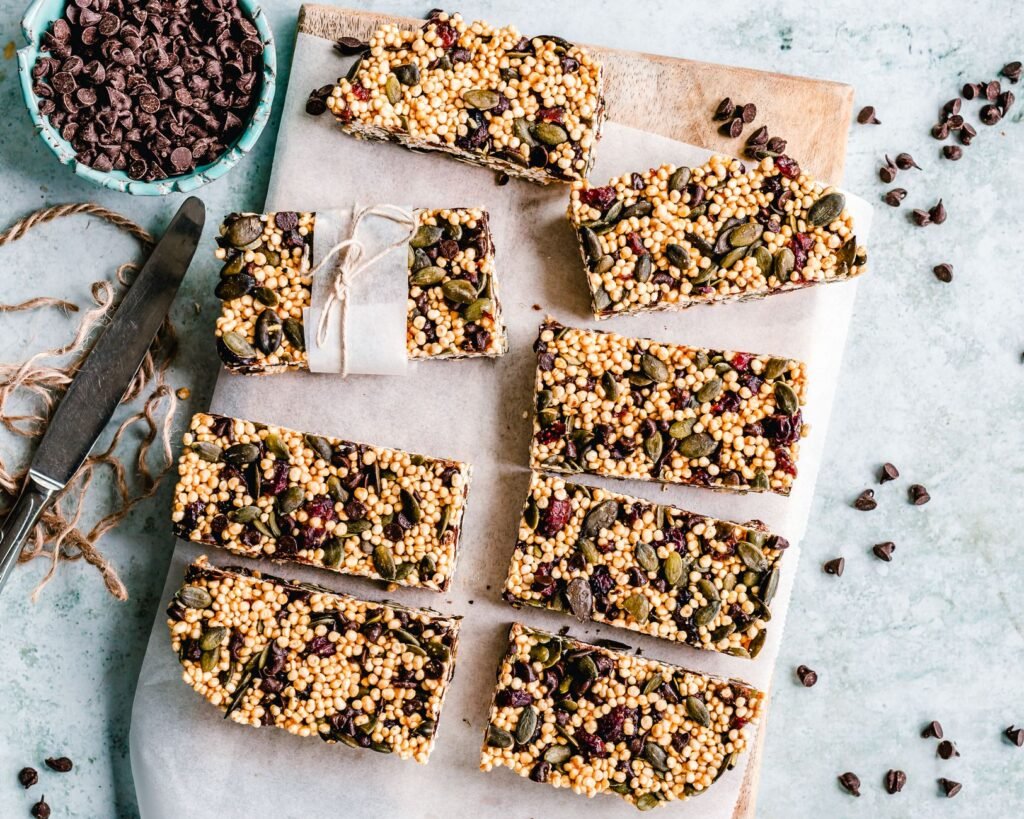
To make homemade granola bars, stir oats, nuts and dried fruit into a warm binder of honey or syrup, nut butter and melted butter, press the mix firmly into a lined pan, bake until the edges turn golden, and cool completely before cutting. Skipping the full cool is the usual reason bars fall apart.
What glues oats into a granola bar
A bar holds together because something sticky coats every oat and sets as it cools. Loose granola uses the same ingredients with less binder, which is why it breaks into clusters instead of slabs.
| Part | Job in the bar | Common choices |
|---|---|---|
| Oats | Structure and chew | Quick or old fashioned rolled oats |
| Ground oats | Fill gaps so the bar packs tight | Oat flour or oats pulsed in a blender |
| Liquid sweetener | Main glue once cooled | Honey, maple syrup, corn syrup |
| Nut or seed butter | Extra binding and richness | Peanut, almond, sunflower seed |
| Fat | Tenderness and browning | Melted butter or vegetable oil |
| Add-ins | Flavor and texture | Dried fruit, nuts, seeds, chips |
If you only want the loose, crunchy kind for yogurt, that is a separate recipe with its own guide.
A chewy baked granola bar method
This outline follows the chewy granola bar recipe published by King Arthur Baking, which bakes in a 9 by 13 inch pan.
- Heat the oven to 350 degrees F and line the pan with parchment, leaving extra hanging over two sides as handles.
- In a large bowl, mix the oats, ground oats, sugar, salt and any spice.
- Stir in the dried fruit and nuts, chopped small so they do not create weak spots.
- Warm and whisk together the nut butter, melted butter or oil, honey or syrup, a little water and vanilla.
- Pour the wet mix over the dry and stir until every oat looks glossy.
- Pack it into the pan and press hard with a flat spatula or the bottom of a measuring cup.
- Bake 25 to 30 minutes, until golden brown around the edges.
For deeper flavor, toast the oats and nuts on a sheet pan for a few minutes before mixing, then let them cool a little so they do not thin the binder.
Why homemade granola bars crumble
Cutting too soon is the biggest cause. The binder is still soft while warm and only firms as it cools. Give the slab about 30 minutes in the pan, lift it out by the parchment, and let it cool at least another 30 minutes on a rack before slicing with a serrated knife.
Weak pressing is the second cause. Loose oats have air pockets that become crack lines, so lean your weight into the spatula. Overloading on add-ins does the same thing, because big chunks of fruit and whole nuts leave less binder around each oat. Pull the pan too early and the center stays underset, so wait for real color at the edges.
A batch that crumbles anyway is not wasted. Break it into clusters for yogurt or ice cream, or press the crumbs back into the pan with a little warm honey and chill until firm.
Swaps for allergies and pantry gaps
Maple syrup can stand in for honey in the same amount. Sunflower seed butter replaces peanut butter for a nut free bar, and pumpkin seeds or extra dried fruit can take the place of nuts. Vegetable oil works in place of butter.
Each change shifts texture a little. Thinner syrups and oils can make a softer bar, so press harder and bake to the full golden edge. Mini chocolate chips melt if stirred into a hot binder, so add them after the wet mix has cooled a bit or press them on top.
Storing homemade granola bars
Wrap each bar individually, or stack them with parchment between the layers so the bars do not weld together into a single slab. On humid days the sugars pull in moisture and the bars turn sticky, so keep them in the refrigerator then. For longer storage, wrap and freeze them, and move one to a lunch bag in the morning.
Frequently asked questions
Can I make no-bake granola bars instead?
Yes. No-bake bars rely on a thick binder such as nut butter and honey warmed together, then chilled until firm. They stay softer and need refrigeration to hold their shape. Press them into the pan just as firmly as baked bars, and chill for a few hours before cutting.
Can I use steel cut oats in granola bars?
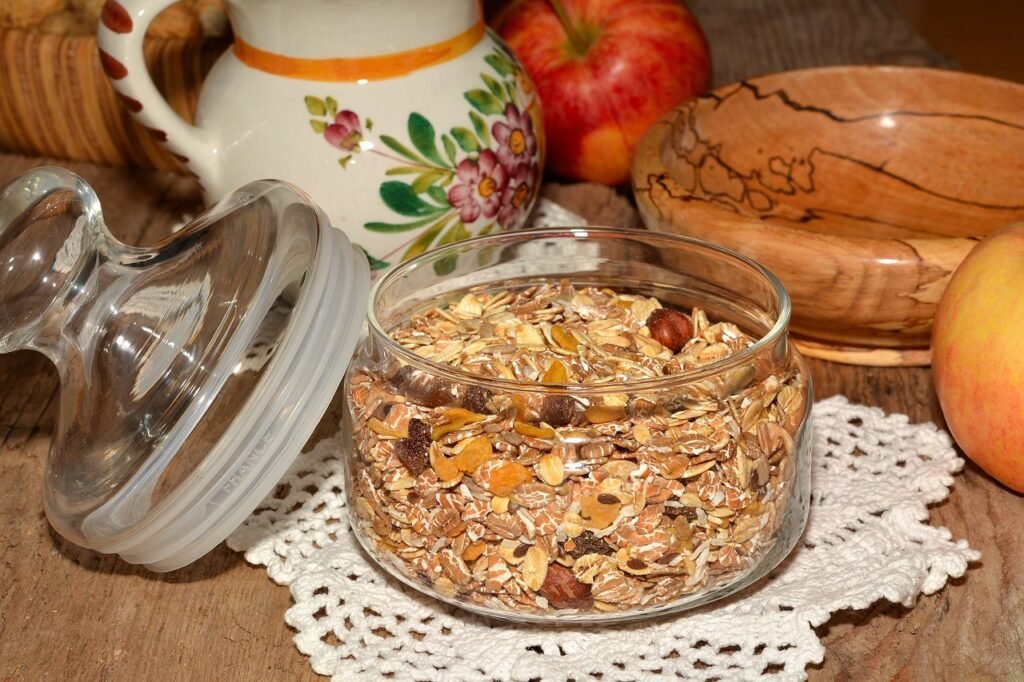
Steel cut oats stay hard and gritty in a bar, because they need long simmering in liquid to soften. Stick with quick or old fashioned rolled oats. If you only have old fashioned oats, pulse a portion in a blender to make the fine oat flour that fills gaps.
How can I make granola bars less sweet?
Trim the dry sugar first rather than the honey or syrup, since the liquid sweetener does most of the binding. Unsweetened dried fruit and toasted nuts add flavor without extra sugar. Expect a slightly more fragile bar, so press firmly and let it cool completely before slicing.
Are granola bars healthy?
It depends on the recipe. Oats, nuts and seeds add fiber and some protein, but many bars are held together with plenty of sugar. The 2025 to 2030 Dietary Guidelines for Americans say no amount of added sugar is recommended as part of a healthy diet, so compare labels or cut back the dry sugar when you bake.
Are granola bars gluten free?
Not automatically. Oats are naturally gluten free, but they are often grown and processed alongside wheat, barley and rye and can pick up gluten. For a gluten free bar, use oats labeled gluten free, which under FDA rules must contain less than 20 parts per million of gluten, and check the labels on every add-in.
Can dogs eat granola bars?
It is safer not to share them. Many granola bars contain ingredients the ASPCA lists as toxic to dogs, including chocolate, raisins, macadamia nuts and the sweetener xylitol. If your dog eats a bar containing any of those, call your veterinarian or the ASPCA Animal Poison Control Center right away.