
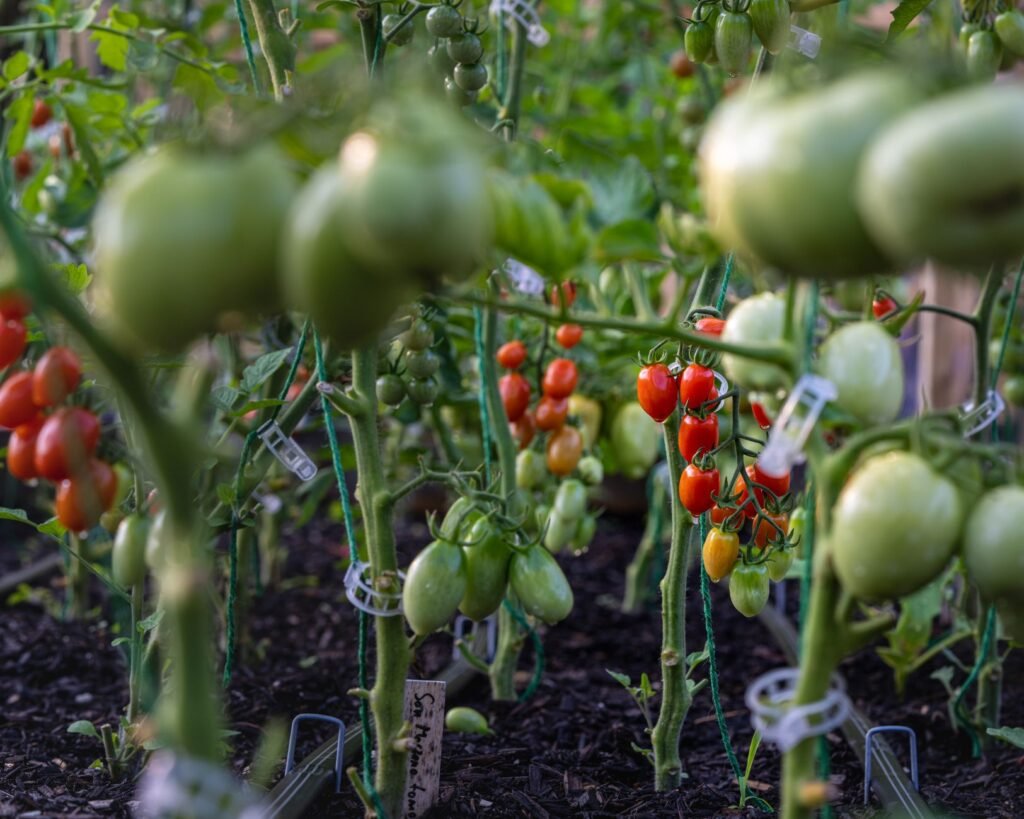
To grow tomatoes, plant young transplants in a spot with at least six hours of direct sun after the last frost, set them deep, and give them about an inch of water a week. Mulch the soil, support the vines with stakes or cages, and keep watering steady to avoid split fruit.
Choosing a sunny tomato bed with the right soil
Sun drives fruit. For good yields, Iowa State University Extension recommends no less than six hours of direct sun daily, and more is better. A spot near a south facing wall or open lawn beats one under trees that fill in by midsummer.
Tomatoes prefer slightly acidic soil with a pH between 6.0 and 6.8. Your county extension office can run a soil test and tell you whether you need lime, sulfur or nothing at all. Work compost into the bed before planting so the soil drains well but still holds moisture.
If you have space, move tomatoes to a different bed each year. They share families with peppers, potatoes and eggplant, and growing any of them in the same soil year after year lets soilborne diseases build up.
Planting tomato transplants deeper than they grew
Wait until the danger of frost has passed in your area. Your local extension office publishes typical last frost dates, and cold soil stalls young plants even without frost. If you start from seed, sow indoors five to six weeks before you plan to set plants outside.
Tomatoes can grow roots along any buried stem, so plant them deep, up to the first set of true leaves. Pinch off the lower leaves that would end up underground. Before planting, the Iowa State guide to tomatoes suggests working in 1 to 2 pounds of all-purpose garden fertilizer such as 10-10-10 per 100 square feet, though a soil test can refine that.
Tomato spacing for stakes, cages and sprawling vines
| How you grow them | Space between plants |
|---|---|
| Indeterminate, staked | 1.5 to 2 feet apart in the row |
| Wire cages | 2 to 3 feet apart |
| Left to sprawl on the ground | 3 to 4 feet apart |
| Determinate types | 1.5 to 2 feet apart, rows 4 feet apart |
Iowa State suggests rows 4 to 5 feet apart for most setups. Crowded plants stay damp after rain and dew, which invites leaf diseases. Put stakes or cages in at planting time so you do not stab roots later. Trimming suckers is its own job, covered in a separate pruning guide.
Watering and mulching so tomatoes do not crack
Aim for about one inch of water a week from rain and watering combined. A rain gauge or an empty tuna can in the bed shows how much actually fell. One or two deep soakings reach roots better than a daily sprinkle, and watering at the base keeps the leaves dry.
Consistency is the real goal. Plants that swing between dry and soaked tend to develop cracked fruit and blossom end rot, the leathery dark patch on the bottom of a tomato. Once the soil warms, spread 2 to 3 inches of straw, shredded leaves or grass clippings from untreated lawns around the plants. Mulch evens out moisture and keeps soil from splashing onto lower leaves.
Determinate or indeterminate tomato varieties
Determinate varieties grow to a set height, flower over a short period and ripen much of their crop in a few weeks. They suit containers, small beds and anyone planning to can a batch at once. Indeterminate varieties keep growing and setting fruit until frost, so they need tall supports and give a steady trickle of tomatoes all season.
The plant tag or seed packet says which type you have, along with days to maturity. In short summer areas, pick varieties with fewer days to maturity so the crop ripens before fall cold arrives. Seed catalogs and plant tags also list any disease resistance bred into a variety, which helps if blight or wilt has hit your garden in past years.
Frequently asked questions
Can I grow tomatoes in containers?
Yes. Choose a large container with drainage holes, fill it with potting mix rather than garden soil, and pick a determinate or compact variety. Containers dry out much faster than beds, so check moisture daily in hot weather and water until it drains from the bottom.
Why are my tomato plants flowering but not setting fruit?
Blossoms often drop during stretches of very hot or cool weather, and fruit set usually resumes once temperatures moderate. Too much nitrogen fertilizer can also push leaves at the expense of fruit. Your county extension office can help diagnose problems specific to your area and season.
When should I pick tomatoes?
Pick when the fruit has reached full color for its variety and gives slightly to gentle pressure. Tomatoes also finish ripening indoors at room temperature, so you can harvest ones that have started to color if a frost or heavy rain is on the way.
Do deer eat tomato plants?
Yes. Deer will browse tomato plants, and University of Maryland Extension notes that hungry deer eat even plants they normally avoid. A woven wire fence at least 8 feet tall is generally the most effective barrier. Taste or smell repellents can help where deer numbers are low to moderate, but check the label before spraying food crops.
Why are my tomato plants turning yellow?
Yellowing that starts on the lowest, oldest leaves often comes from early blight or Septoria leaf spot, fungal diseases that begin near the soil, or from a shortage of nitrogen. Fusarium wilt also yellows lower leaves before they brown. Pick off spotted leaves, water at the base, and ask your county extension office to confirm the cause.
Are tomato plants toxic to cats?
Yes. The ASPCA lists the tomato plant as toxic to cats, dogs and horses, naming solanine as the toxic compound, although ripe fruit is considered non-toxic. Signs can include drooling, severe stomach upset, weakness and dilated pupils. Keep cats away from the vines, and call your veterinarian if yours chews the leaves or stems.