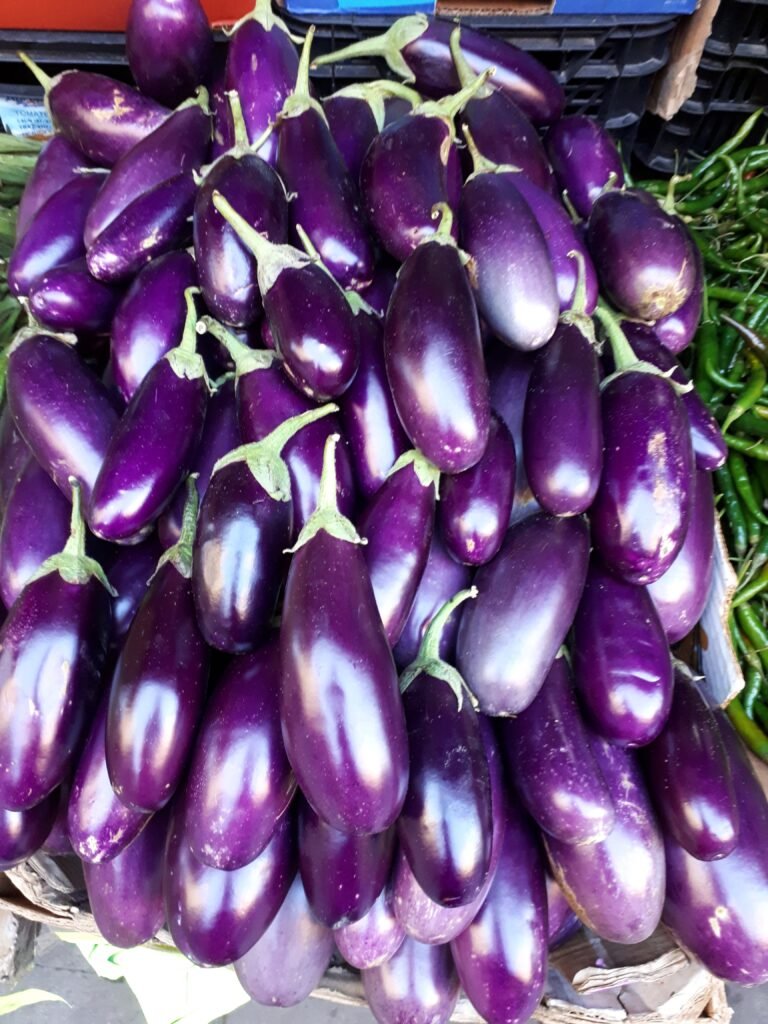
Botanically an eggplant is a fruit, and more precisely a berry. It grows from the flower of the plant and carries the seeds inside. In the kitchen it is treated as a vegetable, because it is savory and belongs in the main course. Both answers are correct. They come from two different systems.
Why botanists call it a fruit
Botany runs one test. A fruit is the mature ovary of a flowering plant, the structure that develops after pollination and holds the seeds. Eggplant passes cleanly. The flower gets pollinated, the ovary swells into the glossy purple thing on the shelf, and the seeds sit in the flesh.
It qualifies as a berry too, which is where most people stop believing this. A berry, botanically, is a fleshy fruit developing from a single ovary with seeds embedded in the pulp. Grapes, tomatoes, bananas and chili peppers all qualify. Strawberries and raspberries do not, which tells you how little the kitchen word berry has to do with the botanical one.

Why cooks call it a vegetable
Culinary classification ignores plant anatomy and sorts by flavor and by role in a meal. Sweet things that work in dessert get called fruit. Savory things that go in the main dish get called vegetables. Eggplant is bitter raw and rich once cooked, so it lands in the vegetable aisle, the vegetable half of the menu, and the vegetable group in federal dietary guidance.
There is nothing sloppy about that. Two systems, two purposes. A chef sorting by sugar content is not making a botanical error, and a botanist calling eggplant a fruit is not suggesting you bake it into a pie.
The tomato took this question to the Supreme Court
In 1893 the same argument got a legal answer in the United States. The Tariff Act of 1883 put an import duty on vegetables and let fruit in free. An importer named Nix argued his tomatoes were botanically fruit and should not be taxed. The case, Nix v. Hedden, went all the way up.
The court ruled against him unanimously. The justices accepted that tomatoes are botanically fruit, then held that tariff law follows ordinary language rather than science, and in ordinary language tomatoes are served with dinner and not as dessert. Tomatoes were vegetables for customs purposes. The opinion never pretended to settle the botany. It settled the tax.
Eggplant is far from the only one
| Food | Botanically | Treated in the kitchen as |
|---|---|---|
| Eggplant | Fruit, a berry | Vegetable |
| Tomato | Fruit, a berry | Vegetable |
| Cucumber | Fruit | Vegetable |
| Zucchini | Fruit | Vegetable |
| Bell pepper | Fruit, a berry | Vegetable |
| Avocado | Fruit, a berry | Usually savory |
| Green beans | Fruit, a pod | Vegetable |
| Pumpkin | Fruit | Both, depending on the recipe |
| Rhubarb | Leaf stalk, a true vegetable | Dessert fruit |
Which answer should you actually give
It depends who is asking. On a biology quiz, fruit, and a berry if there is room to show off. At trivia night, fruit, with the tomato case as the follow up. In cooking, shopping or nutrition, vegetable. If someone insists there is only one right answer, they have quietly picked a system without saying which one.
One practical note that outlives the argument. Eggplant sits in the nightshade family with tomato, potato and pepper. That matters in a garden, where planting the same family in the same bed year after year lets soil disease build up. Rotating the whole group is the usual advice.