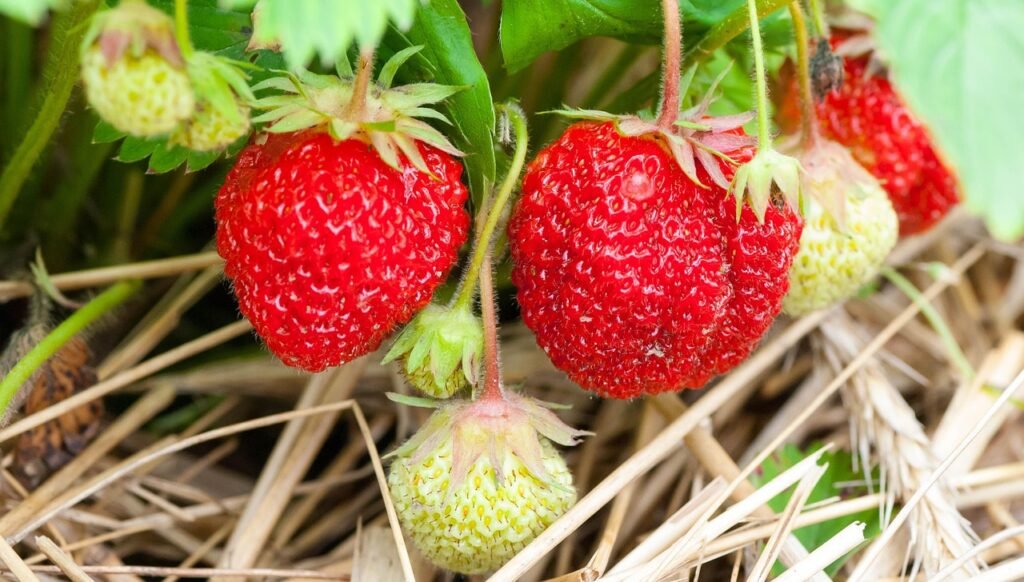
Grow strawberries in a spot with at least eight hours of sun, set each plant so the crown sits partly above the soil, and water deeply through the summer. Pick a type that suits your harvest plans, remove the first flowers so plants root well, and mulch with straw before winter.
June-bearing, everbearing and day-neutral types
Nurseries sort strawberry plants into three groups, and choosing among them sets your whole harvest calendar. The descriptions below follow Utah State University Extension, and your local extension office can suggest varieties proven in your area.
| Type | How it flowers | When you pick |
|---|---|---|
| June-bearing | Sets flower buds in the short days of autumn | One main crop in late spring or early summer |
| Everbearing | Sets buds under long days | A small spring crop and another in fall |
| Day-neutral | Sets buds regardless of day length while temperatures stay mild | Berries on and off through the season |
June-bearers give the biggest single harvest for jam and freezing. The other two spread smaller pickings across the summer.
A sunny site that did not just grow tomatoes
Utah State University Extension notes that strawberries need at least eight hours of full sun each day of the growing season to produce well, and that they grow best in loamy or sandy soil. Heavy clay slows growth and invites root disease, so raised beds help where the ground stays wet.
In a small yard, a raised bed or a large container can stand in for an in-ground row, as long as it gets the same sun and drains freely. Containers dry out faster, so plan on checking them more often.
Site history counts too. Avoid ground where tomatoes, peppers, potatoes, eggplant or okra grew recently, since those crops can harbor the Verticillium wilt fungus that also attacks strawberries.
Setting strawberry crowns at the right depth
- Plant bare root plants in early spring, as soon as the soil can be worked.
- Soak the roots for a short while and trim any that are very long so they fit without bending.
- Dig a hole deep enough to spread the roots out and down rather than folding them.
- Cover only the roots and the base of the crown, leaving most of the crown above the soil.
- Space plants 18 to 24 inches apart in rows three to four feet apart for a matted row, or 12 to 15 inches apart if you plan to keep runners trimmed.
- Firm the soil and water well.
Depth is where new plantings most often fail. A buried crown rots, and one set too high dries out.
Pinching early flowers and steering runners
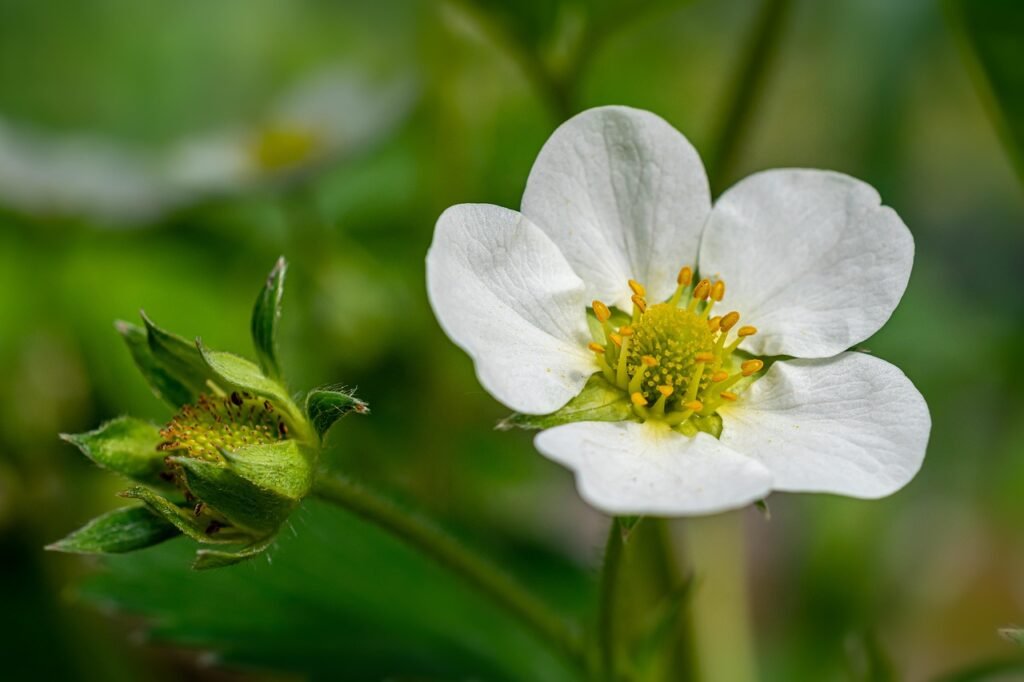
It feels wrong, but the first blossoms need to go. In a matted row of June-bearers, flowers and fruit are removed the first year so the plants put energy into runners and roots. For plants grown as single hills, removing the first flower cluster is enough.
Runners are the long stems that root into new daughter plants. Matted rows let them fill in the spaces, while the hill system cuts them off so the mother plant stays large. Rooting runners into pots on purpose gets its own guide.
June-bearing beds also need renovating right after harvest. That means clearing weeds, narrowing the rows and fertilizing and watering so new daughter plants root in time to fruit next year.
Watering, straw and how long a bed keeps producing
Strawberry roots are shallow and dry out fast. In summer heat, water thoroughly every three to five days rather than giving a light sprinkle daily, and water the soil instead of the leaves. Harvest strawberries early in the day while the air is still cool, once they are fully red, and check the patch every couple of days in peak season, since overripe fruit left on the plant invites rot.
In cold regions, cover the bed with clean straw or shredded leaves three to six inches deep once the weather turns cold in late fall, then pull it off the plants in spring. A well kept bed usually produces for three to five seasons before it needs replanting in a fresh spot.
Frequently asked questions
How long does it take strawberry plants to produce fruit?
June-bearing plants set out in spring are usually kept from fruiting that first year, so the real harvest comes the following spring or early summer. Everbearing and day-neutral plants can give a light crop in their first season once the early flowers have been removed.
Can strawberries grow in containers on a patio?
Yes, as long as the pot drains well and sits in full sun. Containers dry out much faster than garden beds, so check the soil often in hot weather. Everbearing and day-neutral types suit pots because they keep producing without needing space for runners to spread.
Should I fertilize strawberries?
A soil test from your local extension office tells you what the bed actually needs. Many growers add fertilizer after the June harvest when renovating the bed, which supports new runners. Avoid heavy feeding in spring, since it pushes leafy growth and soft berries prone to rot.
Do strawberry plants come back every year?
Yes. Strawberries are perennials, so the crowns go dormant over winter and push out new leaves each spring, and runners root into new daughter plants. Harvests shrink as a bed ages and gets crowded, which is why growers replant in a fresh spot every few years. In cold areas, a winter layer of straw protects the crowns.
How many strawberry plants should I grow per person?
Oklahoma State University Extension says about 125 plants usually give a family of four plenty of fresh berries plus enough to freeze or preserve, which works out to roughly 30 plants per person. Plant fewer if you only want berries for eating fresh. Missouri State University notes one mature plant can produce 1 to 2 quarts.