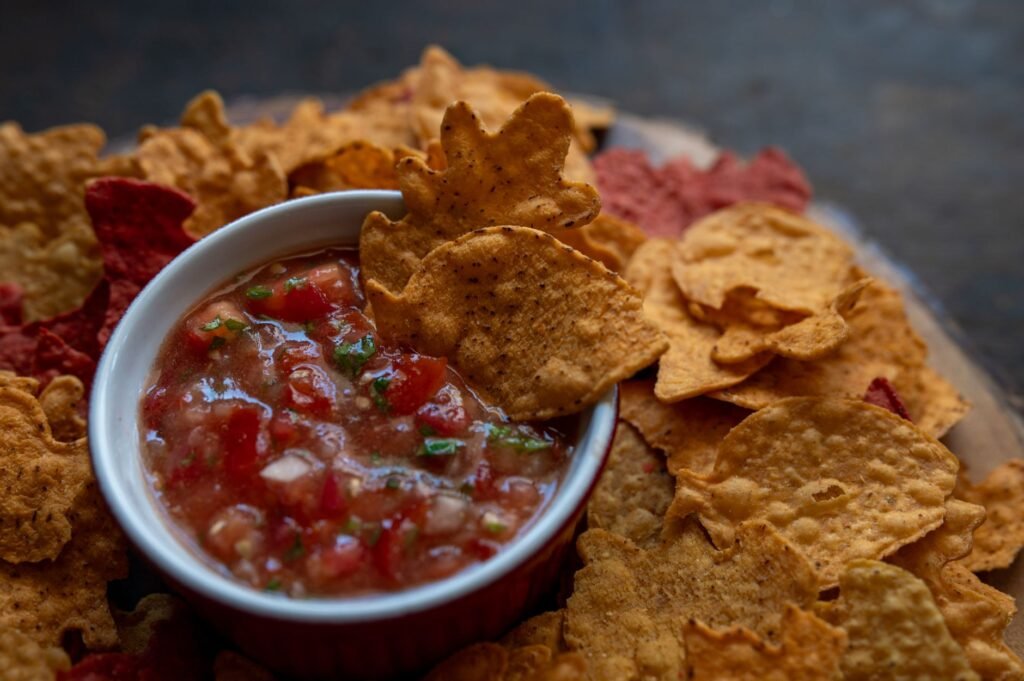
Cut corn tortillas into wedges, then fry them in oil at about 350 degrees F until crisp or bake them in a single layer on a sheet pan until they stop bending. Salt the chips the moment they come out of the heat so it sticks, and let them cool completely before you judge the crunch.
Corn tortillas that have dried a little work better
Store bought corn tortillas make good chips, and the thin ones sold for tacos work best. Flour tortillas can be fried too, though they puff and turn more like a cracker than a classic chip.
Fresh, soft tortillas hold moisture that spits when it hits hot oil and takes longer to cook out in the oven. Stack them, cut the stack into six or eight wedges with a sharp knife (a pizza cutter is faster for a big batch), and let the wedges sit out on a rack for half an hour or so. Wedges that feel slightly leathery at the edges will crisp faster and more evenly.
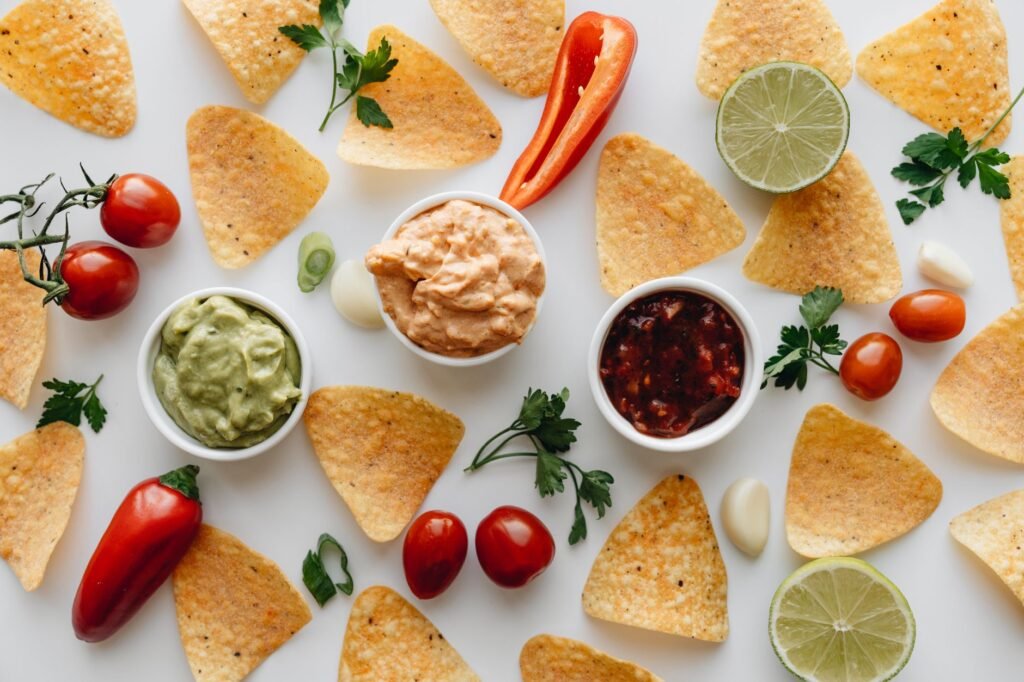
Frying the wedges in a heavy pot
Deep frying is usually done somewhere between 350 and 375 degrees F. Tortilla wedges are thin, so the lower end of that range gives you time to pull them before they scorch.
- Pour neutral oil such as canola or peanut into a heavy pot, filling it no more than about halfway so there is room for bubbling.
- Heat to about 350 degrees F, checking with a clip on thermometer.
- Add a small handful of wedges so they float in one layer without crowding.
- Turn them with a slotted spoon until the bubbling slows and the edges turn light gold.
- Lift onto a rack or paper towels, salt right away and repeat with the next batch.
Let the oil climb back to temperature between batches. Crowding the pot drops the heat, and chips that cook in cooler oil soak it up and turn greasy.
Never leave hot oil alone on the stove. Keep a lid nearby, and if the oil ever catches fire, slide the lid on and turn off the burner. Water on a grease fire makes it spread.
Baking tortilla chips in the oven
Oregon State University Extension’s Food Hero recipe bakes wedges anywhere from 375 to 450 degrees F for about 5 to 10 minutes, depending on the temperature, and warns you to watch closely so they do not burn. Brushing or spraying the tortillas lightly with oil before cutting helps salt cling and gives more color.
Arrange the wedges one deep on the pan, leaving a small gap around every triangle. Chips near the edge of the pan finish first, so pull those out and let the center pieces go a little longer. They firm up a lot as they cool. If your oven runs hotter at the back, turn the pan halfway through.
Fried chips against baked chips
| Fried | Baked | |
|---|---|---|
| Texture | Blistered, light and crisp | Flatter and crunchier, more like a cracker |
| Oil used | A pot of oil, strained and saved for later | A light brush or spray |
| Hands on time | Constant, in small batches | Mostly waiting while they bake |
| Best for | Dipping in salsa and queso | Nachos, soups and snacking |
Seasoning and storing homemade chips
Salt sticks to chips that are still hot and a little oily, so season within seconds of draining. Fine salt clings better than coarse flakes. Chili powder, a little cumin or grated lime zest tossed on at the same time adds flavor without making them soggy.
Let the chips cool completely on the rack before storing, because steam trapped in a warm container softens them. Kept in an airtight tin or bag at room temperature, they stay crisp for a few days. Stale chips regain most of their crunch after a few minutes of reheating in a warm oven.
Leftover frying oil can be cooled, poured through a fine sieve and kept in a sealed jar for another round. Once the oil smells stale or has gone dark and thick, discard it.
Frequently asked questions
Can I make tortilla chips in an air fryer?
Yes. Spray or brush the wedges lightly with oil, arrange them in one layer in the basket, and cook in small batches while shaking the basket partway through. Follow your air fryer maker's guidance for temperature, and check early, since thin wedges go from golden to burnt quickly.
Why are my homemade tortilla chips chewy instead of crisp?
Chewy chips usually still hold moisture. Either the oil was not hot enough, the pot was crowded so the temperature dropped, or baked chips came out too soon. Cooling them in a closed container also traps steam. Return them to a warm oven for a few minutes to dry out.
What oil works best for frying tortilla chips?
A neutral oil that tolerates high heat does the job well. Canola, vegetable, peanut and corn oil are all common choices. Avoid butter and unrefined oils for deep frying, since they tend to burn at chip frying temperatures and leave a bitter taste.
Are tortilla chips gluten free?
Chips made only from corn tortillas are usually gluten free, since corn does not contain gluten. Flour tortillas are made with wheat, and some multigrain or artisan tortillas also contain wheat, so check the label. The frying oil counts too, because oil shared with breaded foods can pass gluten to the chips.
Can dogs eat tortilla chips?
They aren't a good treat for dogs. The ASPCA warns that too much salt can cause excessive thirst and urination in pets, and chips are salty and fried. Seasoned chips are a bigger concern, because onion and garlic powders come from the allium family, which the ASPCA says can damage a dog's red blood cells.