
You do not take strawberry cuttings at all. The plant sends out horizontal stems called runners, each carrying baby plants that root wherever they touch soil, and your job is to steer the best ones into pots and cut the rest off. Everything else is about choosing and timing.
The plant does the work, you direct the traffic
After the harvest winds down, established crowns start throwing long stems across the ground. Every so often along one of those stems there is a bump that already has a rosette of tiny leaves on top and root buds underneath. Set that bump against damp soil and it anchors itself within weeks, still drawing food from the parent the whole time through the stem connecting them.
That connection is the part people rush. A rooted baby that is cut loose too early has to feed itself before it has enough root to do so, and it sulks or dies. Leave the stem attached until the young plant can resist a gentle upward tug, which is the simplest test there is.
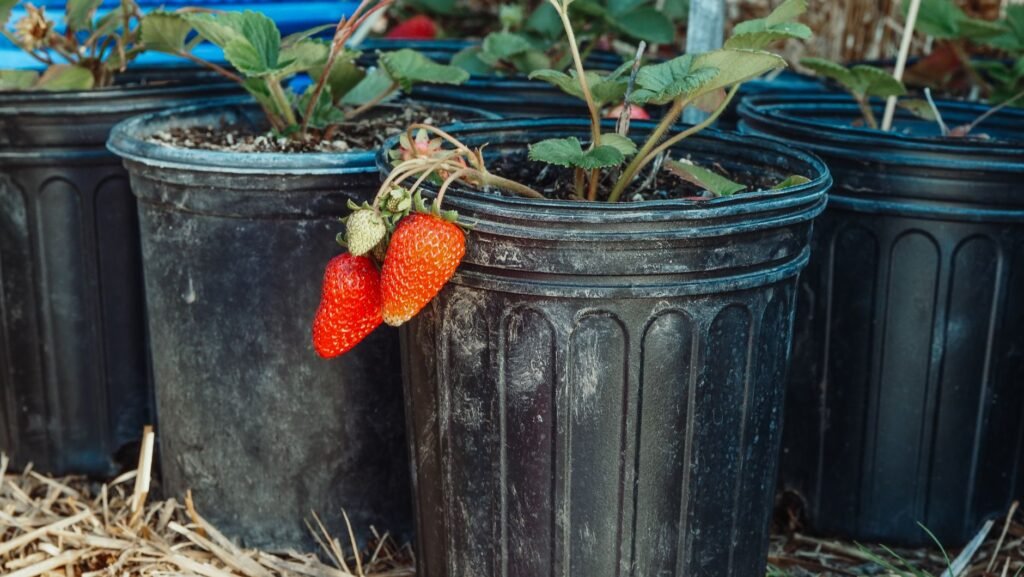
Which babies to keep and which to snip
A single stem often carries two or three of these rosettes in a line. They are not equal. The one closest to the parent gets the most food and builds the biggest crown, and vigor falls off with each position further out. Keep the first, take the second only if you need the numbers, and cut everything beyond that so the parent is not supporting passengers.
How many you get at all depends on the type you planted.
| Type | Runner output | Best route to new plants |
|---|---|---|
| June bearing | Heavy, especially after fruiting ends | Root the runners, which is what these varieties are built for |
| Everbearing and day neutral | Sparse, since energy goes into repeat fruiting | Split the crown in spring, or root the few runners you get |
| Alpine | Almost none | Seed, which comes true, or division of an old clump |
One more rule applies to a bed planted this year. Pinch the runners off through the first season so the young crowns put everything into themselves. You lose free plants and gain a crop worth picking.
Pegging into pots beats letting them land wherever
Allowing rosettes to root in open ground works, but it leaves you digging up plants with torn roots and it turns a tidy row into a mat. Sinking a pot under each one solves both problems.
- Fill a small pot with ordinary potting mix and bury it to its rim directly beneath the rosette you chose.
- Hold the node flat against the surface with a bent piece of wire or an opened paper clip, firm enough that it cannot lift.
- Leave the stem to the parent completely intact and water the pot whenever the surface dries.
- After three or four weeks, tug the rosette lightly. Resistance means the rosette is anchored.
- Cut the stem on the parent side, wait several more days, then lift the pot out and grow it on.
Rotating the bed so the patch does not fade
Crowns thicken and turn woody with age, and yields slide even when the plants look healthy. The usual answer is a rolling replacement rather than one big overhaul: raise a batch of daughters each summer, plant them into fresh ground, and pull the oldest section out once the new one is producing. Running three areas at staggered ages keeps something at peak every year.
Move the new plants to different soil rather than refilling the same row. Soilborne problems accumulate where the crop has sat for years, and a daughter planted into that ground inherits the trouble immediately.
It is also worth buying certified plants every few cycles instead of propagating from your own stock forever. Viruses build up quietly in strawberries and they do not announce themselves with spots or holes. The only symptom you tend to see is smaller fruit and weaker growth year after year, which is easy to blame on the weather or the soil when the real cause arrived on the runners.
Frequently asked questions
When should I take strawberry runners?
Wait until the harvest is finishing, which is when established crowns push runners hardest. Pot the rosettes through midsummer so they have time to build roots and settle before cold weather. Skip propagation entirely in a bed's first season and let the young crowns bulk up instead.
How many plants can one strawberry plant produce?
A vigorous June bearing crown can send out several runners, each carrying two or three rosettes, so the raw number gets large quickly. Quality drops off fast though. Keeping only the rosette closest to the parent on each runner gives you fewer plants that are worth growing on.
Do I have to cut the runner before potting the new plant?
No, and cutting early is a common mistake. The rosette lives off the parent while it roots, so leave the link intact until a light tug meets resistance. Sever it on the parent side after that, then wait a few more days before lifting the pot.