
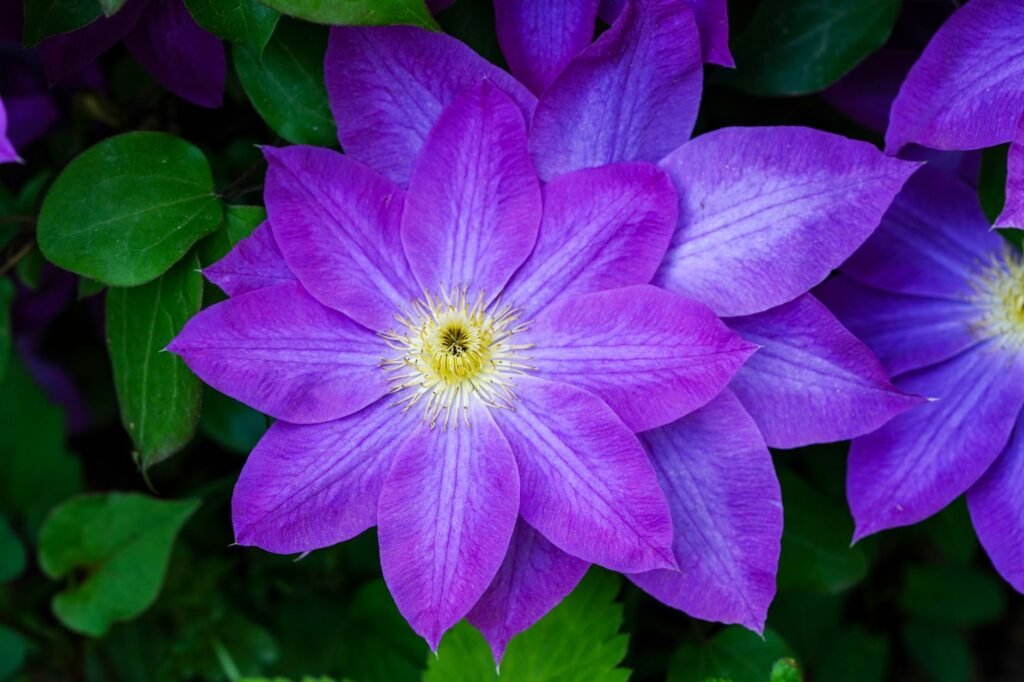
Clematis is rooted from internodal cuttings, meaning the lower cut goes an inch or two below a pair of leaves rather than right underneath it, leaving a bare leg of stem to bury. Layering a long shoot into sunken pots is the other route, and it is the more forgiving of the two.
The plant that breaks the usual cutting rule
Almost every guide to rooting a stem tells you to slice immediately below a leaf joint, because that is where the root cells sit in most plants. Clematis is the standing exception. Cut there and the short stub left behind tends to soften and rot before anything happens, and the whole cutting follows it down.
Instead you leave a length of plain stem under the joint. That section between the joints is firmer and drier, it holds the cutting upright in the mix without needing to be jammed in, and the base callouses over and produces roots from the cut face. The leaf joint itself is then sitting at the surface where air reaches it, which is exactly where you want the shoot bud to be.
Where the knife goes, step by step
Take material when this season’s growth has firmed a little but is not yet woody, which usually falls between late spring and the middle of summer. A shoot that still flops is too soft and will collapse, while an old brown stem has stopped being interested.
- Cut a length of stem carrying several leaf pairs and keep it out of the sun while you work.
- Divide it into pieces, cutting cleanly just above one leaf pair for the top of each piece.
- Make the lower cut roughly one to two inches below that same leaf pair, so each piece is a joint sitting on a bare leg.
- Remove one leaf of the pair entirely and shorten the survivor if it is large.
- Give the base a light coating of rooting hormone, then slide the leg into coarse, sharply drained mix until the joint rests at the surface.
- Cover with a clear dome or bag, keep it warm and out of direct sun, and resist poking at it for several weeks.
Patience is the main requirement from there. Roots can take anywhere from a few weeks to a couple of months depending on warmth, and the top often sits motionless the entire time.
Layering gives you the best odds by far
If a mature vine has a long flexible shoot you can reach, layering asks almost nothing of you and rarely fails. The shoot remains joined to the parent and keeps drawing on it throughout, which removes the deadline that a severed piece of stem is always working against.
Pick a stem from the previous season, bury several small pots up to their rims along the line the stem will lie, and bring the shoot down so a leaf joint rests on each pot. Nick the underside of the stem lightly at each joint, pin it with a bent wire, and cover it with mix, leaving the leaves exposed. A single long shoot weaving in and out of the ground this way can produce a plant at every pot. Keep them watered, leave them connected until the following spring, then cut between the pots and lift each one separately.
Growing on, and the planting depth nobody mentions
New clematis are slow to build a root system, and pushing them into the garden too early wastes the work. Pot them on as the roots fill their container, keep them somewhere sheltered through the first cold season, and give them a full growing season in a pot before they go in the ground.
When they do go out, set the crown several inches deeper than it sat in the pot. Buried buds can send up fresh stems if the top growth ever collapses, and that reserve is the difference between losing a plant and losing one season.
| Method | Timing | What to expect |
|---|---|---|
| Internodal cuttings | Late spring through midsummer | Many plants at once, with real losses along the way |
| Layering | Spring or summer, lifted a year later | Fewer plants, very high success rate |
| Division | Early spring, herbaceous kinds only | Woody climbers resent root disturbance and sulk |
| Seed | Autumn, from the fluffy heads | Species may come true, named hybrids will not |
Frequently asked questions
Why are clematis cuttings taken between the nodes?
A stub left directly under a leaf joint softens and rots on this plant, taking the cutting with it. The firmer stretch of stem between joints resists that, holds the piece upright in the mix, and forms a callus at the cut face that roots emerge from.
How long do clematis cuttings take to root?
Expect anywhere from several weeks to a couple of months, with warmth at the base making the largest difference. The top of the cutting usually shows no movement during that period, so judge progress by a gentle tug rather than by waiting for new leaves to appear.
Can you propagate clematis by division?
Only the herbaceous kinds that die back to the ground each year take division reasonably well. Woody climbers resent having their roots disturbed and often sit unhappy for a season or more afterward, so layering or cuttings are the sensible choice for those.