
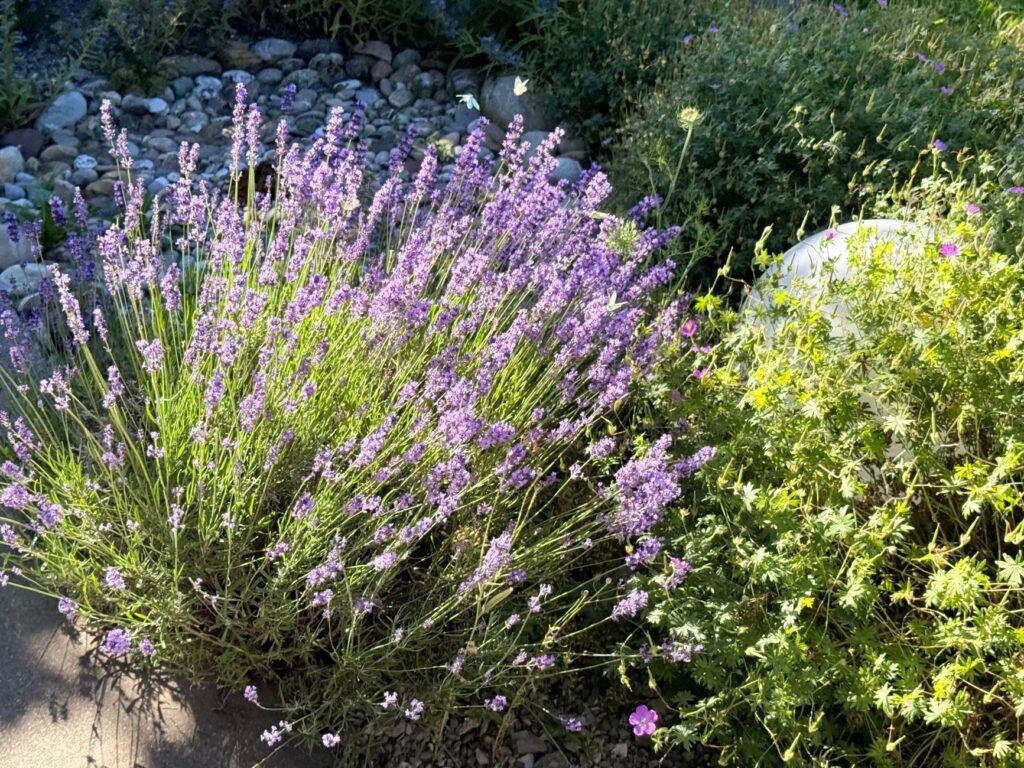
Plant lavender after your last spring frost in a spot with full sun and dry, sandy, well-drained soil, spacing plants 18 to 24 inches apart. Set each root ball level with the ground, water it in well, and keep watering about weekly until the plant is established. After that, lavender prefers to stay on the dry side.
Choosing a lavender spot with sun and drainage
Lavender comes from dry, sunny hillsides, and it fails fastest when its roots sit wet. Utah State University Extension’s guide to growing English lavender gives the basics below.
| Need | What USU Extension recommends |
|---|---|
| Light | Full sun |
| Soil | Dry, sandy, well-drained; light, gravelly soil |
| Soil pH | 6.5 to 7.5 |
| Spacing | 18 to 24 inches apart |
| Planting time | After the last spring frost |
| Early watering | About 1 gallon per plant per week until established |
| Climate | USDA hardiness zones 5 to 10 |
Look up your zone on the USDA Plant Hardiness Zone Map before buying. Those zone figures refer to English lavender; the showy types sold as Spanish or French lavender may be less cold tolerant, so read the tag.
When shopping, choose a compact plant with healthy gray-green foliage and no blackened stems at the soil line. Slide it out of the pot if the store allows, and look for white, firm roots rather than a brown, mushy mass.
Planting lavender in heavy clay or wet ground
Clay holds water for days after rain, while lavender needs its roots to dry out soon after a soaking. Rather than digging a deep hole and filling it with rich compost, which can turn into a soggy pocket, raise the plant above the problem. A raised bed, a mound of gritty soil several inches high, the top of a slope or a spot along a sunny wall all drain faster.
Not sure how your soil drains? Test the planting spot with a hole roughly a foot deep. Pour in water and watch how fast the level drops. If water is still standing long after a normal garden bed would have soaked it up, treat that spot as poorly drained and build up instead of down.
Skip heavy wood mulch piled against the stems. USU suggests light mulches such as bark or gravel to hold down weeds, and gravel has the added benefit of keeping the crown dry.
Setting a lavender plant into the ground
- Water the plant in its nursery pot an hour before planting.
- Dig a hole about as deep as the pot and a little wider.
- Slide the plant out and gently loosen any roots circling the bottom.
- Set it so the top of the root ball sits level with, or slightly above, the surrounding soil. Never bury the stems.
- Backfill with the soil you removed, firming it lightly with your hands.
- Water thoroughly, then give about a gallon a week until you see new growth.
Hold off on fertilizer. USU notes that an inch of compost under the plants is enough to feed them, or a single application of slow-release fertilizer for the season. Too much food makes soft, floppy growth with fewer blooms.
Lavender care through the first seasons
Once the plant is putting on new growth, cut back on watering and let the soil dry between drinks. Yellowing lower leaves and a blackened base often point to too much water, not too little.
Prune every year after flowering. USU advises shearing the plants back to about half their size, which keeps them compact and stops them from turning woody and sprawling in the center. Cut into leafy stems rather than bare wood, since old bare stems regrow slowly.
Growing lavender in a pot instead of a bed
A container is a good answer if your yard is shady or poorly drained. Pick a pot with drainage holes, use a gritty potting mix, and place it where it gets full sun. Clay pots dry faster than plastic ones, which lavender appreciates. Water when the top inch of mix feels dry, and empty any saucer after rain. In zones colder than your lavender’s rating, move the pot to a sheltered spot for winter.
Frequently asked questions
Can you plant lavender in the fall?
In mild climates, fall planting can work because the soil stays warm enough for roots to grow before winter. In colder zones, spring after the last frost is safer, which is what Utah State University Extension recommends, since young plants need time to establish before freezing weather.
How long does lavender take to bloom after planting?
Many nursery plants bloom lightly in their first summer, but heavy flowering usually comes once the plant is established, often by the second season. Timing depends on the variety, your climate and the plant's size when you bought it, so check the tag for the expected bloom period.
Does lavender come back every year?
English lavender is a perennial and returns each year in USDA zones 5 to 10 when drainage is good. Plants often decline after several years as they turn woody, so yearly pruning after flowering helps them last. Less hardy types may act as annuals in cold areas.
What should you plant with lavender?
Choose neighbors that also like full sun, fast drainage and little water. Utah State University Extension suggests other low water plants such as gaillardia, salvias, echinacea, daylilies, rudbeckia and iris. Avoid pairing it with thirsty plants that need frequent watering, since lavender declines when its roots stay wet.
How do you plant lavender seeds?
Start them indoors rather than sowing them in the garden. Utah State University Extension says to sow seeds 1/8 inch deep in soilless mix, cover them lightly with perlite and keep them near 70°F, where they usually sprout in 14 to 21 days. Expect 100 to 200 days before transplanting, and many varieties do not come true from seed.
Is a lavender plant safe for cats?
No. The ASPCA lists lavender as toxic to cats, dogs and horses because it contains linalool and linalyl acetate, and eating it can cause nausea, vomiting and loss of appetite. Plant it where pets don't graze, and call your veterinarian or an animal poison control line if a cat eats some.