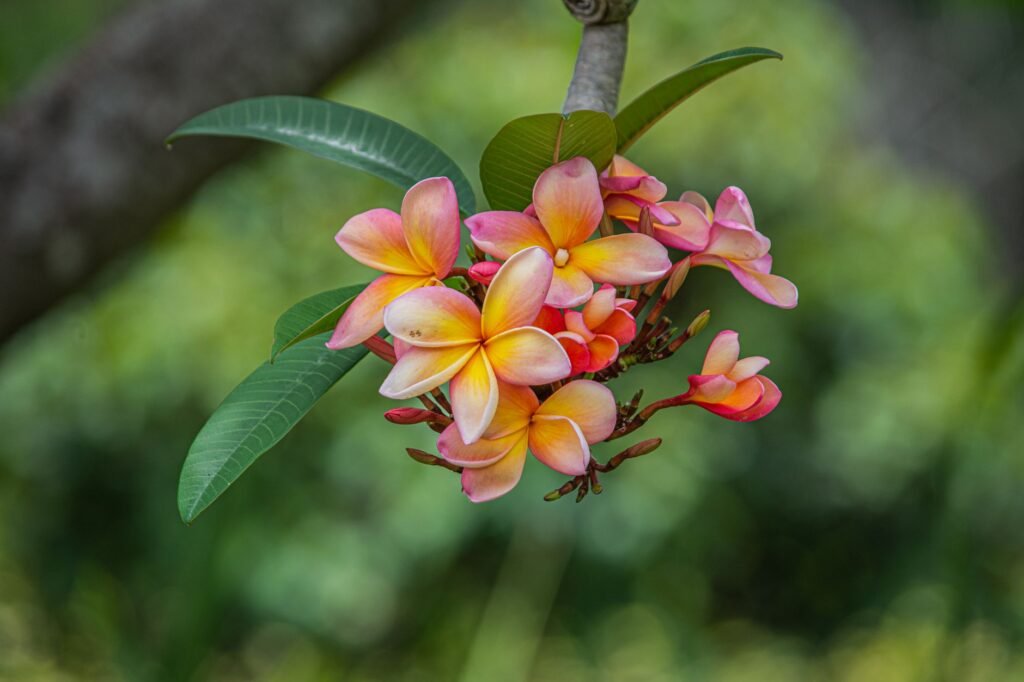
To propagate plumeria, cut a 12 to 15 inch stem tip from mature gray wood, let the cut end dry for three to five days until it calluses, then plant it about 3 inches deep in moist, fast-draining potting mix. Hold off watering until new leaves appear, since soggy soil rots the cutting.
Choosing a plumeria branch to cut
Plumeria, also called frangipani, is one of the easier plants to root because it needs no mist system or special supplies. The choice of stem sets up success. A University of Florida IFAS Extension publication on propagating plumeria from cuttings recommends taking cuttings from mature wood that includes the stem tip. Mature stems have a grayish color and feel firm, while new growth is green and soft.
Aim for a piece 12 to 15 inches long and roughly half an inch thick. You can remove some or all of the leaves to cut down on water loss while the cutting has no roots.
The milky sap contains irritants, so wear gloves and keep it off your skin and away from your eyes. Rinse tools and hands after cutting.
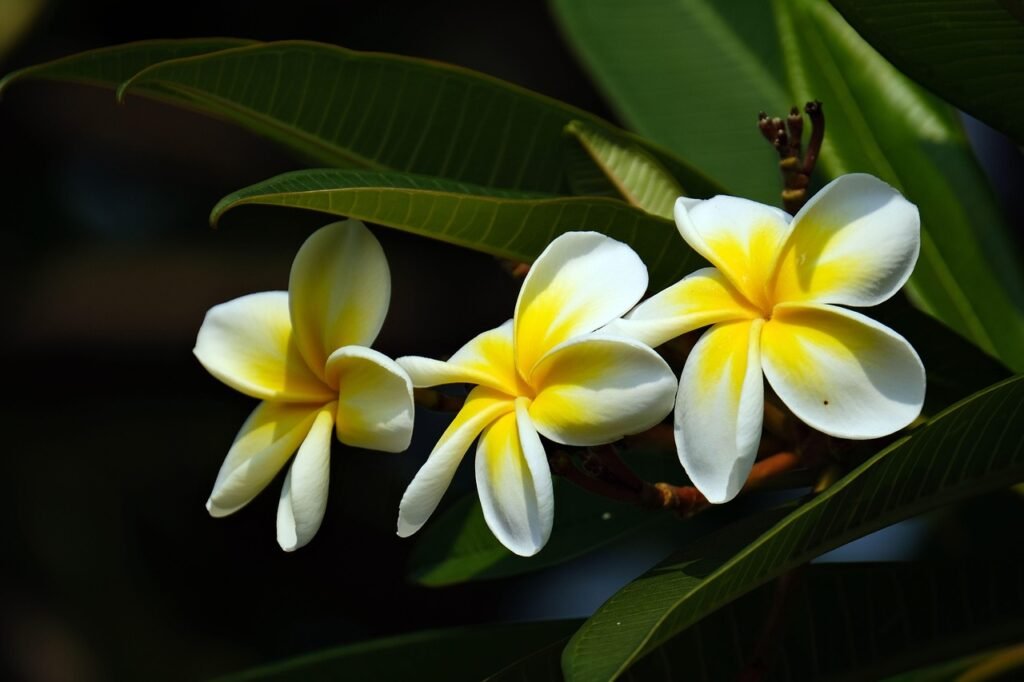
Letting the plumeria cutting callus before planting
Skipping the callus is how a plumeria cutting rots instead of rooting. Leave the cutting somewhere dry and shaded for three to five days so the cut end seals over with a firm, dry layer called a callus. It should feel dry to the touch, not sticky.
Store cuttings upright or lying flat on a dry surface out of direct sun. Plumeria stems are fleshy and hold a lot of water, so a few days out of soil won’t hurt them. Rooting hormone isn’t required for plumeria, though some growers dip the callused end in it anyway.
Potting and watering the plumeria cutting
| Step | What to do |
|---|---|
| Container | A pot with drainage holes, sized to keep the cutting upright |
| Mix | Well-draining potting soil, moistened before planting |
| Depth | About 3 inches of the callused base below the surface |
| First five to six weeks | No watering while roots form |
| New leaves appear | Start watering lightly |
| Leaves fully developed | Water normally, keeping the mix moist but not wet |
A tall cutting can wobble, which disturbs new roots. Tie it loosely to a stake or brace it with a few stones on the soil. Put the pot somewhere warm and bright.
Signs your plumeria cutting has rooted
New leaves at the tip are the best sign that roots have formed. Tugging the cutting to check disturbs the fragile roots, so resist the urge. Early leaves sometimes appear before roots are established, which is why watering should stay light until the leaves grow out fully.
Once the cutting is growing, give it full sun and soil that stays moist but never wet, which is how established plumeria perform best. Plumeria tolerates soil from slightly acidic to slightly alkaline. The UF publication also notes that a fertilizer high in phosphorus and low in nitrogen may encourage flowering. Move the plant to a larger pot when roots fill the first one.
A cutting that turns soft, dark or wrinkled at the base has usually rotted. If it’s still firm higher up, cut above the damaged part, let the new end callus again and start over.
Growing plumeria outside the tropics
Plumeria is a tropical plant. UF’s Gardening Solutions guide to plumeria lists it as best suited to USDA Hardiness Zones 10B to 11, and in colder areas it can be grown in a container and brought indoors when cold weather arrives. Plumeria does not tolerate freezing temperatures, so rooting cuttings in pots makes sense anywhere frost is possible.
Cuttings keep the flower color and form of the parent plant, which seeds don’t. Plumeria grown from seed often takes three to four years to flower and may look nothing like its parent. If the plant you’re cutting is a patented variety, check the tag, since patented plants can’t be propagated without the patent holder’s permission.
Frequently asked questions
Can you root plumeria cuttings in water?
Plumeria stems are fleshy and prone to rot, which is why extension guidance favors callusing the cut end and planting it in fast-draining potting mix kept on the dry side. A cutting sitting in water risks rotting before roots form. Soil propagation is the more reliable method for most growers.
Why did my plumeria cutting rot?
Rot usually comes from planting before the cut end has callused, using a mix that holds too much water, or watering during the first weeks before roots form. Cold, damp conditions make it worse. Cut above any soft tissue, let it callus again, and replant in a drier mix.
How long does it take a plumeria cutting to bloom?
It depends on the size of the cutting, the growing conditions and the variety. Cuttings from mature, flowering-size wood can bloom much sooner than plants grown from seed, which often take three to four years. Keep the plant warm and in full sun to give it the best chance.
Is plumeria toxic to dogs?
Its sap is irritating, so keep dogs away from plumeria. UF/IFAS Extension says the plant belongs to the dogbane family and its sap contains harmful irritants, while noting no recorded deaths from exposure to or ingestion of plumeria. Keep stems and cuttings out of reach, and call your veterinarian if your dog eats part of one.
What does plumeria smell like?
Plumeria flowers are highly aromatic, and UF/IFAS Extension says many people describe the scent as floral, tropical and pleasant. The blooms range from white and yellow to orange, pink and red, and in Florida they appear between May and November. Certain moths are drawn to the flowers, though they offer little to no nectar.