Pinch or cut off a piece of stem two to five segments long, let the cut end dry for a day or two, then set it about an inch deep in moist, well-drained potting mix. Park the cutting in bright, indirect light, and expect roots in roughly three to eight weeks.
Confirming you have a Thanksgiving cactus
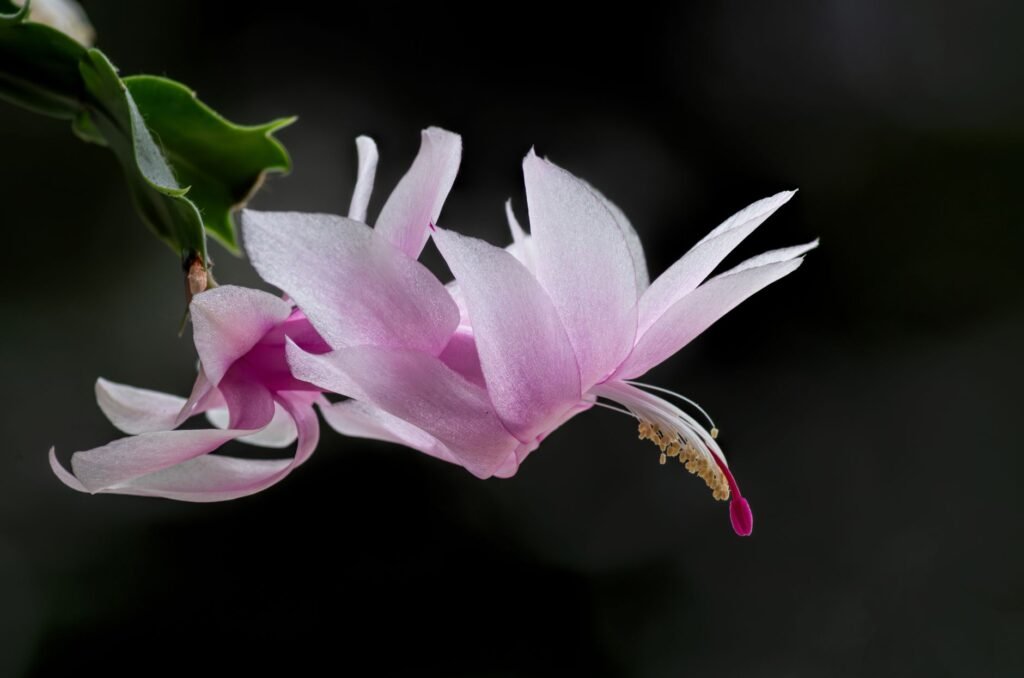
Thanksgiving cactus (Schlumbergera truncata) and Christmas cactus are close relatives that are often sold under each other’s names. They propagate the same way, but knowing which one you have helps you predict when it will bloom.
| Feature | Thanksgiving cactus | Christmas cactus |
|---|---|---|
| Stem segment edges | 2 to 4 pointed, saw-toothed projections | Rounded, scalloped edges |
| Anther color inside the flower | Yellow | Purplish brown |
The flat green pads are not leaves. North Carolina State Extension describes them as cladodes, flattened stem sections that do the work of leaves. The same source describes each segment as roughly 1.5 to 2.25 inches long and 0.75 to 1.5 inches wide, and classifies the plant as nontoxic for cats and dogs.
Taking Thanksgiving cactus cuttings in late spring
Clemson Extension names May or June as the best time, when the plant has finished blooming and is putting out new growth.
- Choose healthy, plump stems with no soft or shriveled segments, ideally from different parts of the plant so you do not leave one side bare.
- Remove a section of 3 to 5 segments, as Clemson suggests, or 2 to 3 segments, which North Carolina State also describes. Twist it off at a joint or cut with a clean, sharp knife, wiping the blade between plants.
- Let the cut ends dry in the shade for a day or two, or up to a few days, until they form a callus.
- Gather several cuttings, since a pot of them fills out into a fuller plant.
Break or cut at the joint between two segments rather than through the middle of one, so the base of the cutting is a clean, compact end that dries quickly.
A rooting setup from pot to plastic bag
Clemson Extension recommends placing three cuttings about one inch deep in a 4-inch pot, or five cuttings in a 6-inch pot. Water the soil well, then tent the pot and its segments under a clear plastic bag, which keeps the air around them humid. Clemson puts rooting at three to eight weeks.
Use a moist, well-drained potting mix, such as a cactus or succulent blend. A bright window that misses the harsh afternoon sun works best, since intense rays can yellow the segments. Once the bag comes off, North Carolina State advises watering only when the mix is completely dry. The same guide gives the plant’s preferred range as 70 to 80°F with high humidity, which is why a bright bathroom often suits it.
Signs the segments have rooted
A rooted cutting resists a gentle tug and looks firm rather than limp. Tiny new segments forming at the tips are the clearest sign that roots below are feeding growth. At that point, open the bag for longer stretches over a week before removing it entirely.
Shriveled, wrinkled segments usually mean the cutting is too dry or still has no roots, while black, mushy bases mean rot from soil that stayed soggy. Discard rotted pieces and start again with fresh, callused segments.
Once a young plant is growing, North Carolina State suggests fertilizing monthly during spring growth and cutting back in fall and early winter.
Getting the new plant to bloom in fall
Flower buds depend on conditions starting around mid-September. Clemson lists three needs for about six weeks or more: temperatures between 60 and 68°F, at least 14 hours of continuous darkness each night, and bright light during the day. Keep it away from lamps or porch lights at night during that stretch, since stray light cuts into the continuous darkness it needs. A small, freshly rooted plant may bloom lightly its first fall, so expect a fuller display once it has more stems.
Frequently asked questions
Can you root Thanksgiving cactus cuttings in water?
Some people try rooting segments in a little water, but the extension methods from Clemson and North Carolina State use callused cuttings in moist, well-drained potting mix. Soil rooting avoids the transplant step, where water-grown roots can struggle to adjust. If you try water, keep only the base submerged.
Is Thanksgiving cactus safe for cats and dogs?
North Carolina State Extension lists Schlumbergera truncata as non-toxic to both cats and dogs, which makes it a popular choice for homes with pets. Pets can still knock over pots or chew segments off, so keep new cuttings out of reach while they root. Call your veterinarian if a pet seems unwell.
Should I remove flower buds from a cutting?
A cutting taken while buds are forming spends energy on flowers instead of roots, so many growers pinch buds off. Taking cuttings in May or June, as Clemson Extension recommends, avoids the question because the plant has finished blooming and is in active growth by then.
How often should you water a Thanksgiving cactus?
Water when the potting mix feels dry to the touch rather than on a fixed schedule, and let the excess drain away. Clemson Extension says the plants tolerate slightly dry soil in spring and summer, but once flower buds set in fall, keep the mix evenly moist so the buds don't drop. Avoid soggy soil in winter.
Do Thanksgiving cactus like to be root bound?
Somewhat, yes. Clemson Extension says holiday cacti flower best when kept somewhat pot bound, so there's no rush to move them into a bigger container. NC State Extension suggests repotting about every three years, and Clemson recommends doing it in spring, using a moist, well drained potting mix.