
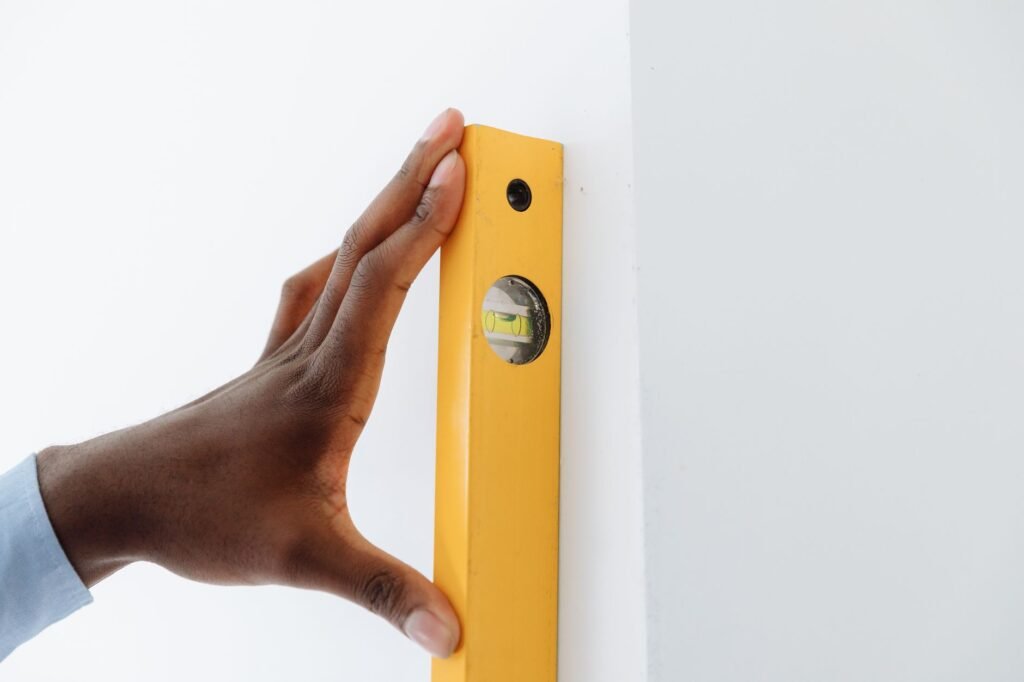
Find the studs, mark a level line, and screw the brackets or mounting rail into studs wherever you can. Where no stud lines up, use a drywall anchor rated for more than the loaded shelf will weigh. Pre-drill, check level once more before the final screw, and load the shelf only after everything is snug.
Matching shelf hardware to what it will hold
Start with the load, not the look. A row of paperbacks is heavier than it seems, and a shelf of cookbooks or dishes heavier still. The table sorts common options.
| Shelf type | How it mounts | Best for |
|---|---|---|
| Floating shelf | Hidden steel bracket screwed to the wall | Light decor, small plants, photos |
| Bracket shelf | Two or more L brackets under a board | Books, pantry items, general storage |
| Rail and bracket system | Vertical metal rails with clip-in brackets | Closets, garages, adjustable storage |
| Cleat-mounted shelf | Beveled wood strip screwed across studs | Heavy tools, long spans, cabinets |
Every anchor and bracket package lists a weight rating. Add up what will sit on the shelf, include the shelf itself, and pick hardware rated comfortably above that total.

Locating studs and what hides behind drywall
In the United States, wall studs are usually placed 16 inches apart measured center to center, though some walls use 24 or 12 inches. Once you find one stud, measure over to find its neighbors, and confirm each with an electronic stud finder or a strong magnet that grabs the drywall screws.
Before drilling, think about what else is in the cavity. Wiring often runs up and down from outlets and switches, so avoid drilling directly above or below them. Plumbing tends to sit in walls behind sinks, tubs and toilets. Some stud finders can flag live wires; if you have any doubt, shift the shelf a few inches.
Marking, drilling and mounting a level shelf
- Hold the shelf or rail at the height you want and mark the top edge lightly in pencil.
- Use a level to extend that mark into a line across the full width.
- Mark the stud centers along the line, then mark each bracket hole.
- Drill pilot holes into studs slightly smaller than your screws, or install drywall anchors where there is no stud.
- Drive the first screw of each bracket, check level, then add the rest.
- Set the shelf on the brackets and fasten it from underneath if the brackets have holes for that.
- Press down firmly on the shelf before loading it to make sure nothing shifts.
A painter’s tape strip along the line lets you mark freely without pencil marks left on the paint.
Picking a drywall anchor when no stud lines up
Plastic expansion anchors suit light items only. Self-drilling threaded anchors screw into the drywall and hold a bit more. For real weight away from a stud, look at toggle bolts or metal sleeve anchors, which spread the load behind the wallboard. Follow the package’s hole size exactly, since an oversized hole robs an anchor of its strength. Remember that the shelf’s own weight counts, and so does any pulling on it, like a child grabbing the edge. Shelves in a kid’s room are safer fastened to studs.
A reliable trick for wide shelves is to put at least one bracket on a stud and use anchors only for the others. If neither bracket can reach a stud, screw a wood cleat across two studs first and attach the shelf to the cleat.
Shelves on plaster, brick, concrete or tile
Plaster over wood lath can crack under a hammer drill, so drill slowly and look for the studs behind it as you would with drywall. Brick and concrete need masonry bits and masonry anchors. Drill into the mortar joint or the brick face according to the anchor’s directions. For tile, use a bit made for tile or glass and a strip of tape to keep it from wandering. Wear safety glasses when drilling into masonry or overhead, and vacuum the dust as you go. If you’re renting, check your lease about drilling before you start.
Frequently asked questions
How much weight can a shelf on drywall anchors hold?
It depends entirely on the anchor, the drywall thickness and how many anchors share the load. Each package lists a weight rating, and toggle-style anchors hold far more than small plastic plugs. Screwing into a stud beats any anchor, so put brackets on studs whenever the spacing allows.
How high should you hang a shelf?
There is no fixed rule. Above a desk, leave enough room for a monitor and your head when you lean forward. For display shelves, many people keep the lowest shelf around eye level. Tape a paper template to the wall first and live with it for a day.
Can you hang floating shelves without studs?
Light floating shelves can go on quality drywall anchors that match the bracket's instructions, but these shelves lever a lot of force onto the top screws. For books or anything heavy, catch at least one stud, or pick a bracket shelf that spreads weight lower on the wall.
How do you hang floating shelves?
Take the hidden bracket out of the shelf, hold it level on the wall and mark its screw holes. Drill pilot holes and screw the bracket into studs, using heavy duty anchors only where no stud lines up. Slide the shelf onto the bracket rods until it sits tight to the wall, then tighten any set screws underneath.
How do you hang wire shelves?
Wire closet shelving rests on a row of wall clips along its back edge, with support brackets bracing the front and side wall brackets where a shelf meets a wall. In drywall, the clips come with anchors that fit into drilled holes, while over a stud you screw them in directly. Follow the spacing your kit recommends.