
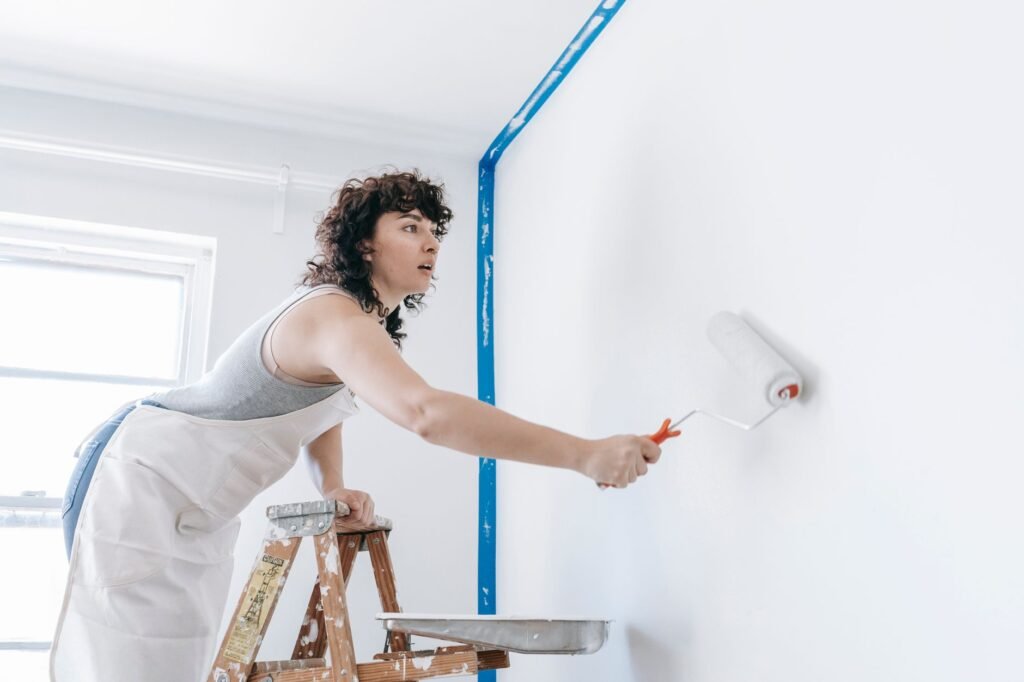
To paint a room, clear and clean the space, patch and tape, then paint the ceiling first, the walls second and the trim last. Cut in along the edges with a brush and roll each wall while that border is still wet, and plan on two coats when you are changing color.
Prep that decides how the finished walls look
Most of the difference between a professional result and a patchy one happens before the paint can is open. Move furniture to the middle of the room and cover it, lay drop cloths along the walls, and take off outlet covers and switch plates. Set out an angled brush, a roller with a nap suited to your wall texture, a tray, an extension pole and a damp rag before you open anything.
Wash walls where hands and cooking leave grease, since paint does not bond well over grime. Fill nail holes and dents with spackle, let it dry, sand it smooth and spot prime the patches so they do not show through as dull spots. Run painter’s tape along the trim and ceiling line and press the edge down firmly.
Older homes need one extra step. The EPA says lead-based paint is more likely if a house was built before 1978, and that sanding or scraping old painted surfaces can create lead dust. Have the paint tested before you sand anything in an older house.
Working out how much paint to buy
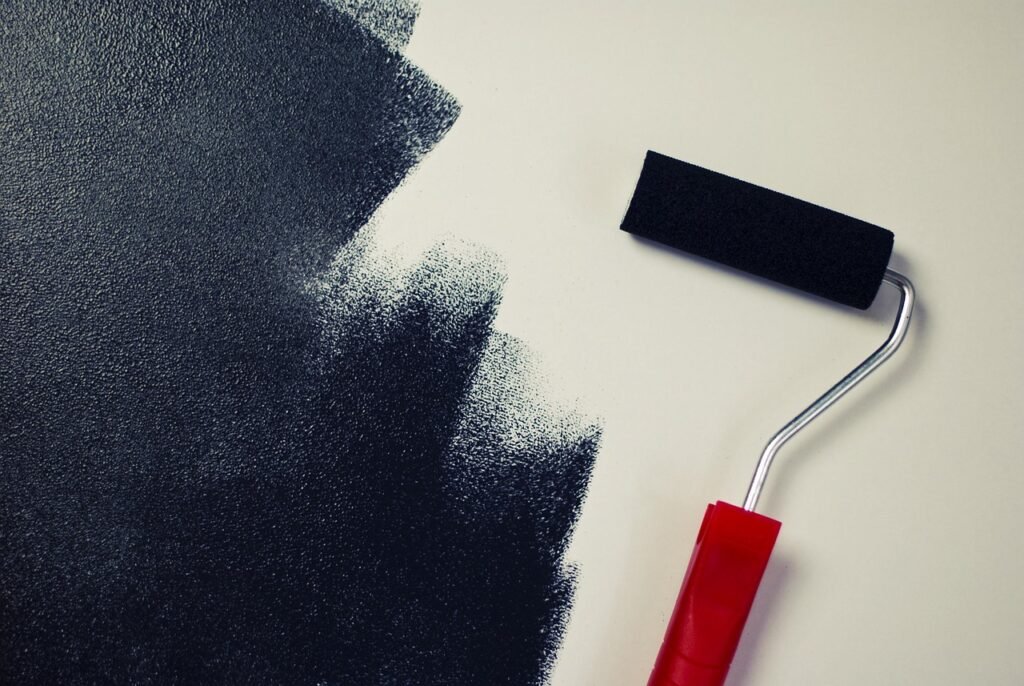
Measure each wall’s width and multiply by the height, add them up, and subtract large windows and doors. Then check the coverage figure printed on the can or the maker’s website, which is given in square feet per gallon and varies by product and by how rough the wall is.
Double the total for two coats. A bold color change, fresh drywall or a dark color going light usually needs a primer coat first. Buy all the paint for one room at once and pour the cans together in a bucket, which evens out small differences between batches.
Ceiling, walls, then trim
- Paint the ceiling first, so drips land on walls you have not painted yet.
- Cut in along the top of one wall, the corners and around trim with an angled brush.
- Roll that wall while the cut in band is still wet, working in sections from top to bottom.
- Move to the next wall and repeat, then let the first coat dry as the label directs before the second.
- Paint baseboards, door frames and window trim last, once the walls are dry enough to tape over if needed.
Rolling a wall so lap marks disappear
Lap marks are the stripes that show when fresh paint rolls over paint that has already started to dry. The fix is keeping a wet edge. Load the roller fully, roll a section roughly three roller widths across in a loose W, then fill it in without lifting the roller off the wall.
Overlap each new section into the still wet one before it. Finish with light top to bottom strokes in one direction so the texture matches across the wall. Stopping in the middle of a wall for lunch is what leaves visible bands, so finish a wall before taking a break. Keep the damp rag handy for drips on trim, since paint that dries on a glossy baseboard is far harder to fix than a fresh smear.
Picking a sheen for each surface
Sheen names are not standardized, so one brand’s satin may look like another’s eggshell. The general trade off holds across brands, though, as shinier paint cleans more easily and shows every bump in the wall.
| Sheen | Where it usually goes | Trade off |
|---|---|---|
| Flat or matte | Ceilings, low traffic walls | Hides flaws and touches up well, marks easily |
| Eggshell | Living rooms and bedrooms | Slight glow, wipes clean better than flat |
| Satin | Kitchens, bathrooms, hallways | Stands up to scrubbing, shows roller marks more |
| Semi-gloss or gloss | Trim, doors, cabinets | Toughest and most washable, shows every flaw |
Frequently asked questions
How long should I wait between coats of paint?
Follow the recoat time printed on the paint can, since it changes with the product, the temperature and the humidity in the room. Paint that feels dry to the touch may not be ready for a second coat. Recoating too soon can pull up the first layer and leave a rough, streaky finish.
Do I need primer if the paint says paint and primer in one?
Often not on clean walls in good shape that are staying a similar color. Separate primer still helps over fresh spackle, bare drywall, water stains, glossy old paint and big color changes. The product label lists which surfaces need a dedicated primer first.
When should I remove painter's tape?
Check the tape maker's instructions, since timing differs by product. Pull the tape slowly at a low angle, back over itself. If the paint has formed a skin across the tape edge, score the line lightly with a utility knife first so the tape does not peel paint off the wall.
What do I need to paint a room?
You need prep supplies and painting tools, plus the paint. Sherwin-Williams' checklist lists drop cloths, cleaning supplies, sandpaper, rags, caulk, painter's tape, a putty knife, spackle, a paint pail and primer for prep, then a brush, a roller frame and cover, a tray with liners, a ladder and an extension pole.
How do you clean walls painted with flat paint?
Gently, with mild soap and warm water. Sherwin-Williams says heavy pressure and over-wetting can damage matte paint, so dust the wall first, wring the sponge or soft cloth nearly dry and wipe with light pressure, then rinse with a damp rag. On freshly painted walls, wait at least two weeks before washing.