
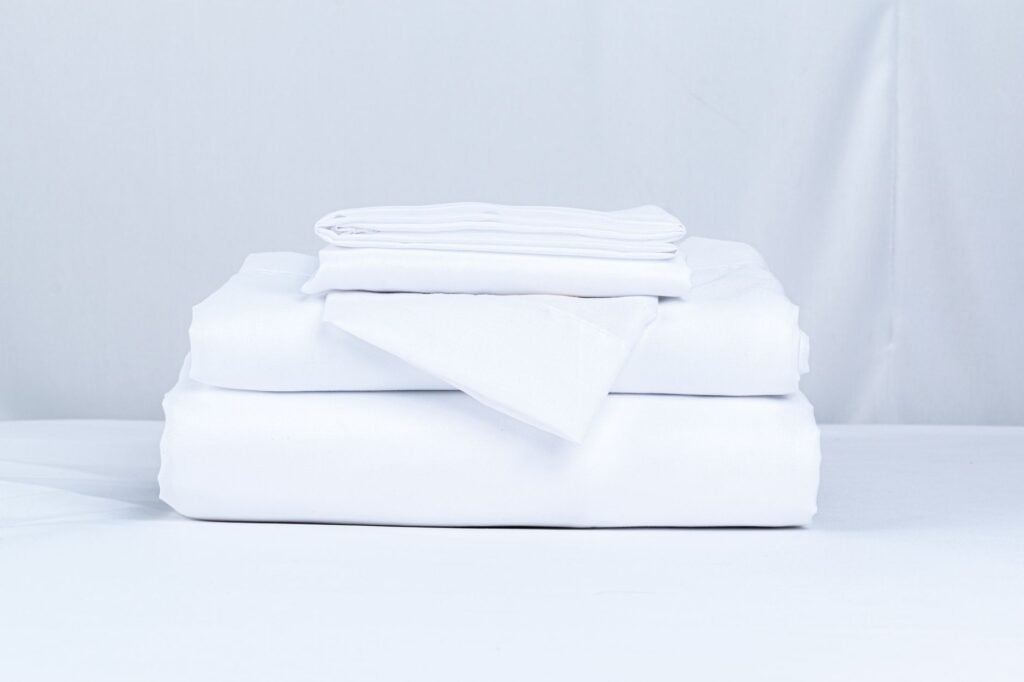
Turn the fitted sheet inside out, tuck one top corner into the other, then do the same with the bottom pair and tuck those two stacks together. Lay it on a flat surface, fold the curved elastic edge in to make a rectangle, and fold that into thirds and then in half.
The corner tucking method, one step at a time
The trick is to nest all four corners into each other so the elastic pockets stack up and stop fighting you. After that, a fitted sheet folds almost like a flat one.
- Hold the sheet inside out by two adjacent corners along a short edge, one corner on each hand, with the rest hanging down.
- Bring your hands together and fold one corner over the other so the pockets nest, right side facing out on top.
- Run your free hand down the edge to find the third corner, and tuck it into the pair you are holding.
- Find the last corner and tuck it in too, so all four pockets sit in one stack.
- Lay the sheet on a bed or table. You will have a rough rectangle with a curved edge where the elastic gathers.
- Fold the curved edge in toward the center, then fold the opposite side in to match, making a clean rectangle.
- Fold in thirds lengthwise, then in half or thirds again, depending on your shelf.
Smooth the sheet with your hand after each fold. Wrinkles pressed in at this stage tend to stay there until the next wash.
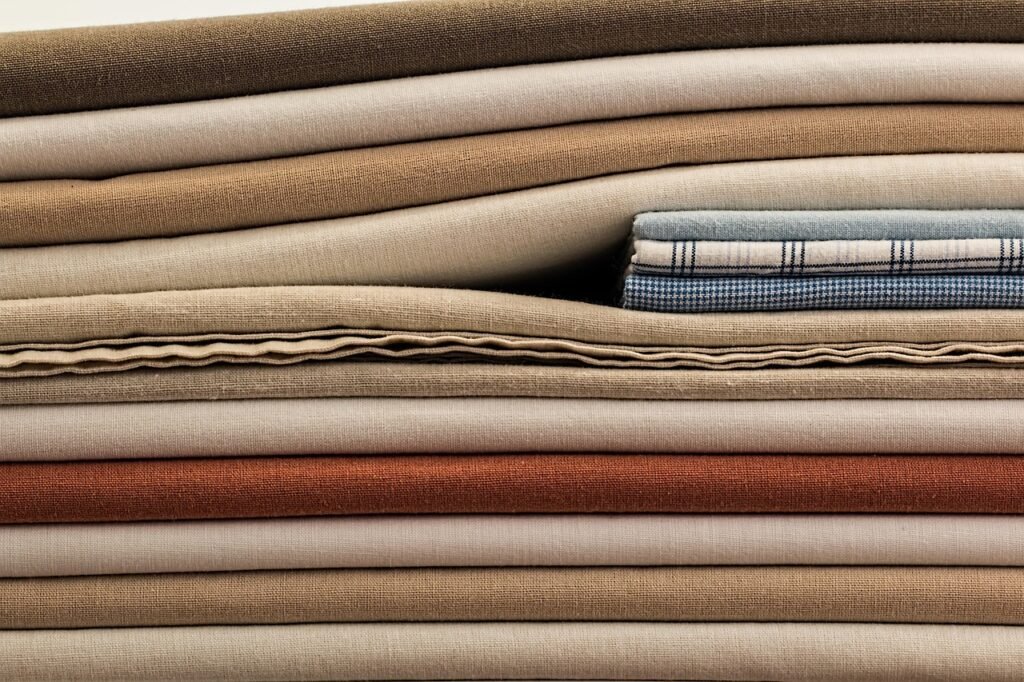
Folding a fitted sheet flat on the bed
If holding a king sheet in the air feels like wrestling, do the whole job on a flat surface. It takes a little more space but less coordination.
Spread the sheet on the bed with the elastic side facing up, so the four corner pockets curl toward you. Reach into the two corners on the far side and pull them toward you, folding the sheet in half and tucking those pockets into the two near corners. Now you have one long edge with two doubled pockets. Tuck one of those doubled pockets into the other.
From there, straighten the elastic edge by folding it in along the length until the sides are even. Fold in thirds and then in half. Because the bed does the holding, this method works well for people with sore shoulders or anyone folding alone.
Deep pocket, king and flannel sheets
Not every fitted sheet behaves the same way. A few adjustments help with the awkward ones.
| Sheet type | What makes it tricky | What helps |
|---|---|---|
| Deep pocket | Tall corner pockets that bunch up | Fold the pocket walls flat against the sheet before the final folds |
| King or California king | Too wide to hold comfortably | Use the flat on the bed method |
| Flannel or jersey knit | Thick fabric that stretches | Fold into halves instead of thirds so it lies flat |
| Elastic all around the edge | No distinct corners to grab | Find the seams at each corner and tuck using those |
| Crib sheet | Small and floppy | Tuck corners, then fold once or twice |
Keeping a sheet set together on the shelf
Once the fitted sheet is folded, stack the flat sheet and one pillowcase on top of it, then slide the stack into the second pillowcase. The whole set stays together, the closet looks tidier, and you are never hunting for a matching piece on laundry day.
Label shelves or bins by bed size if more than one mattress size lives in your house. Twin and full fitted sheets look similar folded, and it is annoying to find out the hard way when you are halfway through making a bed.
When a fitted sheet refuses to lie flat
If your folds keep coming out lumpy, check the elastic. Stretched or broken elastic lets the corners flop, and no folding method fully fixes that. Sheets in that condition still work on the bed, though they may slip off the corners of the mattress.
Folding right out of the dryer, while the fabric is still warm, makes a big difference. Warm cotton smooths easily, and it sets fewer creases than a sheet left in a heap. Pulling sheets out before they are bone dry and giving them a shake also cuts down on wrinkles. Check the care label if you are unsure about drying settings, since some fabrics shrink with high heat.
Frequently asked questions
Should a fitted sheet be folded inside out?
Starting inside out makes tucking the corners easier, because the pockets nest neatly when you fold one over the other. By the end of the process, the right side of the fabric faces out, so the folded sheet looks clean on the shelf. You can fold it right side out too, it is just fiddlier.
Is it okay to roll a fitted sheet instead of folding it?
Yes. Rolling works well for drawers and bins and takes less practice. Tuck the corners together first so the elastic is contained, fold the sheet into a long strip, and roll it tightly from one end. It may wrinkle a little more than a flat fold.
How do you fold a fitted sheet when you do not have a bed nearby?
Any clean, flat surface works, such as a dining table, a counter, or a clean floor with a towel underneath. You can also do the corner tucking in the air and only put the sheet down for the final rectangle and folds, which needs less space.
How do you keep a fitted sheet on the bed?
Buy sheets whose pocket depth matches your mattress. Simba, a mattress maker, says slipping usually means the sheet is not deep enough, so measure the mattress height including any topper and choose a sheet rated for at least that depth, with elastic all the way around. Sheet straps that clip under each corner help too.
How do you put on a fitted sheet?
Fit the two corners that are hardest to reach first, then stretch the sheet over the two near corners, the order recommended by the mattress maker Simba. Line each corner seam up with a corner of the mattress and check that the elastic tucks underneath all the way around, so the sheet stays put overnight.