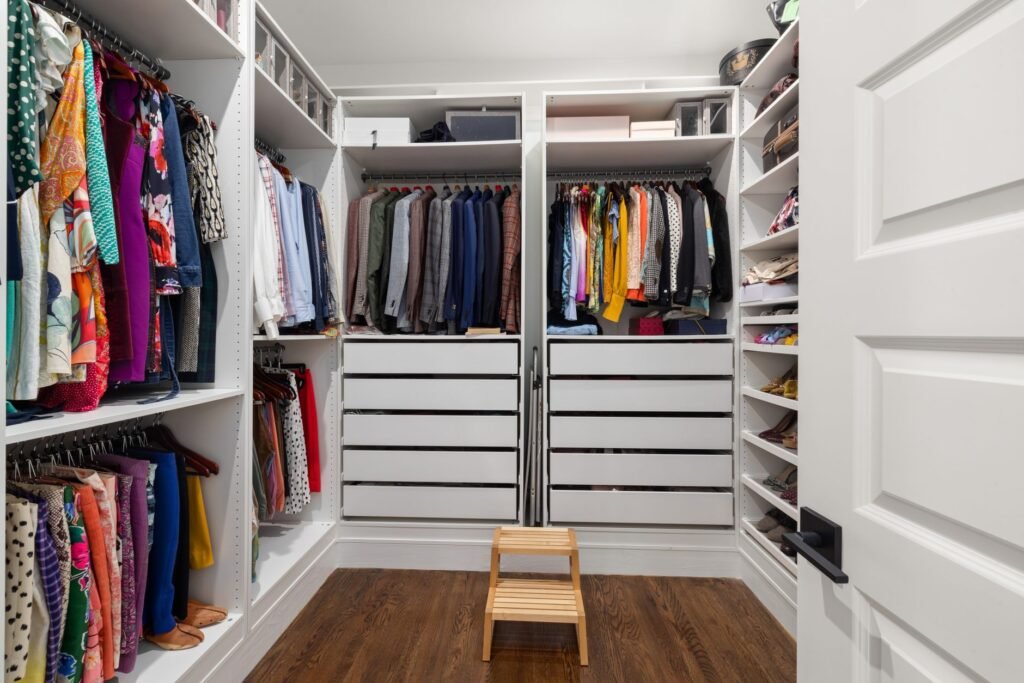
Organize a closet by emptying it completely, keeping only clothes you actually wear, then putting everyday pieces at eye level and grouping the rest by type and color. Hang what wrinkles or drapes, fold heavy knits, and leave a little slack on the rod so the system survives a busy week.
Emptying the closet and sorting into four piles
Organizing a full closet in place only rearranges the clutter. Take everything out, including shoes and whatever lives on the top shelf, and lay it on the bed. Seeing it all at once makes the volume obvious.
- Keep. Items that fit now, suit your life, and were worn in the past year or so.
- Donate or sell. Good condition pieces you no longer reach for.
- Repair. Loose buttons, fallen hems, shoes that need new heels. Give them a deadline.
- Discard. Stained, stretched or worn through items no one else can use. Check whether your town offers textile recycling.
Before the keepers go back, wipe the shelves and vacuum the floor. Clean surfaces make the fresh start feel real.
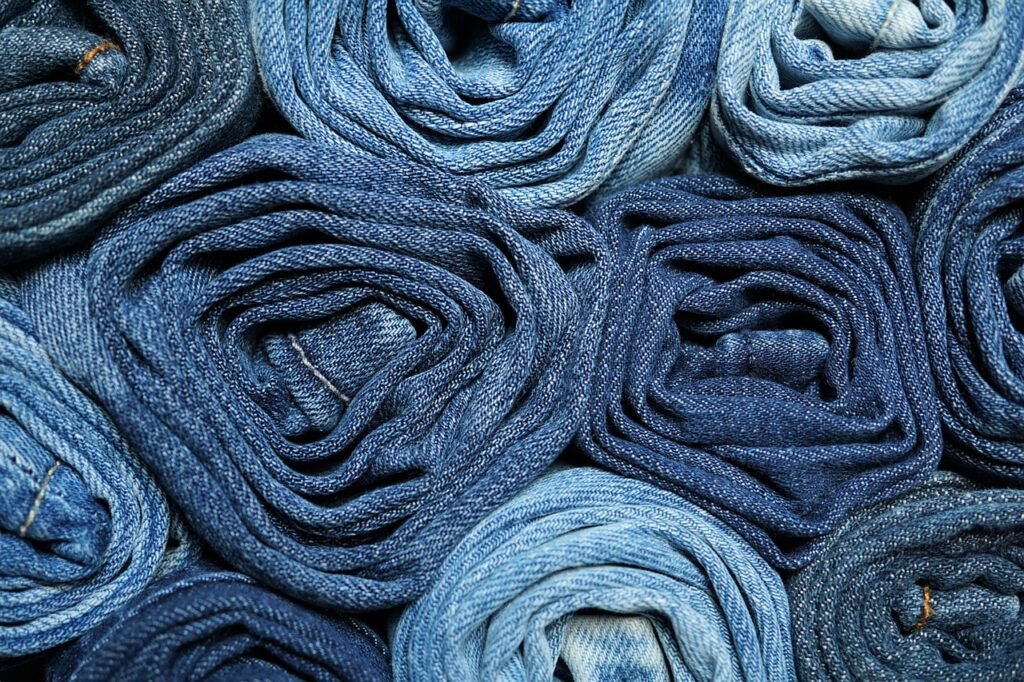
Hang or fold, garment by garment
The fabric decides. Anything that wrinkles or has structure belongs on a hanger. Anything heavy or stretchy is better folded, because gravity pulls it out of shape on a hanger over time.
| Item | Hang or fold | Why |
|---|---|---|
| Button up shirts, blouses | Hang | They wrinkle when folded |
| Blazers, coats | Hang on shaped hangers | Shoulders keep their form |
| Dresses, dress pants | Hang | Long lines and creases stay neat |
| Sweaters and heavy knits | Fold | Hangers stretch shoulders and hems |
| T shirts, jeans, workout wear | Fold or file in drawers | Resilient and save rod space |
Filing folded T shirts upright in a drawer, like folders in a cabinet, lets you see every one without digging.
Closet zones based on how often you reach for things
Put the clothes you wear most between shoulder and hip height, where they are easiest to grab. Out of season clothing, spare bedding and keepsakes go on the top shelf. Shoes sit on the floor or on a low rack.
Within the hanging section, group by type first, then by color from light to dark. You find things faster when all the shirts live together, and the color order makes gaps and duplicates obvious. Keep a small open space near the door for tomorrow’s outfit or items waiting to be ironed.
Children’s closets follow the same idea at a lower height. A second, lower rod or a row of open bins at their level lets kids put clothes away without help.
Hangers, bins and dividers that earn their spot
Matching slim hangers are the cheapest upgrade. They take up less room than bulky plastic ones, and uniform height makes a rod look calmer. Keep sturdier shaped hangers for coats and jackets.
Shelf dividers stop stacks of sweaters from toppling. Labeled bins handle small things like belts, scarves and swimsuits, and clear bins show their contents at a glance. The back of the door is useful space for a shoe organizer or hooks for bags. If the closet has one rod and tall empty wall above, a second shelf or a double hang rod can add space for shirts and folded pants. Measure the width, depth and height of the closet before buying anything, and take the numbers with you to the store.
Keeping the closet organized after the first weekend
Closets drift because new things come in and nothing goes out. A one in, one out habit keeps the count steady. Keep a donation bag on the closet floor, and when something no longer fits or feels right, drop it in right away. Put a laundry hamper close to the closet, too, since clothes pile up on chairs when the hamper is out of the way.
To find what you never wear, hang everything with hooks facing one direction at the start of a season, and flip each hanger after you wear the item. Anything still facing the original way a few months later is a candidate to let go. Do a quick reset at each season change, and the big overhaul rarely needs repeating.
Frequently asked questions
Should you organize a closet by color or by type?
Most people find that type first, then color, works best. Grouping all shirts, pants and dresses together tells you where to look, and color order within each group makes pieces easy to spot and match. Sorting purely by color looks nice but scatters similar items across the rod.
How do you store off-season clothes?
Wash or clean everything first, since stains and body oils set over time and attract pests. Fold the items into breathable fabric bins or lidded containers, label them, and store them on a high shelf or under the bed. Keep them somewhere dry, away from attics and basements that swing in humidity.
How do you organize a closet with no shelves?
Use vertical space you can add without building. Hanging fabric shelves on the rod hold sweaters and folded jeans, stackable bins or a small dresser fit on the floor, and over door organizers take shoes and accessories. Tension rods can create a second hanging level if the closet is tall enough.
How do you organize a small closet?
Start by moving off-season clothes and anything you rarely wear somewhere else, since space is the real limit. Then use the height, with a double hang rod for shirts and folded pants, bins on the shelf above, and slim matching hangers throughout. The back of the door can hold shoes, bags or accessories.
How can you organize a closet on a budget?
Start with a thorough edit, which costs nothing and frees the most space. Then buy one inexpensive set of matching slim hangers, reuse shoeboxes and baskets as bins, and add a few over-the-door hooks. Measure the closet's width, depth and height before shopping so everything you pay for actually fits.
How do you organize a walk-in closet?
Treat it like a small room with zones. Put everyday clothes on the wall you reach most easily, long pieces on a full height rod and folded knits on shelves. Save the upper shelves and back corners for off-season clothes, keep the floor clear, and leave a spot near the door for tomorrow's outfit.