Most umbrella plants, the schefflera kind, propagate from stem cuttings taken during active growth and rooted in water or moist potting mix. If yours is umbrella papyrus, the grassy water plant, root a cut leaf head upside down in water or divide the clump instead. Tall, leggy scheffleras also respond well to air layering.
Which umbrella plant is on your windowsill
Several unrelated plants share the name, and they are propagated differently. NC State Extension’s plant database lists these three under umbrella names.
| Plant | Botanical name | Quick tell | Propagation listed |
|---|---|---|---|
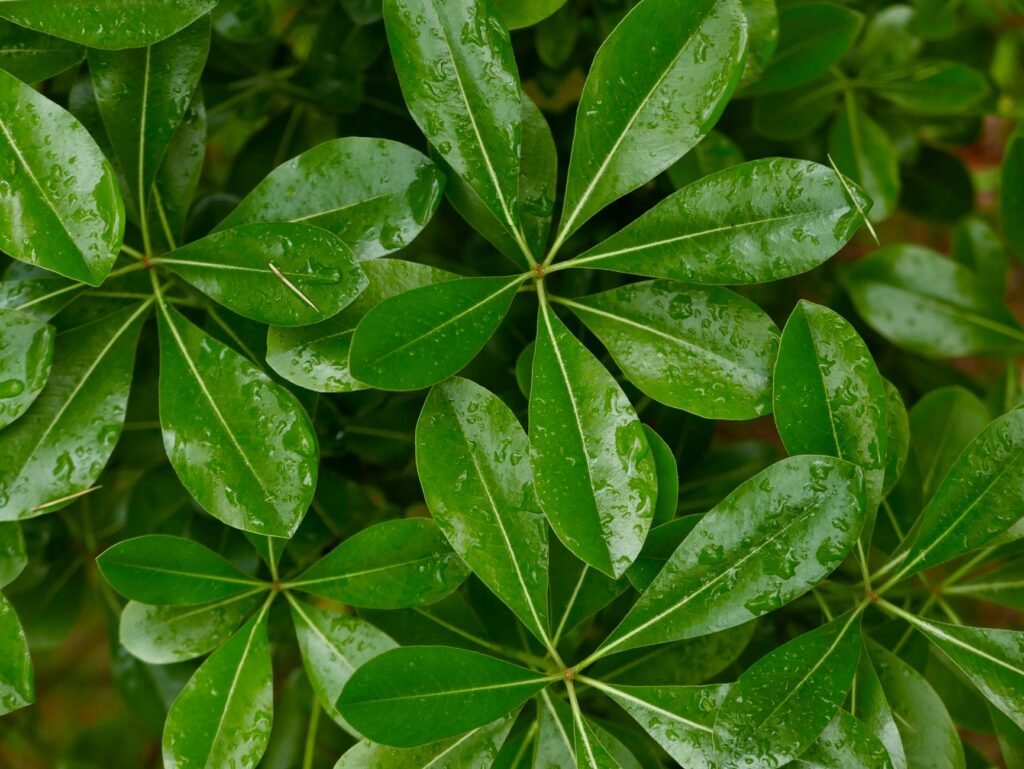
| Dwarf umbrella tree | Heptapleurum arboricola, formerly Schefflera arboricola | Small glossy leaflets in a ring, bushy habit | Seed, stem cuttings |
| Umbrella tree | Heptapleurum actinophyllum, long sold as schefflera | Large leaflets, grows tree sized in the tropics | Seed, layering, cuttings |
| Umbrella papyrus | Cyperus alternifolius | Leafless stems topped by a spray of thin leaves | Division, stem cuttings |
Both schefflera types are toxic to dogs and cats if chewed, and NC State Extension notes the sap can irritate human skin. Wear gloves while cutting and keep trimmings away from pets.
Rooting a schefflera stem cutting
- Choose a healthy stem with firm green or lightly woody growth and several leaves.
- Using clean pruners, cut a schefflera piece several inches long just below a leaf node, which is the small swelling where a leaf attaches to the stem.
- Strip the lower leaves and leave two or three at the top. Cut large leaflets in half to reduce water loss.
- If you keep rooting hormone on hand, coat the cut end with it, then stand the cutting in a jar of water or press it into a pot of damp, well draining potting mix.
- Tent the pots under clear plastic or a humidity dome so the air around the schefflera stays humid, then set them where they get bright, indirect light.
- Change water weekly if rooting in a jar, and keep soil damp but not soggy.
Spring and summer, when the plant is pushing out new leaves, usually give the quickest results. Roots take weeks, not days. When a gentle tug on a soil cutting meets resistance, roots have formed.
Air layering a leggy umbrella plant
With air layering, a schefflera grows roots on its own trunk before you ever cut it loose, which makes it the fix for a plant that has gone bare and lanky at the base. Choose a point on the bare trunk beneath the leafy crown. Make a shallow upward cut or scrape a thin ring of bark, dust it with rooting hormone, and wrap a handful of damp sphagnum moss around the wound. Seal the moss inside a sleeve of plastic wrap, tied off at the top and bottom.
Check that the moss stays moist. Once roots are visible through the plastic, cut the stem below the moss ball and pot the new plant. The old base often sprouts new shoots, so you end up with two plants.
The upside down trick for umbrella papyrus
Umbrella papyrus roots from the top of its stems. NC State Extension notes the stems tend to grow so long that they flop over and take root on their own. Gardeners copy that on purpose. Cut a healthy stem a little below the leaf spray, trim the leaves shorter, and set the head upside down in a jar of water. New roots and shoots grow from the center of the spray.
Division is even faster. Lift the clump, pull or cut it apart so each section has roots and stems, and repot. This plant wants wet roots at all times, so keep it in a saucer of water or a pond margin. NC State also warns it can become weedy in warm, wet areas.
Potting up the new umbrella plant
Move rooted schefflera cuttings into a small pot of well draining potting mix with a drainage hole. Water thoroughly, then wait until the surface of the mix feels slightly dry before the schefflera gets another drink. Indoors, NC State suggests filtered light, such as a sheer curtain, for 3 to 4 hours daily, and warns that direct sun can burn the leaves.
Wait until you see new growth before feeding with a diluted houseplant fertilizer, and pinch the tips later if you want a bushier plant.
Frequently asked questions
Is the umbrella plant toxic to pets?
Schefflera types are. NC State Extension lists the dwarf umbrella tree as toxic to dogs and cats because of calcium oxalate crystals, which can cause drooling, mouth irritation and vomiting. Keep cuttings and fallen leaves out of reach, and call your veterinarian if a pet chews on the plant.
Why is my umbrella plant cutting wilting?
A cutting has no roots, so it loses water through its leaves faster than it can take it in. Some droop in the first days is normal. Cut large leaflets in half, raise the humidity with a clear cover, and keep it out of direct sun. Black, mushy stems mean rot, so start over.
How long do umbrella plant cuttings take to root?
Expect several weeks, and longer in a cool room. Warmth and humidity speed things up. In water you can watch roots appear, while in soil the sign is resistance when you tug gently or new leaves at the top. Pot water rooted cuttings once the roots are a few inches long.
How do you care for a schefflera plant?
Give it bright, filtered light, since NC State Extension warns that direct indoor sun can burn the leaves, and keep it in a warm room, ideally 65 to 90°F. Let the top of the soil dry, then water thoroughly. Scheffleras like high humidity, so setting the pot on a tray of wet pebbles helps in dry indoor air.
How do you prune a schefflera plant?
Cut stems back to just above a leaf or node with clean pruners to control height or fix a lopsided shape. NC State Extension notes schefflera can be pruned to control its size and may be cut back in winter. Wear gloves, since the sap can irritate skin, and root the trimmings as new plants.
Why is my umbrella plant dropping leaves?
Uneven watering is the first suspect. NC State Extension notes that dwarf umbrella trees drop leaves when the soil is too wet or too dry, and that underwatered scheffleras shed leaves. Cold drafts and heating vents also stress the plant, so keep it away from both and water only once the top of the soil dries.