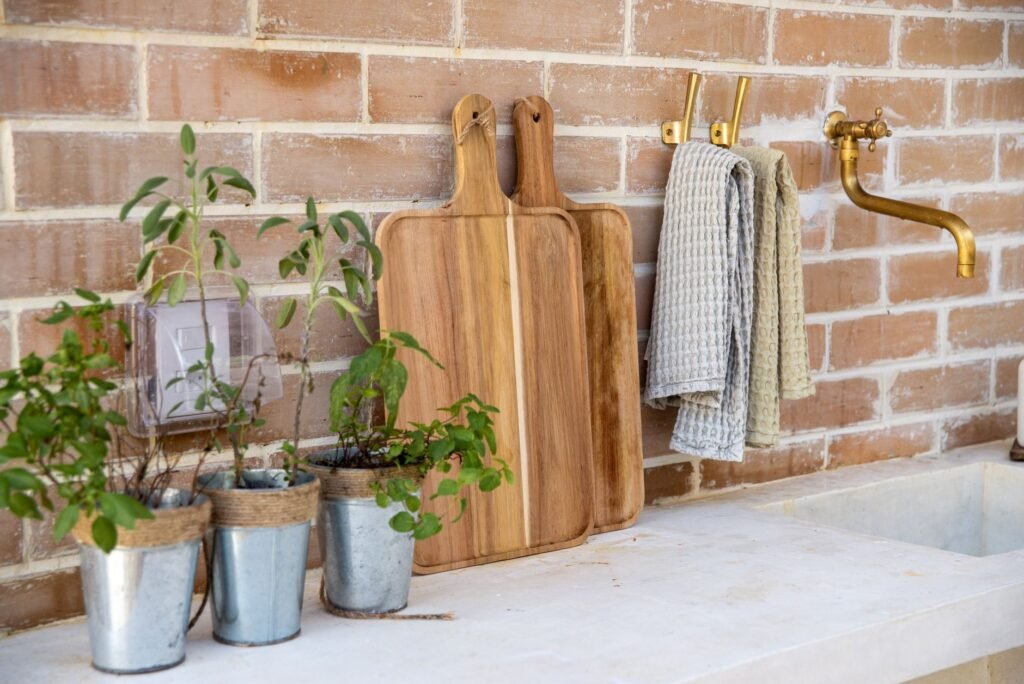
Clean a cutting board by scrubbing it with hot, soapy water after every use, rinsing it, and letting it air dry. After raw meat, poultry or seafood, sanitize it too. USDA guidance for both wood and plastic is a solution of 1 tablespoon of unscented liquid chlorine bleach per gallon of water.
Everyday washing for wood, bamboo and plastic boards
Wash the board as soon as you finish, before juices dry into the knife marks. Use a brush or the rough side of a sponge and hot soapy water, and scrub both faces plus the edges, since liquid runs over the sides. Rinse with clean water, then stand the board on its edge or pat it dry with paper towels so air reaches every surface.
The material decides what else is safe. The USDA’s Meat and Poultry Hotline notes that nonporous boards clean more easily than wood, and it separates boards that can go in the dishwasher from ones that cannot.
| Board | Dishwasher | Bleach sanitizing | Extra care |
|---|---|---|---|
| Plastic or acrylic | Yes | Yes | Replace once deeply scarred |
| Glass | Yes | Yes | Hard on knife edges |
| Solid wood | USDA lists it as safe | Yes | Check the maker’s care card, and oil it when it looks dry |
| Laminated wood | No, it may crack and split | Yes | Hand wash only |
| Bamboo | Hand wash | Optional | Rub with mineral oil to hold moisture |
Sanitizing a board after raw meat or poultry
Soap lifts grease and food, but sanitizing is the step that knocks down bacteria left behind by raw meat. Do it after washing, never instead of washing, because bleach does little on a board still coated in fat.
- Wash and rinse the board as usual.
- Mix 1 tablespoon of unscented liquid chlorine bleach into 1 gallon of water. Make it fresh each time.
- Flood the surface with the solution so the whole cutting area stays wet.
- Let it stand for several minutes.
- Rinse with clear water.
- Air dry, or pat dry with clean paper towels.
Never mix bleach with vinegar, ammonia or other cleaners, and keep the kitchen ventilated while you work.
Salt, lemon and vinegar for smells and stains
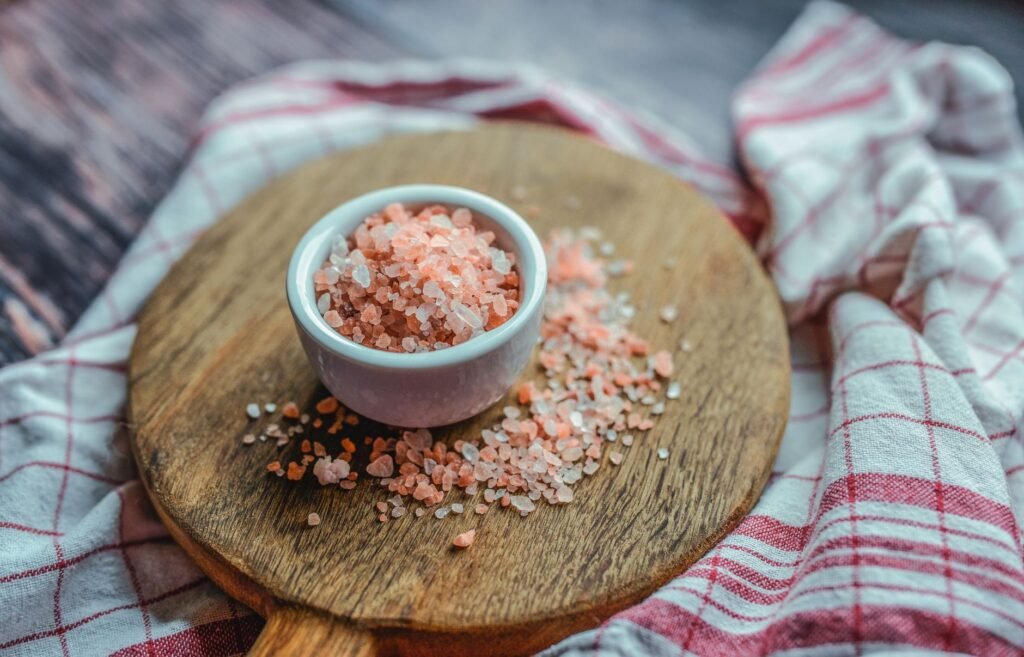
Onion, garlic and fish smells tend to linger in wood. A handful of coarse salt scrubbed in with half a lemon, then rinsed off, works as a gentle abrasive and freshener, and a wipe of white vinegar helps with odors too. These are good for smell and color, but they are not the sanitizing step the USDA describes, so after raw meat use the bleach solution.
On a plastic board, dark stains respond to a thick baking soda paste, wetted just enough to spread and scrubbed in with a brush, which can lift a lot of the surface color. Stains sunk into deep grooves usually mean the board is near the end of its life.
Oiling a wood or bamboo board once it is dry
Wood that dries out can split and warp, and cracks give food a place to hide. Once the board is fully dry, rub food grade mineral oil into every surface with a clean cloth, let it soak in for a few hours or overnight, and wipe off what is left. The USDA suggests mineral oil for bamboo boards to help them hold moisture.
Wood soaks up oil unevenly, so pay extra attention to the end grain along the short edges. If water stops beading on the surface, it is time to oil again.
Keep one board for raw meat and replace worn ones
The simplest way to prevent cross contamination is to use one board for fresh produce and bread and a separate one for raw meat, poultry and seafood. That keeps juices from raw protein away from food that will not be cooked. Colored plastic boards make the split easy to remember, and so does a small mark or notch cut into the corner of the raw meat board.
All boards wear out. The USDA’s advice is to throw away any board that is excessively worn or has hard to clean grooves, whatever it is made of. Run a fingernail across the surface, and if it catches in deep cuts, retire the board to crafts or serving bread.
Frequently asked questions
Can I put a wooden cutting board in the dishwasher?
The USDA says solid wood boards can go in the dishwasher, but laminated boards may crack and split. Many wood board makers still recommend hand washing to protect the finish and glue joints, so check the care instructions that came with yours before you try it.
Is a plastic or wooden cutting board more sanitary?
Either is acceptable according to the USDA, including for raw meat. Nonporous boards like plastic are easier to clean, and both types can be sanitized with a diluted bleach solution. What makes the bigger difference is washing promptly, keeping a separate board for raw meat and replacing worn boards.
How often should I oil a wood cutting board?
Oil it whenever it starts to look pale or dry, or when water soaks in instead of beading on the surface. Boards that are washed daily need it more often than ones used now and then. Always oil a clean, fully dry board, and wipe away excess afterward.
What is the best cutting board material?
It depends on the job, since no single material wins on every count. Wood is gentler on knife edges, while plastic can usually go in the dishwasher. Knife maker Wüsthof warns that glass, stone and metal boards dull a blade quickly, so skip those for chopping. A practical setup is plastic for raw meat and wood for everything else.
What is the best wood for a cutting board?
Hard maple is the classic choice. The FDA Food Code, the model many states adopt for restaurants, allows cutting boards made of hard maple or an equally hard, close grained wood. Walnut, cherry and beech are other popular hardwoods for home boards. Whatever the species, choose solid hardwood with a tight, even grain.