Propagate lucky bamboo by cutting a healthy offshoot or the leafy top of a tall stalk just above a node, then standing it in chlorine-free water in bright, indirect light. Change the water weekly, and once roots form, leave it in water with pebbles or move it into moist potting mix.
Lucky bamboo is a dracaena, not a bamboo
The plant sold as lucky bamboo is Dracaena sanderiana, a species native to Central and West Africa. Despite the name and the jointed look, it is not a bamboo at all and belongs to an entirely different group of plants. That shapes how you propagate it, because the rings along each stalk are nodes, the points where new offshoots grow.
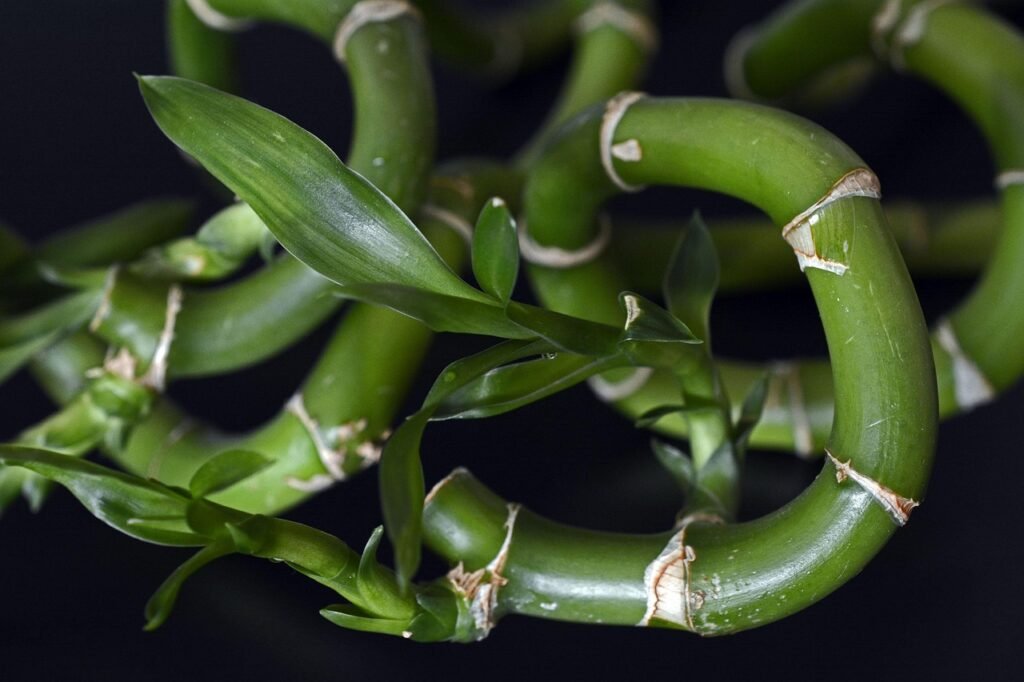
Cuttings root from the node area, which is why every cut should sit just above one. The spirals and braids you see in shops are stalks trained into those shapes as they grow. A cutting from a curly stalk will not keep the curl on its own, and new growth heads toward the light.
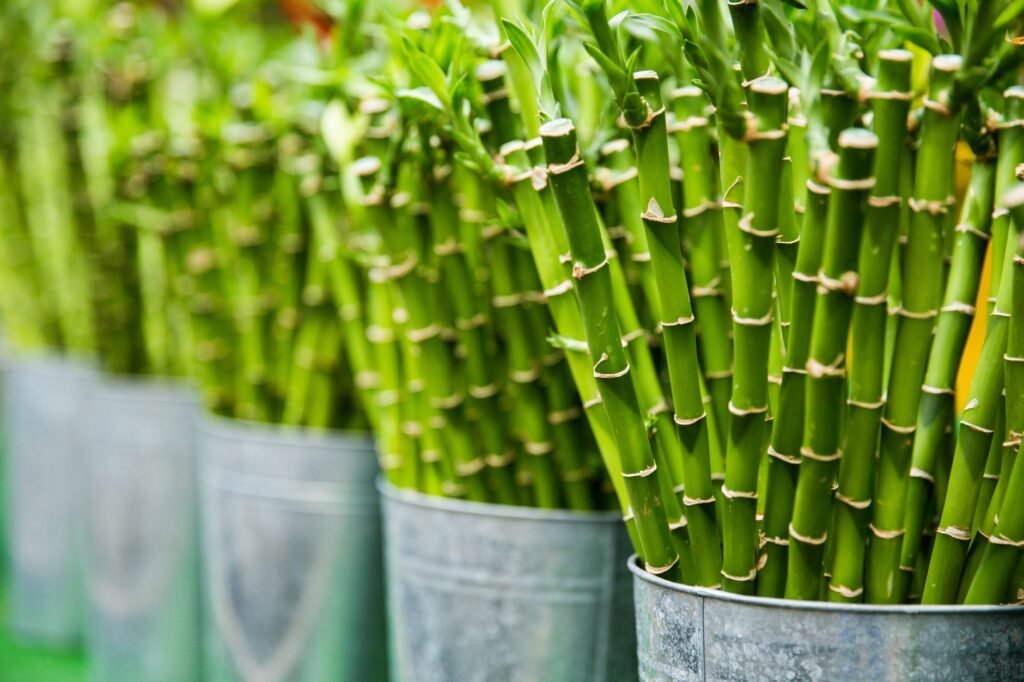
Picking the lucky bamboo stem to cut
| Cutting option | How to take it | Good for |
|---|---|---|
| Leafy offshoot | Cut it off close to the main stalk, just above the node it grew from | Extra plants without shortening the main stalk |
| Top of a tall stalk | Cut just above a node, keeping the leafy top | Taming a leggy plant and starting a second one |
Choose growth that is firm and evenly green. Skip anything yellowing, soft or mushy at the base, since those stalks are already struggling and rarely make good cuttings. A cutting with a few healthy leaves has the energy to push out roots.
Take two or three cuttings at once if the plant can spare them. Not every piece roots, and a spare in the jar costs you nothing. Keep the parent plant in its usual spot with its usual water routine afterward, and trim off any leaves that were damaged while you worked around it.
Rooting lucky bamboo cuttings in water
- Wipe a sharp knife or pruners clean before cutting, so the wound starts clean.
- Cut the offshoot or stalk top just above a node.
- Pull off any lower leaves on the stalk that the water would otherwise cover.
- Stand the cutting in a clean glass or jar of chlorine-free water, such as distilled or filtered water or rainwater, with the base covered.
- Place it in bright, indirect light. Direct sun can burn or yellow the leaves.
- Change the water weekly and rinse the container each time.
- Watch for roots at the base, which can take several weeks depending on warmth and light.
The North Carolina State Extension plant profile recommends chlorine-free water changed weekly, partly to keep mosquitoes from breeding in still water. A clear container makes roots easy to spot and shows early when the water turns cloudy.
Where the rooted lucky bamboo goes next
When the fresh roots on the dracaena cane reach a few inches, you have two choices. Many people leave lucky bamboo in water for good, adding clean pebbles or glass stones to hold the stalk upright. Keep the water level over the roots, and keep changing it weekly.
The other route is soil. Pot the cutting in a moist potting mix and keep it evenly damp, never soggy, since North Carolina State Extension notes the plant needs a moist mix when grown in soil. Either way, keep the new plant away from pets, because the same profile lists it as toxic to cats and dogs if eaten.
Reading yellow leaves and soft stalks on new cuttings
A few lower leaves yellowing on a fresh cutting is common as it adjusts. Many yellow leaves, or scorched patches, usually mean too much direct sun, so move it back from the window. A stalk turning yellow and soft from the base is rotting. Take a fresh cutting from any firm, green section above the damage and start again in clean water.
Water that turns cloudy or smells sour between changes is a warning too. Swap it right away, rinse the container and the stalk base, and trim off any roots that look brown and slimy rather than pale and firm. Moving the jar out of direct sun also slows the algae that turns glass green.
Frequently asked questions
Can you propagate lucky bamboo in soil?
Yes. Cuttings can root directly in a moist potting mix, and North Carolina State Extension notes the plant needs a moist mix when grown in soil. Keep it evenly damp but never soggy, and give it bright, indirect light. Rooting in water just makes progress easier to see.
Is lucky bamboo safe for cats and dogs?
No. North Carolina State Extension lists it as toxic to cats and dogs if eaten, with symptoms that can include vomiting, drooling and depression. Keep cuttings and jars out of reach of pets, and call your veterinarian or an animal poison control line if a pet chews the leaves.
What container is best for rooting lucky bamboo?
Any clean glass or ceramic container that holds the stalk upright will work. Clear glass lets you watch roots form and spot cloudy water early. Rinse it whenever you change the water, which North Carolina State Extension suggests doing weekly, and add pebbles if the cutting leans.
How do you care for lucky bamboo?
Give it clean water and very little food. If it grows in water, change the water weekly, use chlorine-free water and keep the roots covered, or keep potting mix evenly damp. Clemson Extension suggests feeding plants in water every other month with liquid houseplant fertilizer at a quarter of the label rate.
Does lucky bamboo need sun?
It needs bright light but not direct sun. Clemson Extension recommends a room with bright, indirect light, such as one with east or north facing windows, and notes that direct sunlight damages the leaves and turns them brown. If leaves scorch or yellow, move the plant farther from the window.