
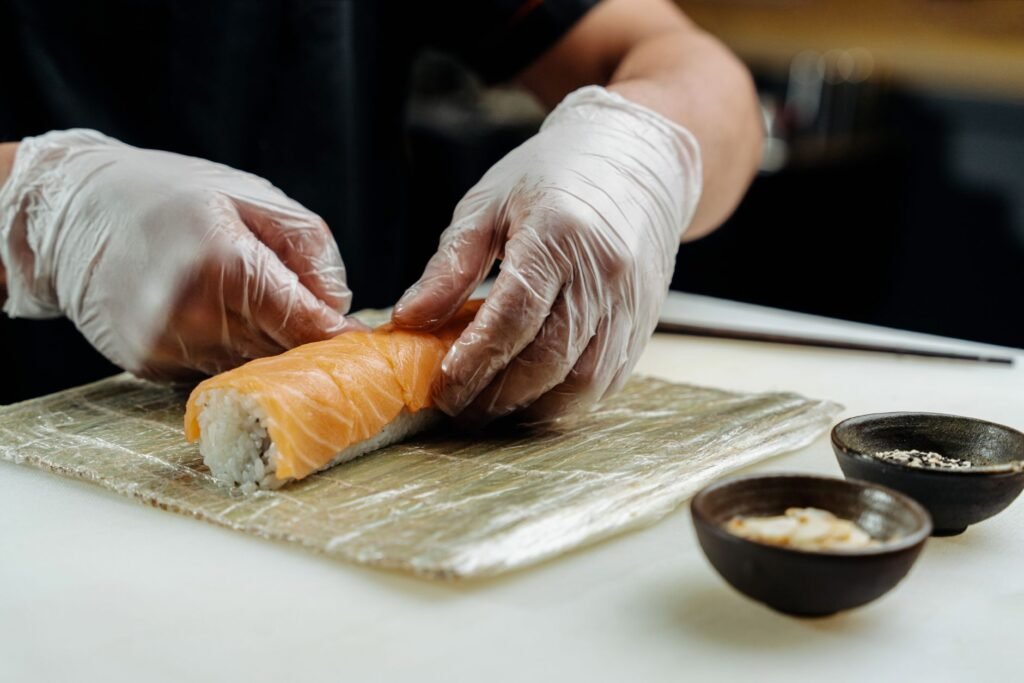
To make sushi, cook short-grain rice, season it with rice vinegar, sugar and salt, then roll it with fillings inside a sheet of nori using a bamboo mat. Cooked or vegetable fillings are the easiest start. Raw fish needs extra care, because it has to be handled and frozen in a specific way.
Sushi rice is the part to get right
Use short-grain or medium-grain rice sold for sushi. Its starch makes the grains cling together, which long-grain rice won’t do. Rinse it in a bowl of cold water, swirling and draining several times until the water runs mostly clear, then cook it with the amount of water given on the bag or your rice cooker’s markings.
While the rice is hot, fold in seasoned rice vinegar, or your own mix of rice vinegar, sugar and salt. Use a paddle and a slicing motion so you don’t mash the grains. Spread it out to cool to about body temperature, and keep it covered with a damp towel so the surface doesn’t dry and harden.
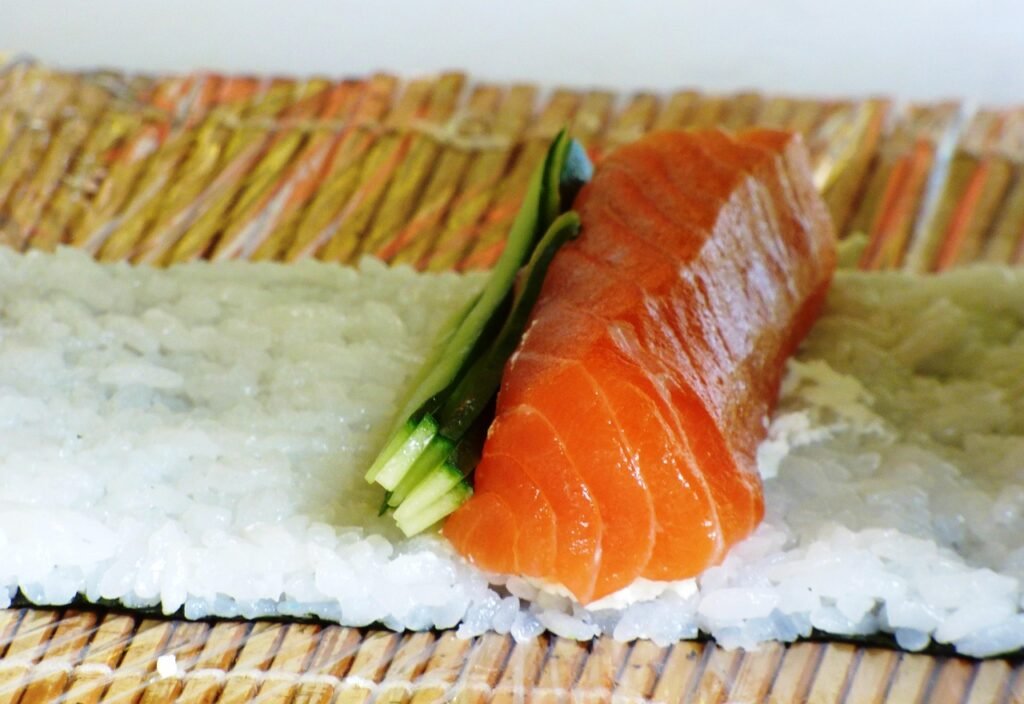
Choosing fish you can safely eat raw
Labels such as sushi grade are marketing terms, not an official US grade. What protects you is how the fish was handled. The FDA Food Code, which most state health departments build their restaurant and store rules on, requires that most fish served raw first be frozen to kill parasites. The South Carolina Department of Agriculture’s food code guide lists the three accepted methods.
| Freezing method | Temperature | Minimum time |
|---|---|---|
| Frozen and stored | -4°F or colder | 7 days |
| Frozen and stored | -31°F or colder | 15 hours |
| Frozen solid, then stored | -31°F solid, then -4°F or colder | 24 hours of storage |
A home freezer is normally set to 0°F, according to the FDA, so it can’t reliably reach those numbers. Buy fish the seller says was frozen for raw use and ask the counter staff directly. People who are pregnant, older or have weakened immune systems should talk with their doctor before eating raw fish. Cooked shrimp, imitation crab, cucumber and avocado make good fillings with none of this worry.
Rolling a maki roll on a bamboo mat
- Set the bamboo mat on the counter and lay a sheet of nori on it, rough side up.
- Wet your hands in a bowl of water with a splash of rice vinegar so the rice won’t stick.
- Spread a thin, even layer of rice over the nori, leaving a bare strip along the far edge.
- Line up your fillings across the rice near the edge closest to you. Keep them modest, since overfilled rolls split.
- Lift the near edge of the mat and roll it over the fillings, tucking as you go, then press gently along the length.
- Dab the bare strip with water to seal the roll.
- Slice with a sharp, wet knife, wiping the blade between cuts.
Your first few rolls will probably be loose or lopsided. Squeezing too hard pushes the fillings out the ends, so press just enough for the roll to hold together.
Nigiri, hand rolls and inside-out rolls
Once basic maki feel comfortable, the other home styles use the same rice.
| Style | What it is | How hard at home |
|---|---|---|
| Hand roll | A cone of nori filled with rice and toppings, eaten right away | Easiest, no mat needed |
| Inside-out roll | Rice on the outside, nori wrapped around the fillings | Moderate, cover the mat with plastic wrap |
| Nigiri | A small pressed mound of rice topped with a slice of fish | Harder, depends on slicing skill and fish quality |
Serving and storing homemade sushi
Sushi tastes best within a short time of rolling, while the rice is still soft and the nori has some crunch. Serve it with soy sauce, pickled ginger and wasabi. Don’t let it sit out long. The FDA advises refrigerating perishable food, including seafood, within two hours, or one hour when the air is above 90°F. Chilled rice firms up, so leftovers are better the next day in a warm bowl or cooked into fried rice, if they contained only cooked fillings.
Frequently asked questions
Can I use regular white rice for sushi?
Long-grain rice such as jasmine or standard American white rice doesn't hold together well, so rolls fall apart and nigiri won't keep its shape. Look for short-grain or medium-grain rice, often labeled sushi rice. Brown short-grain rice works too but needs more cooking time.
Which side of the nori goes down?
Place the shiny, smooth side against the mat and spread the rice on the rough side. The rough texture grips the rice, and the smooth side ends up on the outside of a regular roll, where it looks neater. For inside-out rolls, the rice goes on the rough side before you flip it.
Is smoked salmon cooked?
Not always. Hot-smoked salmon is cooked through and flakes like baked fish, while cold-smoked salmon, often sold as lox style or nova, is cured and smoked without being cooked. Food codes treat cold-smoked fish like raw fish, so check the label before using it.
What is sushi?
Sushi is vinegared rice paired with other ingredients, such as seafood, egg or vegetables, and shaped into nigiri, rolled in nori or served as hand rolls. Raw fish is common but not required, and many classic toppings are cooked. Japan's agriculture ministry traces sushi to nare-zushi, salted fish once preserved in fermenting rice.
Is sushi gluten free?
Not automatically. Rice, fish and vegetables are naturally gluten free, but the Celiac Disease Foundation lists traditional soy sauce as a gluten source, along with panko and wheat flour batters like those on fried rolls. At home, use tamari made without wheat, which the foundation notes is gluten free, and read the labels on any sauces you add.