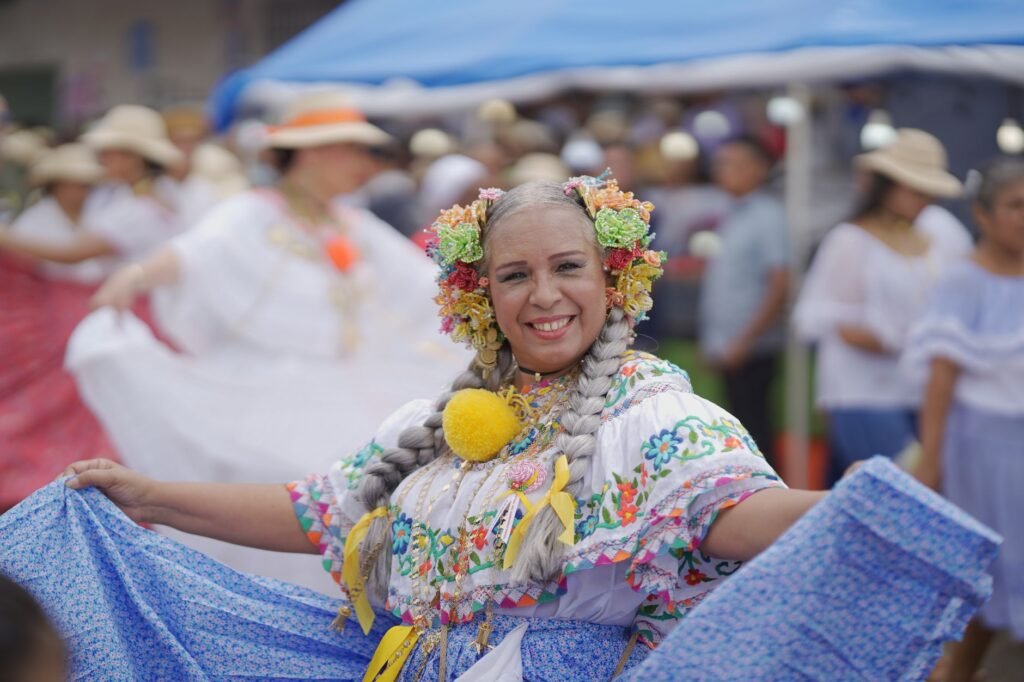
Cumbia is a music and dance tradition from Colombia’s Caribbean coast that blends African drumming, Indigenous flutes and European song and dance. It spread across Latin America in the 20th century, and Mexico, Peru and Argentina each grew their own version, which is why the word covers such a wide range of sounds today.
Where cumbia was born in Colombia
Cumbia took shape in the wetlands and river towns of the Mompos Depression and the small Montes de Maria mountain range, in northern Colombia near the Caribbean. Three groups of people shaped it.
Enslaved Africans brought to the port of Cartagena during Spanish colonial rule carried their drums, rhythms and religious music with them. Indigenous communities in the region already played flutes in ceremonies. The Spanish contributed song forms, the language of the lyrics, and the clothing and couple dancing seen in traditional performances. Over generations these pieces fused into a rural dance music played at festivals and gatherings along the coast.
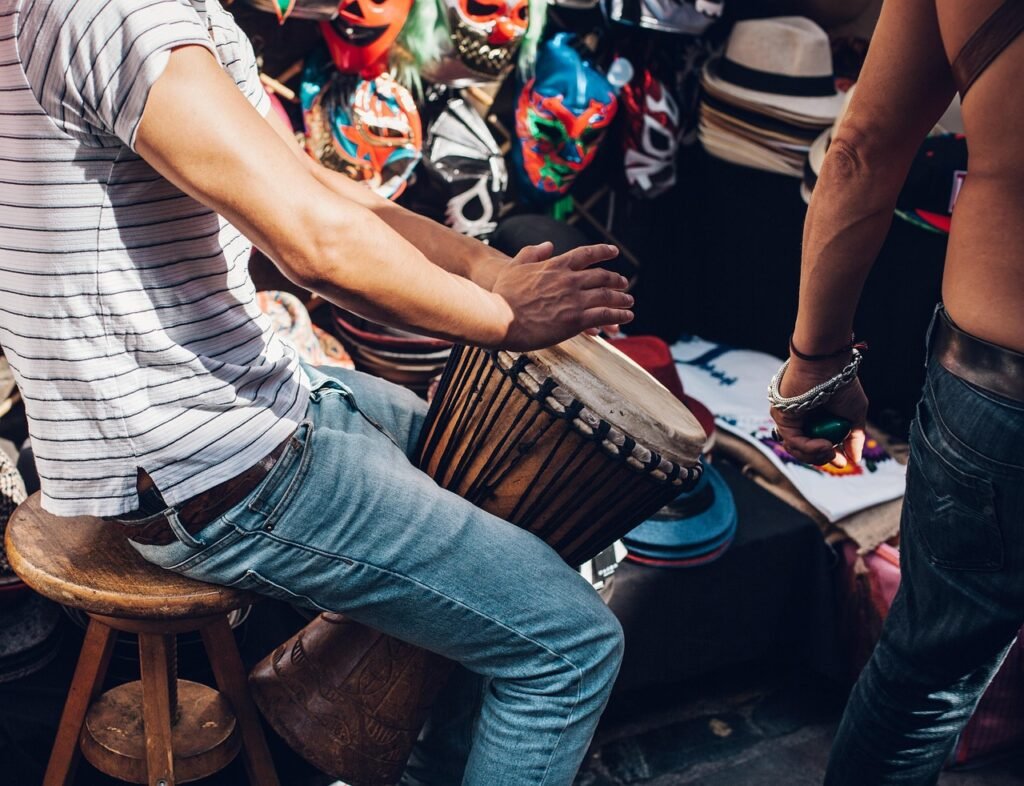
The drums and gaita flutes behind the original sound
Traditional cumbia groups are small, and each instrument points back to one of those roots. The Spanish names describe the job each instrument does.
| Instrument | What it is | Roots |
|---|---|---|
| Tambor alegre | A hand drum whose name means happy or lively drum | African |
| Llamador | A smaller hand drum, its name means the caller | African |
| Tambora | A bass drum | African |
| Gaita | A long flute made from the heart of a cactus, with a mouthpiece built from a duck feather | Indigenous, pre-Hispanic |
| Guacharaca and maracas | A ridged scraper and shakers that keep a steady pulse | Indigenous |
Recordings from this tradition are often labeled gaita music, after the flutes. They sound quite different from the polished cumbia most listeners know from radio, with the melody carried by breathy flutes over interlocking drums.
How cumbia traveled beyond Colombia
Cumbia moved from rural festivals to city dance bands, then left the country. Each place that adopted it changed the instruments and the mood.
- Mexico, 1950s onward. A Colombian musician working in Mexico recorded La Cumbia Cienaguera, widely described as one of the first cumbias recorded outside Colombia. The style became so rooted in Mexico that many people there no longer think of it as imported.
- Peru, 1970s. Cumbia mixed with psychedelic electric guitar and Andean melodies to become chicha, heard in Amazon oil towns and later in Lima.
- Argentina, late 1990s. Cumbia villera, a slower, harder version with lyrics about life in poor neighborhoods, grew popular during the country’s economic crisis.
- United States. Cumbia crossed the Rio Grande and became a dance hall staple, especially in Mexican American communities.
Why one word covers so many cumbia sounds
Because every region rebuilt cumbia with local instruments, a playlist of cumbia can jump from flutes and hand drums to electric organs, synthesizers and guitars. What ties them together is a shared dance feel and a lineage that runs back to the Colombian coast.
In Mexico, sonideros, mobile DJs who play cumbia at neighborhood parties, turned the music into a way for migrants to stay connected with home, broadcasting dedications and greetings online and over the radio. That social role, a soundtrack for community gatherings, echoes how the music started.
It also explains why arguments over what counts as real cumbia never seem to end. A fan of Colombian gaita groups and a fan of Mexican keyboard cumbia can both be right, since each is hearing a branch of the same tree.
Where to start listening to cumbia
Search a music streaming service or your public library’s catalog using the regional labels, since that is how the styles are usually filed. Try gaita or cumbia tradicional for the Colombian roots, cumbia sonidera for the Mexico City DJ scene, chicha or cumbia peruana for the guitar-driven Peruvian sound, and cumbia villera for the Argentine style. Hearing them back to back shows how far one rhythm can stretch while staying recognizable.
Live shows at Latin music festivals and community dances are another good way in, since cumbia was made for dancing rather than sitting still.
Frequently asked questions
Is cumbia Mexican or Colombian?
Cumbia began in Colombia, on the Caribbean coast. Mexico adopted it in the mid 20th century and developed its own popular styles, so much so that many listeners think of it as Mexican music. Both countries have strong cumbia traditions, but the origin is Colombian.
Is cumbia the same as salsa?
No. They are separate styles with different histories. Salsa developed largely among Latin musicians in New York, drawing heavily on Cuban music, while cumbia grew out of Colombian coastal traditions. They often share dance floors and playlists, which is why people mix them up.
Do you need a partner to dance cumbia?
Traditional cumbia is often danced in couples, and partner dancing is common at parties. Many people also dance it alone or in groups, since the steady rhythm is easy to follow. Local dance studios and community centers sometimes offer beginner Latin dance classes that include it.
How do you dance cumbia?
Traditional Colombian cumbia is danced by couples without touching, circling the musicians. The woman takes small, shuffling steps and holds lit candles that keep the man at a distance, while he dances around her in playful courtship, trying to place his hat on her head. Party styles vary by country but share the same steady feel.
What does cumbia mean?
Cumbia is the name of the music and dance tradition itself, and where the word came from is uncertain. Many scholars trace it to Bantu languages of Africa, citing roots such as kumbe, linked to dancing, which fits the drumming traditions enslaved Africans brought to the coast. Others have suggested a Tupi Guarani word meaning murmuring or noise.