
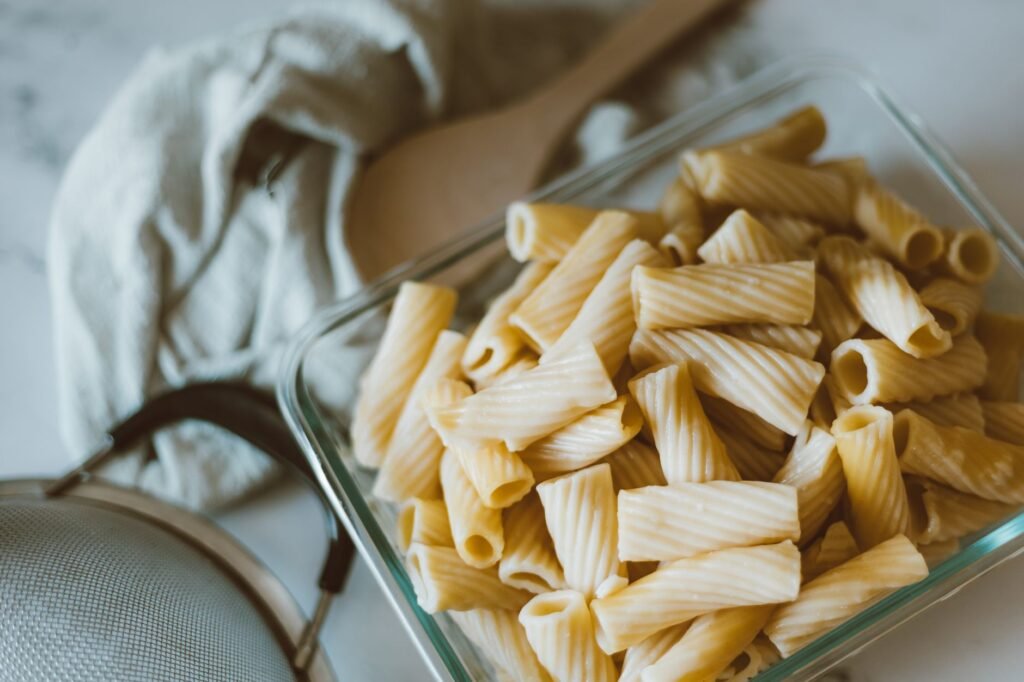
Yes, cooked pasta freezes well as long as you undercook it on purpose. Boil it two or three minutes short of the package time, toss it with oil or sauce, then freeze. That margin absorbs the softening that happens during freezing and reheating, and the sauce or oil coating keeps the strands from welding into one block.
Why plain boiled pasta turns soft
Cooking pasta means forcing water into its starch granules until they swell and gelatinize. Al dente pasta has a core that has not fully swollen yet, and that firm center is the bite you are after. Freeze the pasta and ice crystals push through the gelatinized starch, weakening the structure that was holding the shape together.
Then comes retrogradation, which is the same process that stales bread. Once cooked starch cools, its molecules slowly realign into a firmer arrangement, and repeated temperature swings accelerate it. The combination of crystal damage and realigned starch is why twice cooked pasta reheated from frozen so often lands mushy on the outside and slightly chalky inside.
Undercooking on purpose
- Set a timer for two to three minutes less than the shortest number on the package. The pasta should still show a clear white center when you bite it.
- Drain and rinse under cold water. Rinsing is wrong for pasta you serve immediately, since it strips the surface starch that helps sauce cling, but here it stops the cooking fast and that matters more.
- Toss the drained pasta with a tablespoon of olive oil per pound, or with the sauce you plan to serve it with.
- Spread it on a sheet pan in a single layer and freeze until firm, about an hour. This loose freeze step is what keeps the portions from fusing.
- Transfer to freezer bags in meal sized portions, press flat, label and date. Frozen food stays microbiologically stable the whole time it is frozen, so the two to three month guideline is about texture alone.
Sauced pasta beats naked pasta
| How it is stored | Texture after reheating | Best reheat method |
|---|---|---|
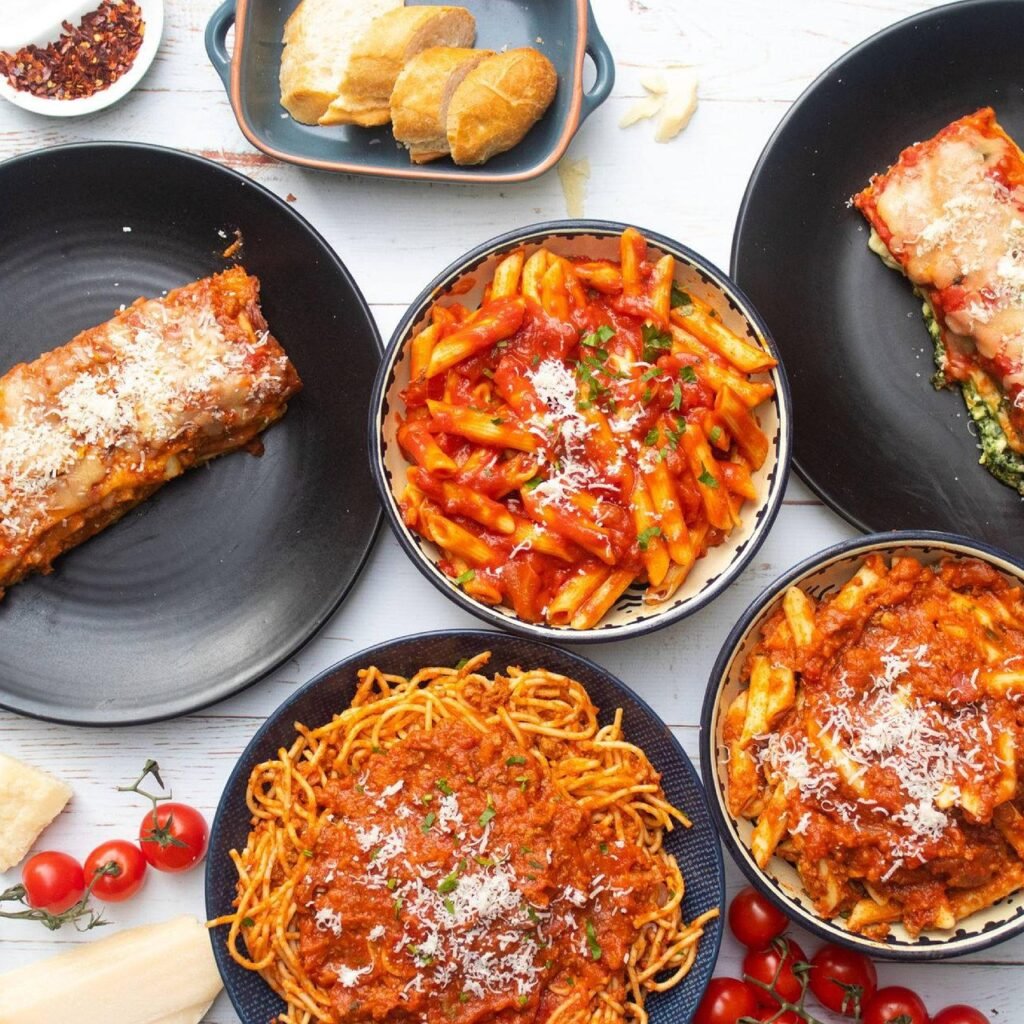
| Tossed in tomato sauce | Very good, sauce protects strands | Covered pan on the stove |
| Tossed in olive oil only | Good, stays separate | Thirty seconds in boiling water |
| Baked casserole, sauced | Very good | Covered oven bake from frozen |
| Plain with nothing on it | Fair, clumps together | Boiling water, break the clump up |
| Tossed in a cream sauce | Fair, sauce may split | Low heat, stir in extra cream |
Reheating straight from frozen
The fastest route is a pot of boiling water and a strainer basket. Lower a frozen portion in for thirty to sixty seconds, lift it out, and it is hot without having cooked any further. Longer than a minute and the strands start giving up their structure.
For sauced portions, put the frozen block into a covered skillet over medium low heat with a splash of water. The trapped steam thaws it evenly while the sauce loosens, and a stir every couple of minutes keeps the bottom from catching. Baked dishes go into the oven still frozen, covered with foil, until the middle is hot.
One thing worth knowing: pasta destined for a baked casserole is the easiest case of all. The dish gets a long, moist bake regardless, so the differences between fresh and frozen pasta largely disappear by the time it reaches the table.