
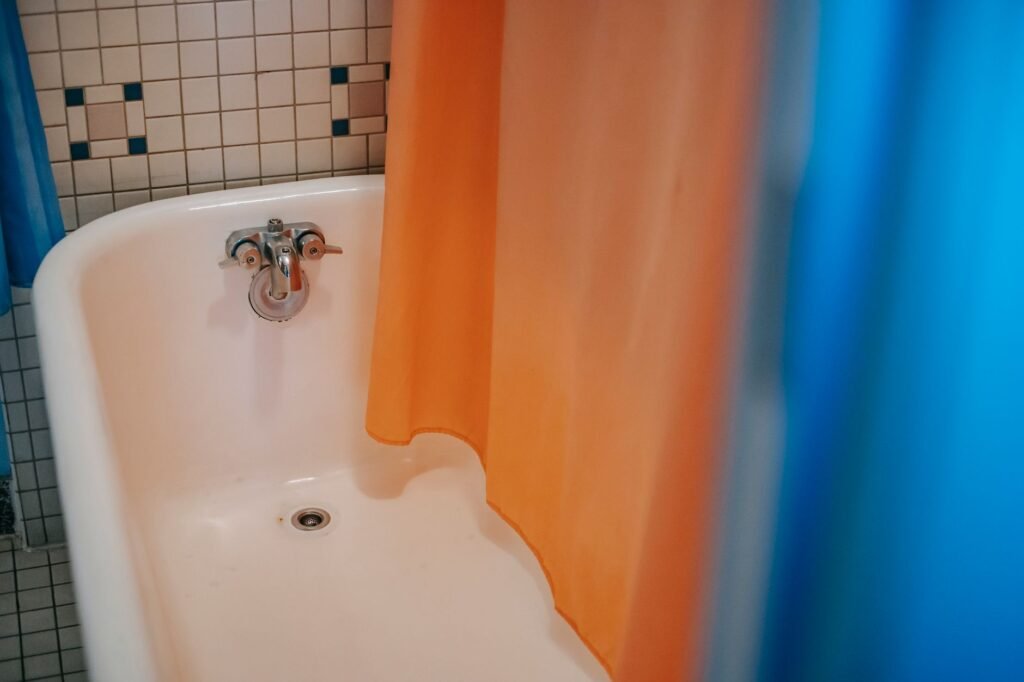
Most fabric shower curtains and many plastic liners can go through the washing machine on a gentle cycle with a couple of old towels, then hang back on the rod to dry. Check the care label first. Curtains that cannot be machine washed can be scrubbed in the tub with a soft brush and rinsed off.
Read the care tag before the curtain goes anywhere
Shower curtains come in two layers in most bathrooms. The outer curtain is decorative, usually polyester or cotton. The liner behind it is plastic, often vinyl or PEVA, and it takes the spray. They wash differently, so unhook both and look for the sewn in tag or the packaging instructions.
| Material | Washer? | Cycle | How to dry |
|---|---|---|---|
| Polyester fabric curtain | Usually yes | Gentle, following the tag | Hang on the rod or line dry |
| Cotton or linen curtain | Often yes, can shrink | Cool or as the tag says | Line dry to limit shrinking |
| Vinyl or PEVA liner | Often yes, check the tag | Gentle with towels for scrubbing | Hang on the rod, no dryer heat |
| Weighted or magnetic hem liner | Check the tag | Hand wash if unsure | Hang to drip dry |
No tag at all? Treat a plastic liner gently and a fabric curtain like a delicate, and you are unlikely to ruin either.
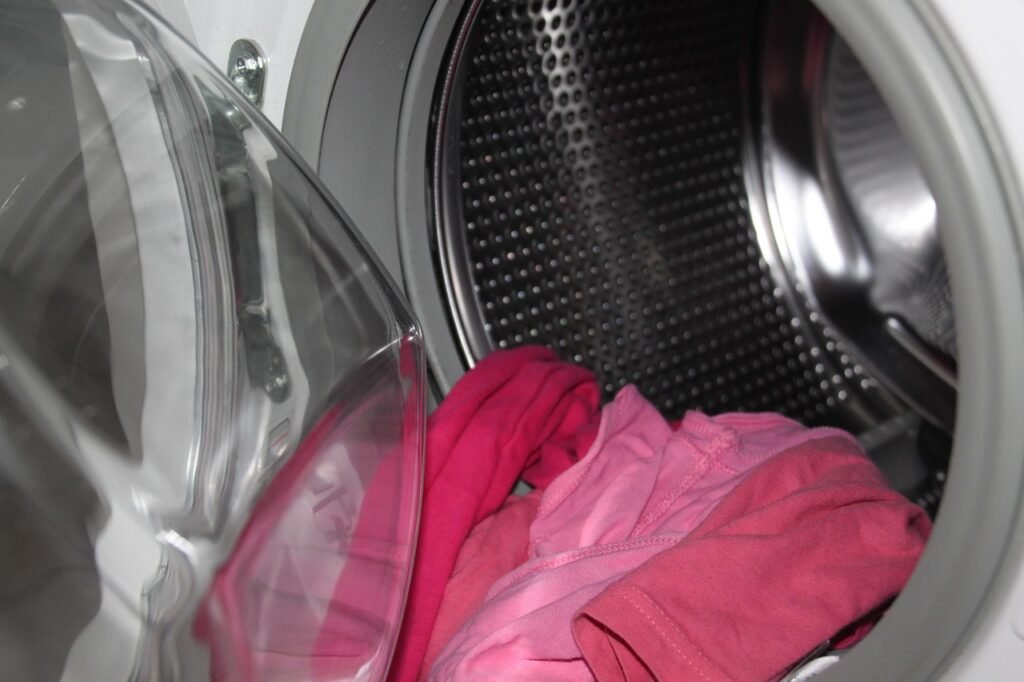
Running a curtain or liner through the washing machine
- Take off every hook and ring. Metal hooks can scratch the drum and tear the grommets.
- Shake the curtain out and check its bottom hem to see where the worst buildup sits.
- Load it with two or three old bath towels. The towels rub against the plastic as the drum turns and do the scrubbing for you.
- Add your usual detergent and choose the gentle cycle and the water temperature the tag allows.
- Pull it out as soon as the cycle ends so it doesn’t sit creased in the drum.
- Hang it right back on the rod and spread it fully closed so it dries flat.
Keep plastic liners out of the dryer. Heat can warp or melt them, and the creases set in for good.
Pink film and black spots along the bottom hem
The lowest few inches of a liner stay wet the longest, and soap scum gives growth something to feed on. That is where you see pink or orange slime and clusters of black specks. A regular wash with towels removes a lot of it. Stubborn spots need more.
For a white plastic liner, some people add bleach to the wash or wipe the hem with a bleach solution. The CDC guidance on cleaning up mold says to use no more than 1 cup of household laundry bleach in 1 gallon of water on hard surfaces, open windows for fresh air, and never mix bleach with ammonia or other cleaners because that produces a poisonous gas. Keep bleach away from colored fabric curtains entirely, since it will strip the color.
If black spots are still there after two rounds, the stain has usually set into the plastic, and replacing the liner makes more sense than scrubbing harder.
Hand washing a curtain that cannot go in the machine
Some curtains carry beads, embroidery or a heavy weighted hem that a washer would wreck. For those, spread the curtain across the tub floor, run a few inches of warm water, and swirl in a little dish soap or laundry detergent. Work over the whole surface with a soft brush or sponge, giving the hem extra passes, then drain the tub and rinse with the shower head.
Baking soda on a damp sponge helps lift soap scum from plastic without scratching it. If you also use vinegar, rinse the baking soda away first, and never pair vinegar with bleach in the same session.
Keeping the hem from turning slimy again
Most of the buildup comes from water that sits in the folds after a shower. Close the curtain fully once you are done so it hangs flat instead of bunched at one end, run the bathroom fan or crack the door, and shake water off the hem now and then.
Washing every few weeks keeps the job small. When a liner stays cloudy, stiff or spotted after cleaning, a new one is the easier fix, and you can wash the outer curtain less often since it rarely gets soaked.
Frequently asked questions
Can you put a plastic shower curtain liner in the washing machine?
Many vinyl and PEVA liners handle a gentle machine cycle, especially with a few towels added to scrub the surface. Check the tag or package first, remove all hooks, and hang the liner back up to dry. Avoid the dryer, since heat can warp or melt the plastic.
How often should you wash a shower curtain liner?
There is no single rule, but washing every few weeks keeps buildup light. A bathroom that is used several times a day, or one without a fan or window, may need it more often. Wash sooner whenever you see pink film, black specks or a musty smell near the hem.
Is it better to replace or clean a shower curtain liner?
Cleaning works well while the liner is still clear and flexible. Replace it when stains stay after a couple of washes, when the plastic has turned stiff or cracked, or when the smell returns within days. Liners are made to be swapped, so replacing one is normal upkeep.
What is the standard shower curtain size?
The most common size is 72 by 72 inches, which fits most standard bathtubs. Stall showers usually take a narrower curtain around 54 inches wide, and extra long curtains of about 72 by 84 inches suit rods mounted higher on the wall. Measure your rod and its height above the tub before buying a replacement.
Do you need a shower curtain liner?
Not always, but it helps. A fabric curtain can hang on its own, though it soaks up more water and wears faster. A liner takes the spray, keeps the outer curtain drier and cleaner, and is made to be swapped out when it gets spotted. Absorbent cotton or linen curtains benefit most from having one behind them.