

Heat a microwave-safe bowl of water with lemon juice or a splash of vinegar until the window fogs, leave the door shut for a few minutes, then wipe the softened mess away with a damp cloth. Wash the turntable separately and finish the inside with mild dish soap and water.
The steam bowl method, one step at a time
- Pour about a cup of water into a microwave-safe glass bowl or measuring cup. Add the juice of half a lemon, or a tablespoon or so of white vinegar.
- Heat on full power for several minutes, until the water steams hard and the window clouds over.
- Leave the door closed for a few more minutes so the steam can soften dried splatter.
- Open the door, wait a moment, and lift the bowl out with oven mitts. Keep your face back from it.
- Take out the turntable and its roller ring and set them aside.
- Wipe the ceiling first, then the walls, then the floor, so drips land on areas you haven’t cleaned yet.
- Wipe the whole interior a second time with a cloth dampened in warm water, which should hold just one drop of dish soap. Dry the microwave cavity afterward.
One safety point before you start. The FDA warns that water heated by itself in a clean container can become superheated, meaning it passes the boiling point without looking like it’s boiling, then erupts when disturbed. Its page on microwave oven safety tells you to follow your manual’s heating times, so don’t run the bowl longer than you need.
Parts inside the microwave that need a gentle touch
Look at the side wall or ceiling and you’ll find a flat panel called the waveguide cover. Frigidaire’s support guidance says to wipe splatters off it gently with a damp cloth as soon as you see them and never remove it.
The rubbery edge around the opening and the inner face of the door deserve regular attention too. The FDA suggests cleaning the cavity, the outer edge of the cavity and the door with water and a mild detergent, and skipping abrasive products. It also says not to run a microwave whose door is bent, warped or won’t close firmly, and to contact the manufacturer if hinges, latches or seals are damaged.
Matching the cleaner to the microwave mess
| Mess | What to use | Tip |
|---|---|---|
| Fresh splatter | Warm water on a soft cloth | Wipe right after cooking and it rarely builds up |
| Dried-on food | Steam bowl, then soapy cloth | Give the steam time to work before scrubbing |
| Heavy crusted spots | A little baking soda on a damp cloth | Rub gently, then rinse the residue off |
| Lingering smell | Water with lemon juice, peel and a few cloves | Heat, let it sit, then wipe and leave the door open to air out |
| Orange tomato stains on plastic | Baking soda on a damp cloth | Some tint may remain; it is cosmetic |
Steel wool, scouring pads and gritty powders scratch interior coatings, so keep them out of the cavity even for stubborn spots.
Cleaning the turntable, door glass and keypad
The glass tray and roller ring lift out. Frigidaire says its turntables can go in warm soapy water or on the top rack of the dishwasher, but check your own manual since not every maker allows that. Let the tray cool fully before it touches water, because hot glass can crack with a sudden temperature change.
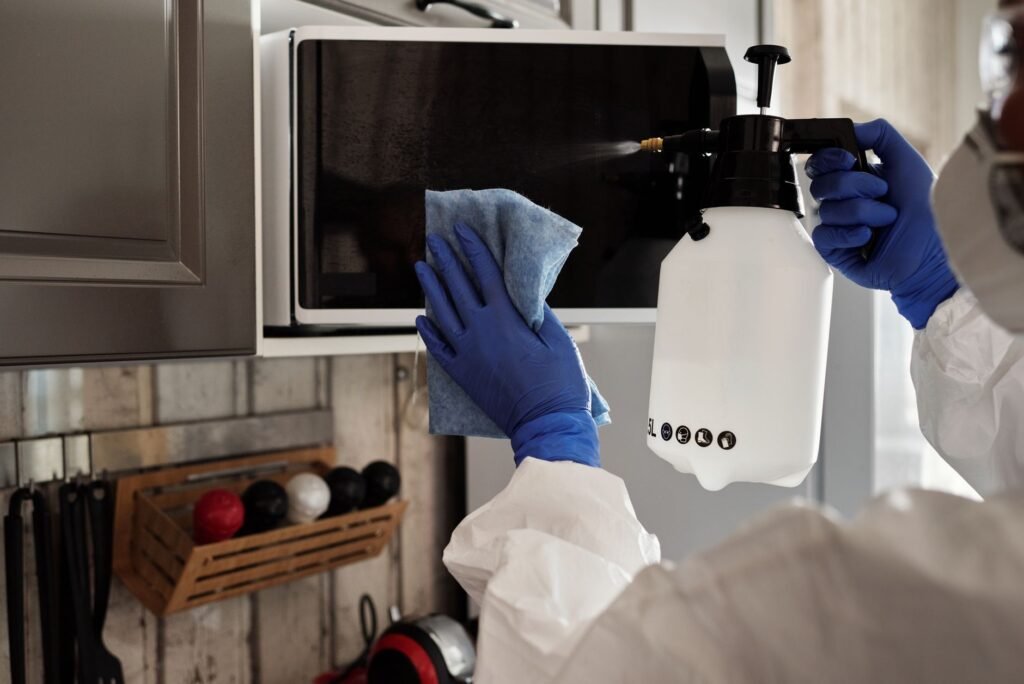
For the outside, Frigidaire recommends mild soap and water or a half-and-half mix of water and vinegar, then a damp rinse cloth and a soft dry cloth. Use only a lightly damp cloth on the control panel and don’t scrub the keys. Spray cleaner onto the cloth rather than onto the microwave, so liquid doesn’t seep into vents or the keypad.
Keeping a microwave from getting this dirty again
A loose cover over bowls of soup, sauce and leftovers stops most splatter before it starts. Use a microwave-safe lid, a vented cover or a paper towel. Wiping the inside once a week with a damp cloth takes a minute and keeps grease from baking on. If your model hangs over the stove, its underside collects cooking grease as well; your manual explains how to remove and wash any filters it has.
Frequently asked questions
Can I clean a microwave with vinegar instead of lemon?
Yes. A tablespoon or so of white vinegar in a cup of water does the same job as lemon juice in the steam method. The smell of vinegar fades once you wipe down the cavity and leave the door open for a while, and lemon just leaves a fresher scent.
Is it safe to use bleach inside a microwave?
Skip it. Harsh chemicals are unnecessary for food splatter and can leave residue on surfaces that touch your food. The FDA recommends water and a mild detergent for the cavity and door. If something smells stale, the lemon and clove steam trick usually clears it.
How often should a microwave be cleaned?
A quick wipe after any spill, plus a weekly pass with a damp cloth, keeps most microwaves clean. Do the full steam cleaning whenever you see dried spots on the ceiling or walls. Regular cleaning of the door seal area also helps the door close properly over time.
How do you clean a microwave with baking soda?
Stir about 2 tablespoons of baking soda into 1 cup of warm water, as Arm & Hammer suggests, and wipe the inside with a sponge dipped in the mix, rubbing gently on crusted spots. Follow with a cloth dampened in hot water to lift the residue, then leave the door open so the cavity can air dry.
How do you clean a microwave filter?
Slide the grease filters out from the underside of an over the range microwave and wash them in mild soap and water about once a month, as Whirlpool recommends. Whirlpool says most can also go in the dishwasher, but check your manual. The charcoal filter behind the top vent cannot be cleaned and needs replacing about every 6 months.