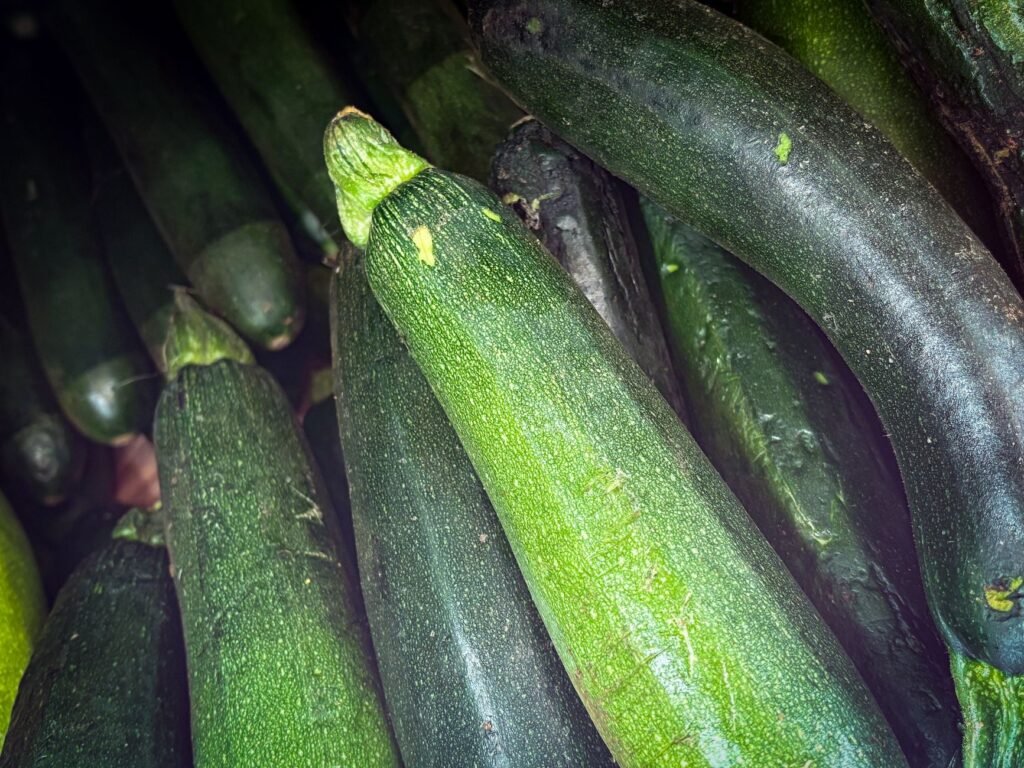
Keep zucchini dry, unwashed, and loose in the crisper drawer. The skin is thin and unwaxed, so the squash loses water fast and dents wherever it presses against something. Very cold, damp storage pits the surface with sunken spots, and that is cold damage rather than old age.
Dry beats damp for summer squash
Zucchini is harvested immature, which is why the skin is so tender and why it has none of the tough protective layer that a winter squash gets. Two things then work against it. Water escapes through that thin skin, which is what makes an old zucchini wrinkle and go spongy. And sitting below roughly the mid forties Fahrenheit for long enough causes chilling injury, which shows up as small sunken pits and water soaked patches.
Home fridges run colder than zucchini would prefer, so the crisper is a compromise rather than an ideal. Use the warmest drawer, keep the squash dry, and plan to cook it sooner than you would a carrot.
Where to put it, and for how long
| Storage | How it holds up | Rough window |
|---|---|---|
| Cool shaded counter, spaced apart | Best flavor and texture | A couple of days |
| Crisper drawer, dry, loosely covered | The practical default | Around a week, sometimes more |
| Sealed bag in the coldest shelf | Pitting and soft spots appear early | Avoid |
| Cut pieces in a closed container | Cut faces dry and darken | A day or two |
| Grated, squeezed dry, frozen flat | Great for bread, fritters, soup | Months |
| Sliced and frozen raw without blanching | Collapses to mush on thawing | Cooked dishes only |
Size changes the maths too. A young squash the length of your hand keeps better and tastes better than a baseball bat sized one, which is mostly water and seeds by then.
The habits that ruin zucchini early
Washing on arrival is the biggest one. Moisture on the skin has nowhere to go inside a cold drawer, and the first soft spot usually appears exactly where a drop sat. Wipe the squash with a dry cloth if it came in dusty and save the rinse for cooking time.
Stacking is the next. Zucchini bruises against zucchini. A pile in a drawer develops flat, dull patches at every contact point, and those patches go soft first. Lay them in a single row with a little air between them.
Cutting off the stem nub is worth avoiding as well. That little stub seals the end of the squash, and once it is gone the end dries out and darkens. Trim it when you cook, not when you store.
Finally, do not store zucchini with tomatoes or bananas. Summer squash softens quickly around heavy ethylene producers.
Telling cold damage from spoilage
Small sunken pits with a slightly translucent look are chilling injury. The squash is still fine to cook that day, but it will decline fast, so use it rather than moving it back.
- Dull, wrinkled skin: water loss. Usable, best grated into something.
- Soft, hollow feeling when you press the middle: the flesh has broken down.
- Weeping liquid or a sticky film: over, and it will mark whatever it lies on.
- A mushy, darkened stem end: rot moving in from the cut.
- White or gray fuzz anywhere: throw the squash out rather than trimming it.
A whole zucchini that is merely bendy is not spoiled. Shred it, squeeze the water out in a clean towel, and it behaves perfectly well in a batter.