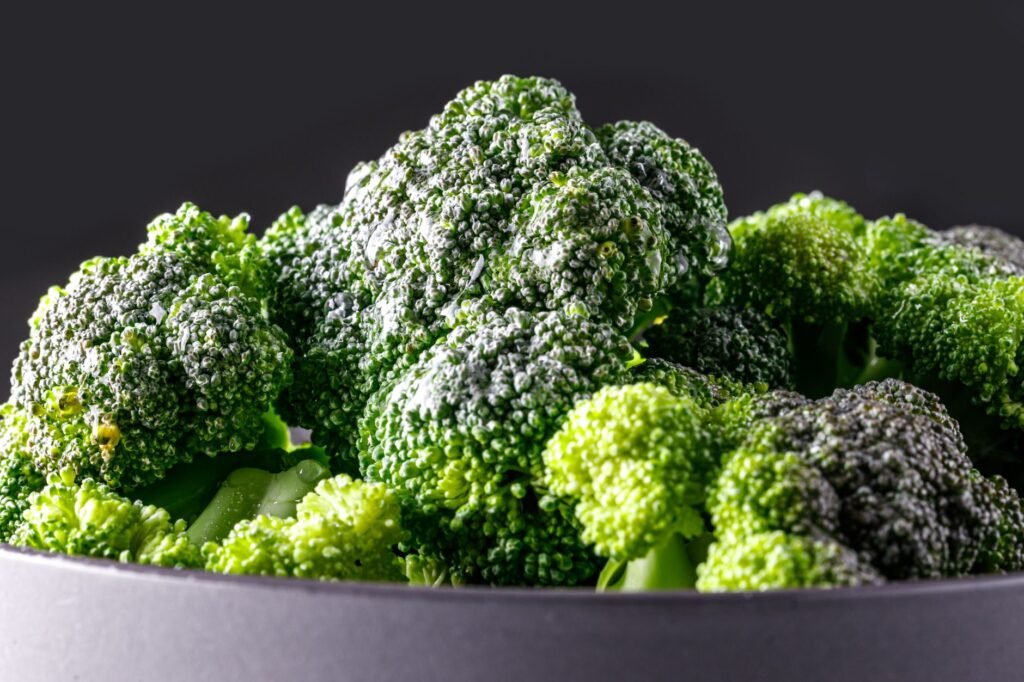
Keep broccoli unwashed, loosely bagged, and in the crisper drawer. It is still breathing after harvest, so it needs damp air and a little airflow at the same time. Sealed tight it turns slimy, left bare it goes rubbery, and parked next to apples it yellows within days.
Broccoli wants damp air and a little airflow
A head of broccoli is a cluster of unopened flower buds, and those buds are still alive when you bring them home. They keep respiring, giving off heat and moisture, and they keep trying to bloom. Everything about storing broccoli is about slowing that down without suffocating it.
That is why the two obvious options both fail. A sealed zip bag traps the moisture the head gives off, and the trapped water sits in the tight crown until it goes slimy. An open shelf lets that moisture escape, and the stalk goes limp and rubbery in a day. A loosely closed bag, or a bag with a few holes, sits in between.
Broccoli is also unusually sensitive to ethylene. Keep it out of the fruit drawer, because apples, pears and bananas will yellow a head fast.
Four ways to keep it, compared
| Method | Best for | What to watch |
|---|---|---|
| Loose bag in the crisper, unwashed | The default, whole heads | Check for condensation and wipe the bag out |
| Damp towel wrapped round the crown | Heads that arrived a bit dry | Re-dampen the towel, do not soak it |
| Stalk standing in shallow water | Broccoli you plan to serve raw | Takes shelf space, change the water |
| Blanched florets, frozen on a tray | Anything you cannot use this week | Dry them well or they freeze into a block |
How long any of these last depends on how fresh the head was at the store. Tight, dark green, slightly purple buds start the clock far earlier than a head already going pale.
The washing mistake that rots the crown from inside
Rinsing produce as soon as it comes home feels tidy and it ruins broccoli. The crown is hundreds of tiny buds packed against each other, and water runs down into that structure and cannot evaporate back out. Sitting in the cold drawer, the wet interior of the head goes slimy days before the outside shows anything. By the time the surface looks wrong, the middle has been gone for a while.
Wash broccoli right before you cook it, then shake it hard or spin it. If it already got wet, dry the crown with a towel and leave the bag open a crack rather than sealing it.
One more habit worth dropping is cutting the head into florets ahead of time. Every cut is a wound that loses water and invites softening, so a head kept whole outlasts a container of prepped florets by a wide margin.
Yellow, limp, or actually spoiled
Broccoli gives you a long, honest decline instead of a sudden failure, so it helps to know which stage you are at.
- Buds turning yellow: aging, milder flavor, still perfectly usable cooked.
- Limp stalk: dehydrated. Trim the base and stand it in cold water for an hour to firm up.
- Strong cabbage or sulfur smell in the drawer: it is well past its best, cook it today or drop it.
- Slimy film on the crown or brown mushy patches: done, and the slime will spread to whatever it touches.
- Black or fuzzy spots in the buds: mold, and the head goes out whole rather than being trimmed.