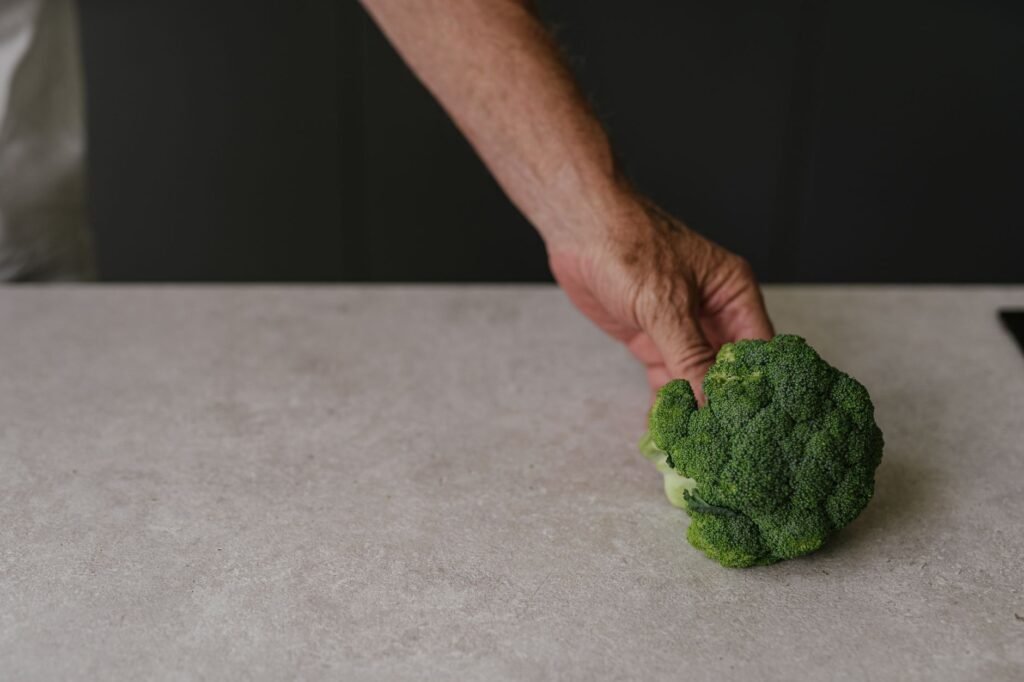
A whole head of broccoli holds up for roughly a week in the crisper drawer, while florets you have already cut drop to three or four days. Broccoli keeps respiring after harvest, so it burns through its own stored sugar and turns yellow and bitter well before anything looks genuinely spoiled.
Why broccoli turns bitter before it turns bad
A cut head is still a living thing. It breathes, it spends stored sugar, and the green pigment in the buds breaks down as it goes. That is why the first sign of age is color rather than slime. Pale yellow buds mean chlorophyll has degraded, and the sulfur compounds that give cruciferous vegetables their bite have concentrated into something harsh.
The same vegetable is unusually touchy about ethylene, the ripening gas that apples, bananas, tomatoes and avocados release. Park a head beside a bowl of ripening fruit and you can cut its useful life close to half. Cold slows every one of these reactions down. It never stops them.
How long each form of broccoli keeps
| Form | Where it goes | Rough window | What ends it |
|---|---|---|---|
| Whole head, unwashed | Crisper drawer, loose bag | About a week | Yellowing buds |
| Cut raw florets | Lidded box | Three to four days | Limp stems, sharp sulfur odor |
| Cooked broccoli | Shallow container, chilled | Three to four days | Off smell, slick surface |
| Blanched, then frozen | Freezer | Months for quality | Ice crystals, mushy thaw |
| Bagged slaw or riced broccoli | Sealed, chilled | Follow the printed date | Trapped moisture in the bag |
Those leftover windows match the general refrigerated storage guidance the USDA publishes for cooked vegetables. FoodSafety.gov keeps a searchable cold storage chart if you would rather look up a specific dish than guess at it.
The checks that tell you to throw it out
- Read the buds first. Uniform deep green is fine. Scattered yellow means quality is sliding and the flavor will be strong. Brown or black patches across the crown are where most cooks stop.
- Smell it up close. Fresh broccoli smells faintly grassy and green. A cabbage blast that hits you the moment the bag opens is the classic finish line.
- Press the stalk. A good stem is firm and squeaks a little under a thumbnail. Rubbery bend, a slick film, or softness where buds meet stalk all mean it is done.
Small habits that buy several extra days
Do not wash it until you are ready to cook. Surface water sitting in the crown is the fastest route to mold and mush. If the head arrived shrink wrapped, cut the plastic open and move it into a loosely closed produce bag so it can breathe.
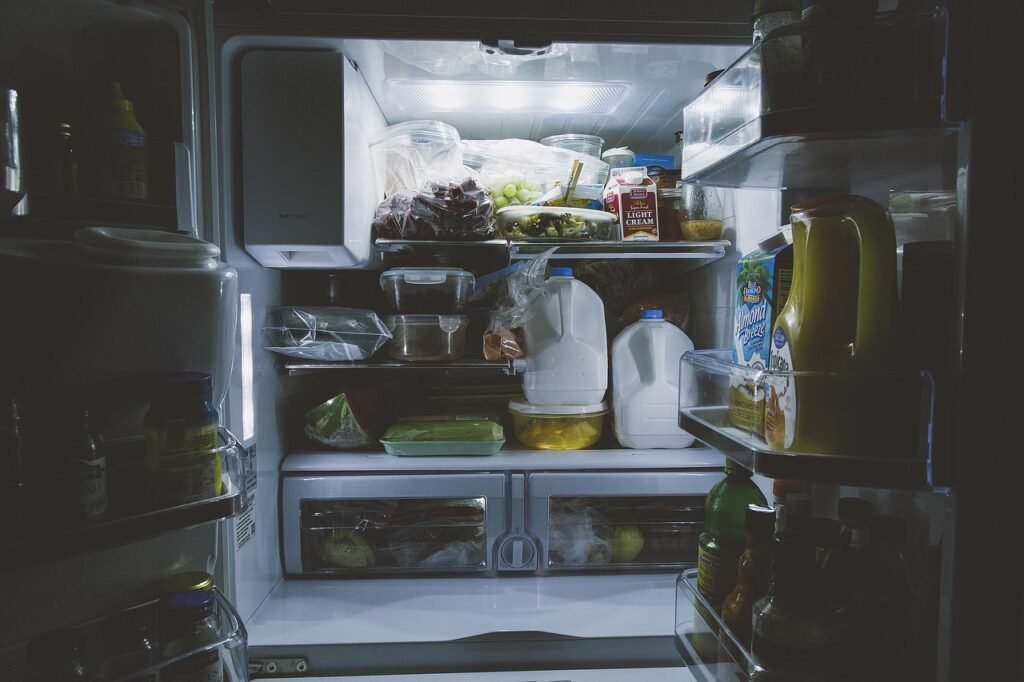
Keep it in the crisper, away from the fruit bowl, and leave the stalk attached. Some cooks stand the head stem down in an inch of water like a bouquet and drape the crown loosely, which keeps the stalk hydrated for a few extra days. Swap that water out once it clouds.
If a head is clearly fading but not spoiled, blanch the florets briefly, chill them in ice water, dry them thoroughly and freeze them flat on a tray. Blanching shuts down the enzymes driving the yellowing, which is exactly why frozen raw broccoli tastes off later and blanched broccoli does not.