
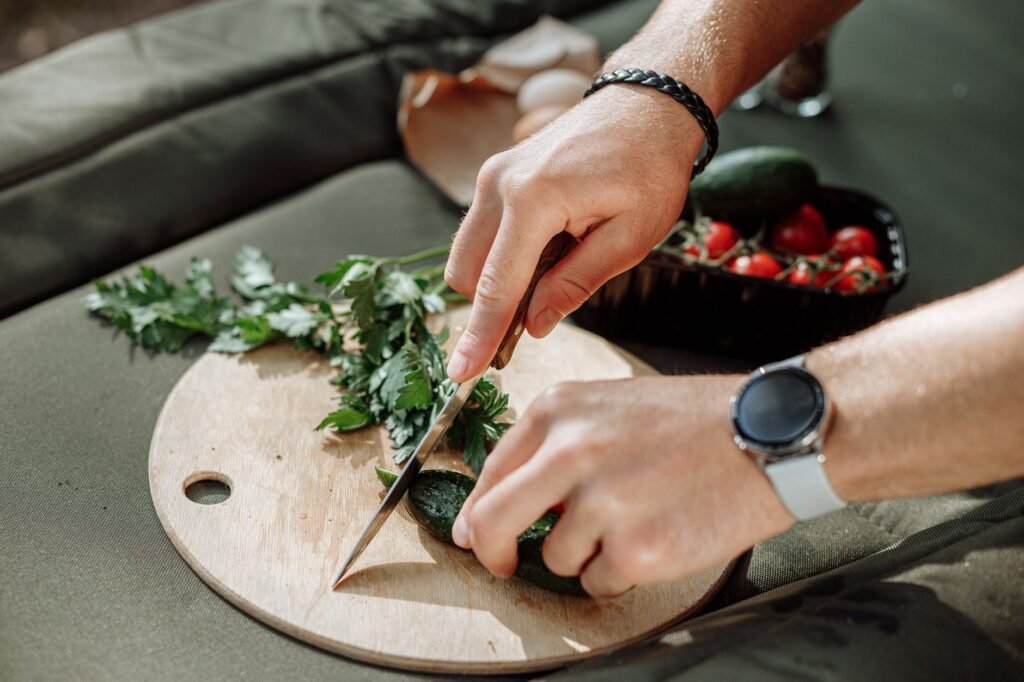
Treat a bunch of parsley like cut flowers: trim the stems, stand them in an inch of water, and tent a loose bag over the leaves in the refrigerator. The stems keep drinking, the bag holds humidity around the leaves, and the leaves themselves stay dry enough not to slime. Change the water once it clouds.
The jar method, step by step

- Cut the rubber band or twist tie off the moment you get home. That band crushes the stems and rot starts right at the pinch.
- Snip a little off the bottom of the stems, the way you would with flowers, so they can draw water.
- Stand the bunch in a jar or glass with enough water to cover the stem ends, no more.
- Drape a plastic bag loosely over the leaves. Loosely is the whole trick, you want humid air, not a sealed chamber.
- Put the jar in the body of the refrigerator, not the door, and swap the water when it goes cloudy.
If there is no shelf space for a jar
Refrigerators are crowded and a tall glass of herbs is often the first casualty. The flat version works nearly as well. Lay the dry bunch on a barely damp paper towel, roll it up without squeezing, and slide the roll into a bag left partly open. The towel handles humidity, the open corner handles airflow.
| Method | Trade off |
|---|---|
| Stems in water, bag tented | Keeps longest, costs vertical space |
| Damp towel roll in an open bag | Nearly as good, fits in a drawer |
| Store bag, straight into the crisper | Yellows at the center within days |
| Airtight box with damp leaves | Slime, fast |
| Chopped ahead into a container | Darkens at every cut edge |
Freezing parsley without turning it to mush
Nothing brings frozen parsley back to crispness, so decide upfront that the frozen batch is for cooking. Chop it, pack it into an ice cube tray, top with olive oil or water, freeze, then move the cubes to a bag. One cube goes straight into a simmering pot with no thawing.
Drying parsley at home is a different story and generally a disappointment. The leaves are mild to begin with, and most of what makes them taste like anything leaves with the moisture.
What kills a bunch early
Washing it on arrival and bagging it damp is the leading cause, and the damage shows up first as a dark, slippery patch in the middle where the leaves press together.
After that: leaving the rubber band on, sealing the bunch airtight so condensation collects, storing the jar in the refrigerator door where the temperature swings every time someone reaches for milk, and burying the bag under something heavy so the stems bend and bruise. Tap water that has sat in the jar for a week also turns, and the stems drink that.
Wilted or genuinely done
Limp but green is recoverable. Trim the stems again and stand them in cold water for half an hour and most bunches perk back up. Yellowing leaves have started breaking down and will not reverse, though the still green sprigs beside them are fine to pick out.
The point of no return is slime at the stem base, a sour smell when you open the bag, or leaves that smear rather than tear. At that stage the whole bunch goes, because the softening has already spread further than it looks.