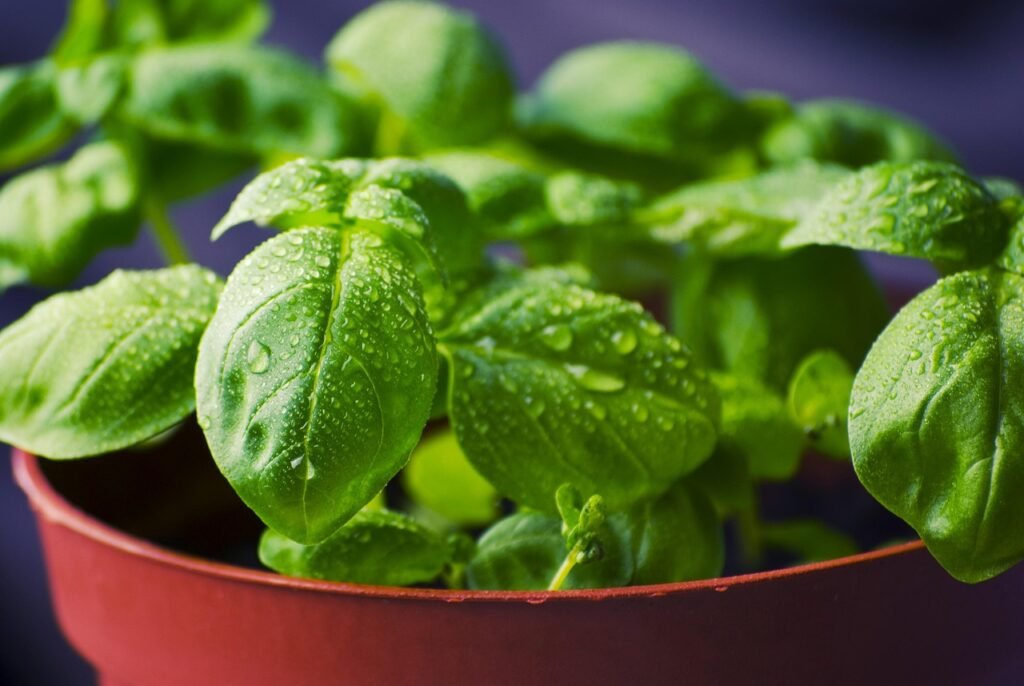
Trim the stems, stand the bunch in a jar with an inch of water on the kitchen counter, and drape a loose bag over the leaves. Kept out of direct sun and away from the refrigerator, basil usually stays bright and usable for about a week. Cold is what turns the leaves black.
The Refrigerator Is Actively Hurting It
Basil is a tropical plant, and it registers refrigerator temperatures as damage rather than preservation. The effect is called chilling injury, and it sets in at temperatures around the low fifties Fahrenheit, which is warmer than any home refrigerator runs. Cell membranes lose integrity, contents leak into surrounding tissue, and enzymes cause the familiar black and brown blotching.
What makes this confusing is the delay. Basil looks fine coming out of the cold and blackens hours later on the counter, so the refrigerator rarely gets blamed. This is the single most important fact about storing basil, and it separates it from nearly every other fresh herb in the produce aisle.
The Counter Bouquet, Done Right
- Trim a small piece off the bottom of each stem at an angle, the way you would with flowers.
- Strip off any leaves that would sit below the waterline, since submerged leaves go slimy and foul the water.
- Stand the stems in a jar or glass with about an inch of cool water.
- Set a loose plastic bag or produce bag over the top like a tent, without sealing it around the jar.
- Keep the jar on the counter, out of direct sunlight and away from the stove.
- Change the water every day or two and re-trim the stems if the water starts to smell.
Left alone in these conditions, a bunch often puts out small white roots, at which point you can pot it and keep going.
Longer-Term Options and What They Cost You
| Method | What you end up with | Good for |
|---|---|---|
| Jar of water on the counter | Fresh leaves, bright flavor | About a week of everyday use |
| Leaves blended with oil, frozen in cubes | Soft green paste, aroma well preserved | Sauces, soups, dressings |
| Pesto, frozen in portions | Finished sauce | Pasta and sandwiches months later |
| Whole leaves frozen flat | Limp and dark on thawing, flavor intact | Cooked dishes only |
| Air dried or dehydrated | Muted, hay-like version of the herb | Rubs and long simmers |
Where Basil Storage Falls Apart
The refrigerator crisper drawer is the obvious one, usually done out of habit with the rest of the produce. Close behind is washing the leaves and then storing them wet, since surface water sitting on basil leaves accelerates the slimy breakdown at the edges. Wash basil right before you use it, and pat it dry.
Packing leaves into a sealed zip bag crushes and bruises them, and every bruise becomes a dark spot. A sunny windowsill above the sink seems like a friendly spot for a tropical plant but the glass amplifies heat and the leaves wilt. Leaving stems submerged too deeply rots the lower leaves and clouds the water within a day. And buying a living potted basil and treating it like a cut bunch, watering it heavily and leaving it in a dim corner, kills it faster than either approach on its own.
Reading the Damage on a Leaf
Black or dark brown patches with a papery, dry feel are chilling injury. Those leaves are unattractive but not dangerous, and you can tear off the good green portions for cooking where looks do not matter.
Dark spots that are wet, slippery, or smell sour are rot, and that bunch should go. So should anything with visible fuzzy growth on the leaves or at the stem.
A leaf that is merely wilted and still fully green is the easy case. It has lost water, and standing the stems in fresh water for an hour usually brings the bunch back upright. Flowering is not spoilage either, though once basil bolts the leaf flavor turns sharper and less sweet, so pinch the flower heads off as they appear.