
Those are fungus gnats, and they live in the top layer of wet potting mix, not on the plant. Killing the adults you can see changes nothing, because larvae feeding in the soil keep hatching. Let the surface dry out hard and the cycle breaks on its own.
What the Larvae Are Eating
Fungus gnat larvae are tiny translucent worms with black heads, and they graze on fungi, algae, and decaying organic matter in the upper inch or two of soil. Heavy populations will nibble fine root hairs, especially on seedlings, but the plant itself is not the attraction. Wet, rich, peaty mix is.
The adults barely feed at all. They live briefly, fly badly, and spend that short time laying eggs on damp soil surfaces. Every one you swat has likely already laid, which is why the swarm never seems to shrink no matter how many you catch.
Eggs need moisture to hatch, and larvae dry out fast. That single weakness is the entire strategy. Remove the wet surface layer and you remove the nursery.
The Drying Routine That Ends It
- Stop watering on a schedule. Push a finger into the pot and water only when the top inch or two is genuinely dry, not merely cool.
- Water from below. Set the pot in a tray, let it drink for half an hour, then pour off what is left so the surface stays dry while the roots stay happy.
- Empty every saucer and cachepot. Standing water under a pot keeps the mix damp from the bottom up.
- Improve airflow. A small fan across the shelf dries surfaces and makes life hard for weak fliers.
- Clear fallen leaves and spent flowers off the soil, since decaying debris is exactly what the larvae eat.
- Hold the routine for several weeks, long enough to outlast the eggs and larvae already in the pot.
Repotting and Top-Dressing When Drying Is Not Enough
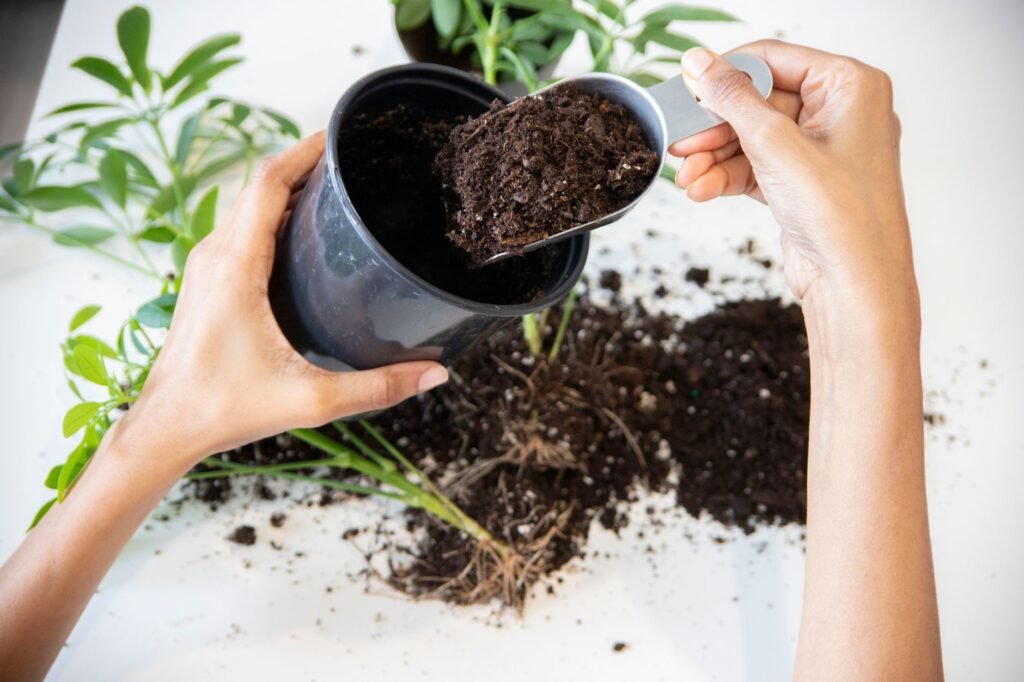
Some pots stay wet no matter how patient you are, usually because the mix is heavy peat, the drainage hole is blocked, or the pot is oversized for the root ball. Those are the ones to repot. Knock off the old soil, rinse the roots gently, and go back in with a chunkier mix containing perlite, bark, or pumice.
Top dressing is the lighter option. Cover the soil surface with a shallow layer of coarse sand, fine gravel, or horticultural grit. Water passes through, the surface dries fast, and adults struggle to reach the soil to lay. It is quietly one of the most effective things you can do.
If you choose to treat the soil, understand the category you are buying. Biological larvicides based on a soil bacterium sold for gnat larvae target the larvae specifically; a diluted peroxide drench kills on contact but changes nothing about the conditions. Follow the label on whatever you pick, and treat it as a supplement to drying rather than a replacement.
What Works and What Wastes Your Time
| Tactic | Effect on the problem |
|---|---|
| Letting the top layer dry between waterings | Fixes the cause |
| Bottom watering plus a grit top dressing | Fixes the cause, gentler on thirsty plants |
| Repotting into a chunky, fast-draining mix | Fixes stubborn pots |
| Yellow sticky cards | Monitors adults, measures progress |
| Apple cider vinegar cups | Built for fruit flies, poor draw for gnats |
| Spraying the leaves | Misses the larvae entirely |
| Cinnamon, coffee grounds, and similar folk fixes | Nothing reliable |
Stopping the Next Outbreak
Quarantine new plants on a separate shelf for a few weeks and keep a sticky card in each new pot. Store open bags of potting mix sealed and dry rather than slumped in a damp garage. Skip standing water in propagation stations near your soil pots, and resist the urge to water every plant the same day out of habit. Overwatering is the root cause here, and gnats are just the part you can see.